PLC in the Automotive Industry

PLCs have remained a constant backbone of manufacturing for more than fifty years. Their robustness, ability to withstand harsh industrial environments, and versatility in programming make them indispensable in automotive plants. 

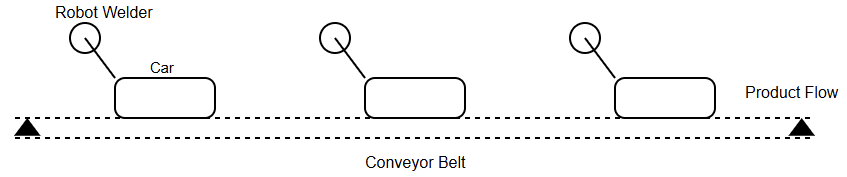
Whether it is welding robots on the production line, conveyor belts transporting car bodies, or automated quality checks, PLCs play an essential role in ensuring reliability, precision, repeatability, and efficiency.

This article explores the significance of PLCs in the automotive industry, their applications, benefits, challenges, and future trends shaping their role in modern vehicle production.

Understanding PLCs in Automotive Context

A PLC is a digital computer specifically designed to control electromechanical processes in industrial environments.

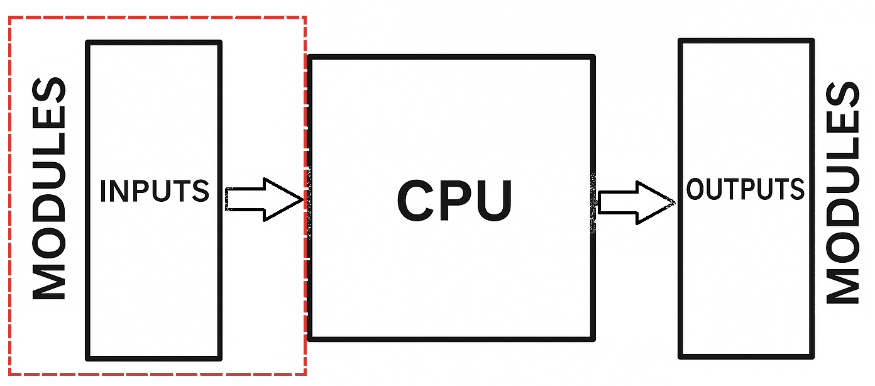
It receives input signals from sensors, processes these signals according to a programmed logic.

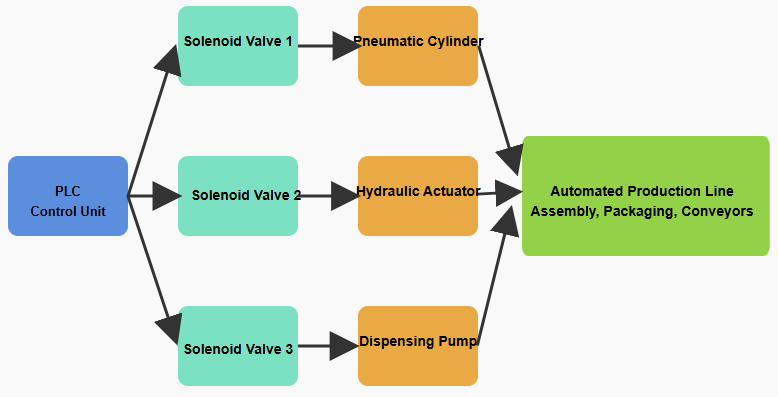
After that, it sends commands to the output devices such as motors, solenoids, robotic arms, among others.

In automotive manufacturing, this means a PLC could take data from a proximity sensor and detecting the presence of a car chassis.

Next, process that information, and then trigger a robotic arm to weld a joint or move the chassis to the next workstation. 

Unlike conventional computers, PLCs are ruggedized. This helps to withstand high temperatures, dust, humidity, and electrical noise typically found in automotive plants.

The flexibility of PLCs also makes them suitable for the dynamic nature of automotive manufacturing. 

Production lines often need to be reconfigured for new models. So, PLCs allow engineers to adjust programming rather than rebuild entire control systems as the used to do back then in 1960s.

Evolution of PLC Use in Automotive

The first PLCs appeared in the late 1960s, introduced to replace hard-wired relay logic in industries such as automotive. Before PLCs, factories relied on panels full of relays and timers to sequence operations. 

These systems were not only bulky and costly but also difficult to modify whenever a new car model was introduced.

The automotive industry, with its high volume and frequent model changes, was among the earliest adopters of PLC technology.

By the 1970s and 1980s, major automakers like Toyota, General Motors, and Ford had integrated PLCs into their production facilities.

PLCs became essential for controlling stamping presses, welding machines, painting booths, and conveyor systems.

As cars became more sophisticated and factories moved toward mass customization, PLCs evolved as well. Modern PLCs support high speed processing, advanced networking, safety protocols, and even integration with enterprise-level systems. 

This evolution has aligned perfectly with the automotive sector’s push toward lean manufacturing and Industry 4.0.

PLC in the Automotive Industry

Key Applications of PLCs in Automotive Manufacturing

The automotive factory is a vast and complex ecosystem that integrates mechanical, electrical, and digital systems. PLCs serve as the control nerve center across various stages of production.

Painting and Coating

Painting is one of the most sensitive processes in car manufacturing. PLCs regulate temperature, humidity, and spray patterns to achieve a flawless finish while minimizing material waste. 

Assembly Line Automation

One of the most visible applications of PLCs is in assembly line control. From moving a chassis through different stations to synchronizing robotic arms.

PLCs ensure that every component is added at the right time and in the right sequence. 

This coordination minimizes downtime and guarantees a smooth flow of production.

Robotic Welding

Modern automotive plants rely heavily on robotic welding for precision and speed. PLCs monitor welding parameters, control robot movement, and ensure safety interlocks are followed.

With PLCs, thousands of welds on a single car body can be completed with micron-level accuracy.

Automated paint shops rely on PLC-controlled robots to deliver consistent coating thickness and quality.

Conveyor and Material Handling

PLCs manage conveyor belts, lifts, and automated guided vehicles (AGVs) that move parts and assemblies across the plant.

The precise timing and synchronization of these systems prevent bottlenecks and allow just-in-time manufacturing.

Quality Control and Inspection

Automotive production demands strict quality assurance. PLCs control automated testing rigs that check parameters such as engine performance, braking systems or electrical circuits.

Then, Sensors feed real-time data into the PLC, which determines whether a component passes or fails the test.

Safety Systems

Worker safety is important in environments filled with heavy machinery and robotics.

PLCs are often integrated with emergency stop systems and light curtains. Then proceeding with interlocks to immediately halt operations if unsafe conditions are detected.

Benefits of PLCs in Automotive Industry

The integration of PLCs into automotive plants delivers several advantages that go beyond simple automation.

Reliability

Automotive production requires long hours of continuous operation, and PLCs are designed to run non-stop with minimal downtime.

Their rugged design ensures that they can withstand harsh conditions while maintaining accuracy.

Flexibility

Automotive plants must frequently reconfigure lines to accommodate new models or variations.

PLCs allow engineers to reprogram control logic quickly, avoiding costly rewiring or hardware changes.

Efficiency

By managing complex processes with precision, they reduce waste, optimize resource utilization, and improve throughput.

This efficiency translates into lower production costs and faster time to market.

Quality assurance

Quality assurance cannot be overstated. By automating inspection and testing, they minimize human error and ensure consistent standards across millions of units.

Safety

Through integration with safety devices and adherence to standards such as IEC 61508. So, PLCs ensure that dangerous processes can be immediately halted in emergencies, protecting both workers and equipment.

Integration with Industry 4.0

The automotive industry is at the forefront of Industry 4.0 industrial revolution. This industry is characterized by cyber-physical systems, IoT connectivity, and data-driven decision-making.

PLCs, though a legacy technology, have evolved to integrate seamlessly into this new digital ecosystem.

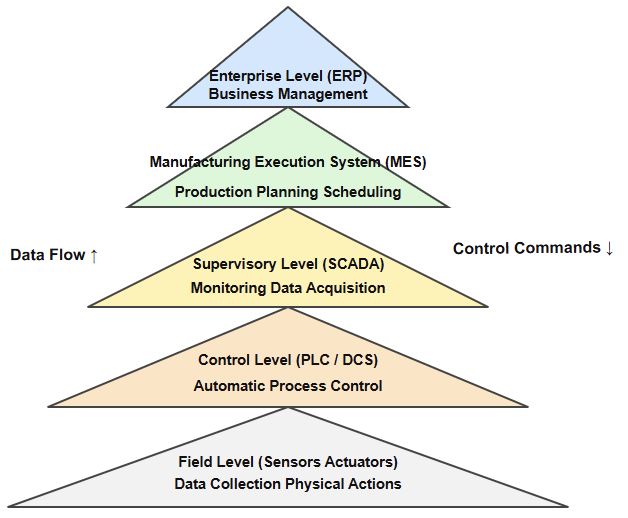
Modern PLCs are not just standalone controllers. They feature Ethernet/IP, ProfiNet, and Modbus TCP/IP communication protocols, enabling them to connect with higher-level Manufacturing Execution Systems (MES). Also, with Enterprise Resource Planning (ERP) systems.

 This connectivity ensures real-time visibility into production data, which is essential for predictive maintenance, supply chain optimization, and quality control.

With embedded data logging and connectivity, PLCs act as bridges between the shop floor and the cloud.

This capability supports advanced analytics, machine learning applications, and remote monitoring. 

For example, a PLC controlling a robotic welder can transmit data about weld quality and equipment health to a central dashboard, allowing engineers to detect issues before they cause costly downtime.

Key Takeaways: PLC in the Automotive Industry

The significance of PLCs in the automotive industry was detailed in this article. Their applications, benefits, challenges, and future trends were also addressed successfully. 

Their ability to control complex processes, adapt to new requirements, and integrate with digital platforms makes them indispensable in an industry that constantly evolves. 

While challenges such as cost, skills shortage, and cybersecurity remain, the continued advancement of PLCs ensures they will remain a cornerstone of automotive automation for decades to come.

As the automotive world transitions toward electric mobility, sustainable practices, and smart factories, PLCs will continue to serve as the silent yet powerful brains behind the machines that build the cars of the future.

FAQ: PLC in the Automotive Industry

What is a PLC and how did it originate in automotive manufacturing?

A Programmable Logic Controller (PLC) is a ruggedized industrial computer that monitors inputs, processes them to obtain the desired output that control the actuators (motor, lamps)

What are the key applications of PLCs in automotive manufacturing?

Used in painting and coating, assembly line automation, robot welding, conveyor and material handling, quality control and inspection, among others

How are automotive PLC applications evolving with Industry 4.0?

Modern PLCs are not just standalone controllers theyfeatureEthernet/IP, ProfiNet, and Modbus TCP/IP communication protocols 

What are the benefits of PLCs in the automotive industry?

They provide a number of benefits such as reliability precision, repeatability, and efficiency, to mention the few.

Ladder Logic vs Function Block diagram vs Structured Text

Programmable Logic Controllers (PLCs) are specialized computers used in industrial automation.

In order for PLCs to run must have some instructions or programming languages inside their CPU.  

The most famous languages like Ladder Logic (LD), Function Block Diagram (FBD), and Structured Text (ST) are under standard of International Electrotechnical Commission IEC-61131-3.

This organization is in charge of defining standard of several programming languages for PLCs

In this article we are going to see the foundation of each one, their advantages and disadvantages, and finally we will conclude by how to choose one. 

 Ladder Logic (LD)

Ladder Logic is a graphical programming language that is the oldest and most widespread of the IEC 61131-3 standards. It was designed to resemble the electrical diagrams of relay-based control systems

Structure of Ladder Logic

The structure of Ladder Logic has two vertical bars representing the power line connected by horizontal “rungs” that contain the logic as shown in the figure below. 

From the figure, the rungs are read from left to right and top to bottom. This simulates the physical flow of power through contacts (X) and coils (Y) to control output devices. 

Structure of Ladder Logic

Advantages of Ladder Logic

Simple for beginners

For fresh engineers, technicians and electricians, Ladder Logic is highly comfortable. 

Easy Debugging

Modern PLC software can animate Ladder Logic diagrams, highlighting active elements as the program runs. This provides real-time feedback, allowing you to quickly trace the logic flow.

Ideal for Discrete Logic

Ladder Diagram is highly effective for straightforward on/off control.

Broad Familiarity

With its long-standing use in industry, Ladder Diagram is the most widely adopted PLC language. 

Disadvantages of Ladder Logic

Data Handling Limitations

Ladder Logic is not naturally designed for working with complex data types such as arrays or strings. 

Low Portability

Compared to Structured Text, Ladder Logic is harder to transfer between different PLC platforms.

Differences in vendor-specific instructions and graphical layouts often mean programs must be rewritten from scratch.

Complexity Management Issues

Ladder Logic diagrams can become crowded with numerous rungs and intricate interconnections.

This visual complexity makes large programs difficult to read, troubleshoot, and maintain.

Weakness in Calculations

LD is inefficient for advanced arithmetic, algorithms, or heavy data manipulation. Implementing such tasks typically produces bulky code that is harder to understand and less efficient than text-based approaches.

Function Block Diagram (FDB)

Function Block Diagram is a graphical language that represents the program as a network of interconnected blocks.

Inside the block there may be other languages embedded such as Ladder Logic or any of the other PLC languages. 

Structure of Function Block Diagram

The figure below illustrates the structure of the Function Block Diagram. Notice that the block named function could be performing any specific task, such as a timer, a counter, PWM block, a PID controller, or a custom-defined function. 

Data and signals flow from the output of one block to the input of another, creating a clear visual representation of the program data flow.

Structure of Function Block Diagram

Advantages of Function Block Diagram

Reusable Modular Design

One of Function Block Diagram main advantages is its modular structure. Developers can build custom function blocks for specific tasks and reuse them across different programs or projects.

Clear Troubleshooting

FBD environments often provide animated data flow, making it easy to trace signals as they move between blocks.

This visual feedback helps technicians quickly identify where a value is being created, modified, or interrupted.

Language Flexibility

Many PLC platforms allow Function Block Diagrams to work seamlessly with other programming languages.

For example, an FBD routine can be called from Ladder Logic, enabling developers to apply the most appropriate language for each task within a project.

Process Control Strengths

FBD is particularly effective for continuous control applications, such as tuning PID loops for variables like temperature, flow, or pressure.

The graphical, block-based structure makes it easy to visualize how data moves and changes through the system.

Clear Representation of Complex Systems

Unlike Ladder Logic, which can become difficult to follow in large programs, FBD organizes operations into compact, functional blocks.

This provides a cleaner, more understandable view of complex logic, simplifying both analysis and maintenance.

Disadvantages of Function Block Diagram

Harder to learn

While more intuitive than Structured Text, FBD can be more challenging for beginners and maintenance staff to grasp compared to the straightforward relay logic of Ladder Logic. 

Potentially complex layout

For very large and complex systems, the diagram can still become a maze of interconnecting lines and blocks.

While still generally cleaner than complex LD, poor organization can hinder readability.

Overhead for simple tasks

For basic discrete logic, FBD can feel like overkill. Simple on/off logic is often faster and easier to implement directly in Ladder Logic.

Structured Text (ST)

Structured Text is a high-level, text-based programming language that uses a syntax similar to Pascal or C.

It is the most powerful and flexible of the IEC-61131-3 languages. So, offers advanced features like loops, conditional statements, and complex data structures. 

Structured Text is ideal for programmers with a traditional software background, as it closely mirrors the programming languages, they are familiar with.

Structure of ST

The following figures shows the structure of ST language. Notice the resemblance with the other high level programming languages like Pascal and/or C. 

Structure of ST language

Advantages of Structured Text

Efficiency for complex tasks

ST is excellent at handling complex mathematical calculations, data manipulation, and advanced algorithms. It can perform these tasks in a compact, efficient manner.

Modularity and portability

ST code is highly modular, supporting functions and function blocks that can be easily reused.

Because it is text-based, it is also the most portable language between different PLC manufacturers that adhere to the IEC standard.

Compact code

The text-based format of ST makes the code much more compact than the graphical representations of LD and FBD. This can reduce the program size and memory usage.

Advanced control structures

ST provides advanced programming constructs like FOR, WHILE and REPEAT loops, as well as CASE statements, which are very difficult or impossible to implement cleanly in Ladder Logic.

Data handling

ST is a natural fit for working with strings, arrays, and complex data types, making it ideal for tasks like data logging, report generation, and communication protocols.

Disadvantages of Structured Text

Hard to Learn

The biggest drawback of ST is its lack of visual representation, making it less intuitive for maintenance technicians without a programming background.

Troubleshooting a problem requires a deeper understanding of the code rather than simply looking at a visual flow.

Debugging challenges

While modern IDEs offer watch windows to monitor variable states, debugging ST is generally more abstract than the visual animation provided by graphical languages. 

Higher entry barrier

ST requires a higher level of programming knowledge to use effectively, which can increase training costs and limit the pool of available personnel.

Poor readability for simple logic

While excellent for complex tasks, Structured Text can be less readable and less immediately clear than Ladder Logic for simple, discrete logic sequences.

A straightforward interlocking circuit is much more intuitive when represented graphically.

What Language to Use?

The choice between Ladder Logic, Function Block Diagram, and Structured Text is not a matter of one being inherently superior, but rather of selecting the right tool for the specific application and environment.

For simple, discrete logic and high-speed troubleshooting

Ladder Logic is the clear winner. Its visual nature aligns with the skills of electrical and maintenance personnel, minimizing downtime when problems arise.

For complex, continuous processes and modularity

Function Block Diagram is the better choice. It provides a clean, modular structure for complex algorithms like PID control and makes data flow easy to follow.

For complex math, data handling, and large projects

Structured Text is the most powerful and efficient. It offers the flexibility and advanced control structures needed for sophisticated, algorithm-intensive applications.

In reality, most modern industrial projects use a combination of these languages within the same PLC program.

A common approach is to use Ladder Logic for simple I/O and discrete control, while using Function Blocks for analog control and Structured Text for complex calculations or data manipulation. 

This blended strategy leverages the strengths of each language, creating a robust, efficient, and maintainable program that is accessible to a wider range of technical personnel.

Conclusion

This article reviewed three PLC programming languages, Ladder Logic, Function Block Diagram, and Structured Text. It also studied the foundation of each one, their advantages and disadvantages. 

Finally, it showed an analysis of which language to choose between the three. So, any language of the three can be chosen depending what function, projects, or what is you are trying to achieve in your application.

FAQ: Ladder Logic vs Function Block diagram vs Structured Text

What are these languages—and are they officially recognized?

 Ladder logic (LD), Function Block Diagram (FBD) and Structured Text (ST) are standard PLC programming languages. Yes, they are recognized under IEC-61131-3 standard.

What is the origin and core purpose of each?

The LD was designed to get rid of relay-control systems due to larger numbers of relay in one system. FBD for reusable modular and ST to get high level languages advantage.

What are the strengths of each?

LD is simple good for those who start to learn about PLC. FBD is modular, so good for large scale project. While ST is better for complex data manipulation

What are the challenges or limitations of each language?

LD is not well for data manipulation, FBD may have complex layout when it comes to big program and ST as it’s high-level language, hard to learn and debug.

Which language is best for which scenarios?

LD simple to learn and for simple calculation, FBD for its modularity and ST for data manipulation and complex projects.

Is it common to use multiple languages in one project?

Yes, for example a PID controller block in many PLC as been implemented using all these languages.

Which language should beginners learn first?

Ladder Logic is usually the best starting point due to its intuitive visual nature and strong prevalence across PLC systems. Once you are comfortable, you can expand into FBD the ST.

What is a PLC and how does it work?

A PLC, which stands for Programmable Logic Controller, is an industrial computer that acts as the “brain” that processes input to obtain the desired/controlled output, such as induction motor speed and industrial robot arm position, among others. 

The PLC works similarly to any computer, but it is just designed to work in an industrial environment.

So, it can survive in tough conditions such as excessive heat, dust, vibration, and electrical noise. 

In this article I share a brief history of a PLC, how a PLC is composed, how many types of PLCs there are, how many languages PLCs speak, and finally, the ways to connect a PLC to the load in a correct manner.

The Journey of a PLC

Relay logic is a method of electrical control that uses electromechanical relays to perform logical operations and control circuits.

Before PLCs, industrial automation relied on relay logic systems, large panels full of relays, timers, and wiring.

These were bulky, hard to troubleshoot, and expensive to modify whenever a production line changed.

This was back then in the 1960s; the technology changed, and today we have the PLCs that we are talking about in this article. So, in 1968 the engineers came up with the idea of substituting these bulky relays.

The Main Parts of a PLC

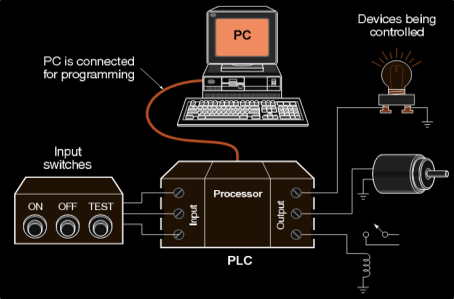
A PLC generally contains four main sections: A power supply, an input part, a Processor (CPU/brain) part, and an output part.

Power Supply

The power supply is the one that gives energy to the CPU. It has a DC-DC converter that takes the normal line voltage to 24VDC to provide DC power to the rest of the connected devices. 

Input Section

This is where the PLC receives signals from the outside world, just like your desktop PC when you click a mouse or when you type something using your keyboard (mouse and keyboard are the inputs).

 But when it comes to a PLC input can be sensors, switches, buttons, or any device that sends information (for example, a temperature sensor or a start button).

Processor (CPU/Brain)

As aforementioned, the CPU is the brain of the PLC. It reads the inputs, processes them according to the program written by the user, and decides/controls what the outputs should do.

Programming Device

Usually it’s a normal PC; after programming using special software, the instructions are loaded to the PLC CPU memory. Then the PLC will be ready to execute these instructions to get the desired output signal.

Output Section

Devices such as motors, lamps, valves, or relays are located at the output section of a PLC.

They are also known by the name of actuators. The CPU tells them when to turn ON or OFF or when to act. 

Note that the devices connected to the input section, as well as those that are connected to the output section, are in general called the field devices.

Types of PLC

PLCs are mainly categorized into two types based on their hardware design: Compact (or Fixed) PLCs and Modular PLCs. 

Although as the technology keeps growing, other classifications have emerged such as Nano/Micro/Mini PLC, safety PLCs and Soft PLCs.

Compact (Fixed) PLC

  • All components (CPU, power supply, and I/O modules) are housed in a single unit.
  • Pros: Simple and low cost.
  • Cons: Limited expansion options.
  • Use: Small, dedicated automation tasks.

Modular PLC

  • Components are separate: CPU, I/O modules, and power supply are installed in racks.
  • Pros: Scalable and flexible.
  • Cons: More expensive and larger.
  • Use: Medium- to large-scale automation.

Other Classifications

  • Nano/Micro/Mini PLCs: These are small in size and have low processing power of the PLC, typically used in very small-scale operations.
  • Safety PLCs: Designed with enhanced safety features to control hazardous processes and protect personnel.
  • Soft PLCs: A general-purpose computer that runs PLC software and functions as a PLC, rather than using a dedicated hardware controller.

Sinking and Sourcing in PLCs

In PLCs, the terms “sinking” and “sourcing” are very important when it comes to physical connection of the PLCs with the input/output (I/O) devices.

They describe how current flows between the PLC I/O terminals and the field devices (sensors, switches, actuators). 

So, during sourcing, current goes from the PLC to the field device, and during sinking, current flows from the field device to the PLC.

Please refer to the diagram shown below for more understanding of these important terminologies. 

The difference between sink and source

Introduction to PLC Programming Languages

For the PLC brain (CPU) to do its job, it needs to be programmed with some instructions (Programming language). A PLC brain understands/talks the following languages.

Ladder Diagram (LD)

This is a graphical language equivalent to traditional electrical relay logic diagrams. It uses contacts as inputs, such as switches, sensors, and coils, and outputs, such as motors and lamps, to represent logical operations.

Function Block Diagram (FBD)

This is also a graphical language that uses predefined function blocks to represent logical functions.

The blocks can be fully functioning components such as timers, counters, and PID controllers, among other components. 

Structured Text (ST)

This language has the ability to use the standard low-level programming instructions like IF-THEN-ELSE, FOR loops, and WHILE loops.

Instruction List (IL)

This also has low-level capability, but it’s a text-based, assembly-like language that uses instructions like LD for load and AND for logical AND.

Sequential Function Chart (SFC)

A graphical language used to organize and structure a PLC program into a sequence of steps, transitions, and actions. 

Main PLC Brands

There are brands like Delta and Noark that are good choices if you have a small project.

But the main brands of PLCs include Siemens, Rockwell Automation (Allen-Bradley), Schneider Electric, Mitsubishi Electric, Omron, and ABB. 

These companies are known for offering innovative, reliable, and extensive ranges of products for industrial automation, though specific brand choice depends on application needs, budget, and industry focus. 

Key Takeaways: What is the PLC?

This article addressed a brief history of a PLC, how a PLC is composed, and types of PLCs.

Furthermore, it discussed how many languages PLCs speak and finally the ways to connect a PLC to the load in a correct manner.

As a result, it can be proved that PLC is indeed the brain of industrial automation. Furthermore, understanding concepts like sinking and sourcing also helps to ensure proper and safe connections between the PLC and field devices, as well as the field personnel/operator. 

If you’re just starting out, remember: learning PLCs is a step-by-step journey, but mastering them opens the door to countless opportunities in automation and control.

Want to keep learning more about the PLCs? Please do not hesitate to read our next article for more beginner-friendly guides.

FAQ: What is a PLC?

What is a PLC and how does it work?

A PLC, which stands for Programmable Logic Controller, is an industrial computer that acts as the “brain” that processes input to obtain the desired/controlled output, such as induction motor speed and industrial robot arm position, among others.

Why were PLCs invented?

Initially, industrial automation relied on banks of hard-wired relays—complex, bulky, and difficult to modify.

PLCs were developed to replace these systems, offering flexibility through programmable logic. 

Who invented the first PLC?

The first PLC (Modicon-084) was created by Richard Morley in 1968, and his team at Bedford Associates. It was specifically made for General Motors.

What are the main components of a PLC?

A PLC generally contains four main sections: an input part, a Processor (CPU/brain) part, and the output part.It may also contain a power source, or you can just add it yourself.

What programming languages are used in PLCs?

PLCs are programmed using IEC 61131-3 standard languages, including:Ladder Diagram (LD): which is a graphical format resembling a relay circuit. Function Block Diagram (FBD): uses reusable logic blocks.

Structured Text (ST): textual, high-level logic with IF/THEN/LOOP structures. Instruction List (IL): low-level, assembly-like text. Sequential Function Chart (SFC): flowchart-like steps and transitions.

Where can I use a PLC?

PLCs are mostly used in industries and control systems, including: Manufacturing lines, automotive assembly, packaging, and industrial robotics. Also, in building systems like elevators, traffic lights, and automatic doors.

How do I choose the right PLC?

This depends on your application requirements, such as the required number of inputs/outputs, Types of inputs/outputs (the latter could be either digital or analog), and the processing capability of a CPU, among other factors. 

What are the steps to learn PLC programming?

Start with beginner-friendly projects like switching the diode ON and OFF then proceed with traffic lights or sump pumps.

Using vendor learning platforms such as Siemens S7-1200 or Rockwell CompactLogix is often recommended for ease of programming.

How does a PLC read sensors?

A PLC reads sensors through its input modules. The sensors send signals to the input modules, which convert them into digital data for the CPU (brain) to manipulate them before sending them to the output modules.

Which of the PLC programming languages is easier to learn for PLC?

Ladder Diagram (LD) is generally considered the easiest programming language to learn for PLCs, especially for beginners with a background in electrical circuits or relay logic.

So, it is a graphical language equivalent to traditional electrical relay logic diagrams. 

What Is Industrial Automation?

Industrial automation is the use of computer‑based control systems, or sometimes even analog ones. It’s about letting machines manage themselves with minimal human intervention.
It involves using machines, robots, and software to perform tasks that usually back then were performed by humans.

Core Components & How It Works

At the core of industrial automation systems are devices and technologies that monitor, control, and execute tasks, replacing or reducing the need for human intervention.

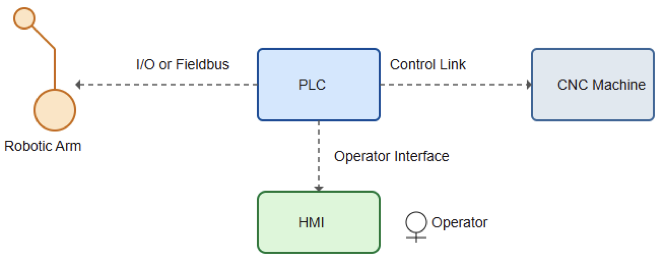
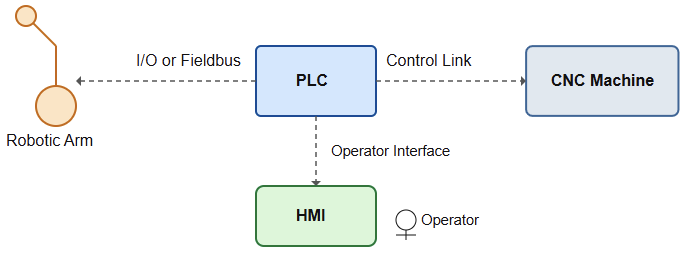
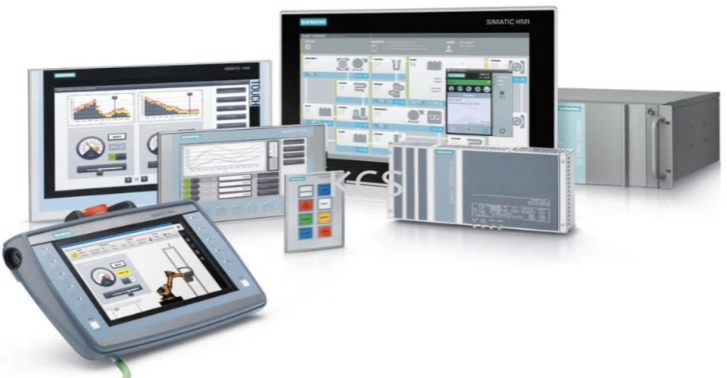
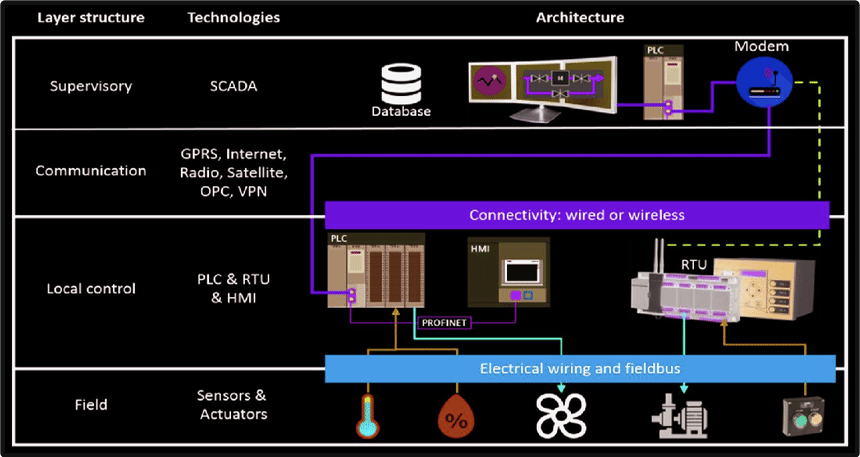
This includes hardware like PLCs (Programmable Logic Controllers), sensors, actuators, robotic arms, HMIs (Human-Machine Interfaces), and software systems such as SCADA (Supervisory Control and Data Acquisition) and DCS (Distributed Control Systems).

PLCs are industrial-grade computers that take input from sensors (such as temperature, pressure, or position sensors), execute programmed logic, and drive actuators (like valves, motors, or lights) accordingly.

The control strategy can be simple—such as turning off a motor when a temperature threshold is reached—or complex, such as coordinating an entire assembly line with hundreds of input/output points.

This is where SCADA systems or DCS platforms come in: they gather data from multiple PLCs or controllers, offer visualization dashboards, allow operators to supervise and control processes remotely, and provide historical logging for quality assurance and diagnostics.

Another major component is CAD/CAM (Computer-Aided Design and Manufacturing), which not only designs parts but also feeds into CNC (Computer Numerical Control) machines and automation paths. This seamless integration is a hallmark of advanced automation.

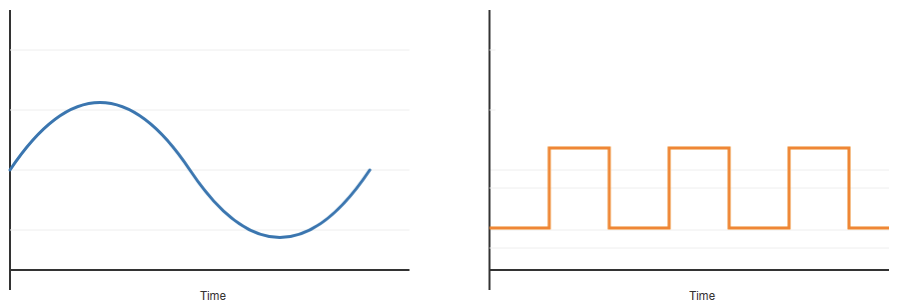
This control can be analog (e.g., pneumatic regulators, PID loops using analog signals) or digital (as in PLCs).

The ultimate goal remains the same: orchestrate all system components to operate autonomously and precisely.

Types of Industrial Automation

Industrial automation isn’t one-size-fits-all. Depending on production needs, scale, and complexity, different types of automation systems are implemented. These fall into four primary categories:

Fixed (Hard) Automation

This type is designed for high-volume, repetitive tasks. The machinery is configured for a specific process and cannot be easily changed.

Examples include automotive assembly lines or bottling plants. Fixed automation is known for high throughput but lacks flexibility.

Programmable Automation

Here, machinery can be reprogrammed to accommodate changes in product design or production sequence.

It’s widely used in batch production, for example, in chemical or food industries. Reprogramming takes time and cost, but it offers more adaptability than fixed automation.

Flexible (Soft) Automation

Flexible systems, often found in CNC machining and robotic systems, can easily switch between different product types.

The transition requires little to no downtime. This is where robots with vision systems, AGVs (Automated Guided Vehicles), and flexible manufacturing systems shine.

Integrated Automation

This is the future-focused approach combining all levels, from field devices to enterprise resource planning (ERP).

It leverages digital communication, centralized control, and software platforms like MES (Manufacturing Execution Systems) and IIoT (Industrial Internet of Things).

Integrated automation enables real-time data-driven decision-making, predictive maintenance, and seamless cross-system interaction.

Each automation type reflects a different degree of self-management and adaptability. The more integrated and flexible the system, the closer we get to fully autonomous industrial environments.

Benefits & Impact

Industrial automation makes machines run themselves, reducing human involvement to the essentials.
It enhances accuracy, efficiency, productivity, and safety while lowering operational costs.
It will increase accuracy, efficiency, productivity, and safety, and at the same time, we reduce the operational cost for our factories.
Automation frees workers from dangerous or monotonous tasks, enabling them to focus on higher‑value roles.

Enabling Trends: Industry 4.0 & IIoT

Industrial automation is being revolutionized by the Fourth Industrial Revolution, Industry 4.0, with smart devices, M2M communication, AI, and cloud integration.
Concepts like IIoT, digital twins, machine learning, and industrial robotics make production smarter, safer, and more adaptable.

Safety, Challenges & Future Outlook

Using PICs and SCADA in safety‑critical environments requires robust protocols and regulatory compliance. Cybersecurity risks (e.g., PLC vulnerabilities) are significant.

High upfront costs and complexity of integration can be barriers, yet trends like flexible and integrated automation systems lower these hurdles.

Looking ahead, expect growth in AI-driven automation, digital twin simulations, and fully lights-out smart factories.

FAQ: What Is Industrial Automation?

What is an example of industrial automation?

A classic example of industrial automation is a robotic assembly line in an automotive plant.

Robots handle tasks like welding, painting, or assembling parts with minimal human oversight.

These systems rely on PLCs, sensors, and actuators to perform repetitive actions with speed and precision.

What is automation in the industry?

Automation in the industry refers to the use of machines, software, and control systems to perform tasks that traditionally required human labor.

This includes monitoring processes, adjusting equipment, handling materials, and even making decisions based on real-time data.

What are the four types of industrial automation?

The four primary types of industrial automation are:

  1. Fixed Automation – High-volume, repetitive tasks (e.g., vehicle assembly lines).
  2. Programmable Automation – Customizable control systems for batch production.
  3. Flexible Automation – Rapidly adjustable systems for varying products.
  4. Integrated Automation—Fully networked and data-driven production environments.

Each of these represents a different approach to reducing manual labor and enhancing production flexibility.

These systems scale from rigid to highly adaptive setups depending on the industry’s needs.

What is a PLC in automation?

A PLC (Programmable Logic Controller) is a rugged industrial computer used to automate processes by monitoring inputs and controlling outputs based on a custom logic program.

They’re essential in managing repetitive tasks like turning motors on/off, adjusting valves, or reading sensor signals.

In practical use, “the use of PLC” is one of the most fundamental tools in industrial automation.

These controllers provide the decision-making brain of the system, ensuring operations run smoothly and according to programmed logic—even in harsh industrial environments.

Conclusion: What Is Industrial Automation?

Industrial automation means letting machines self-manage critical processes. It combines PLCs, robots, sensors, control systems and software to deliver safer, more accurate, efficient, and lower-cost operations.

As IIoT, robotics and AI advance, automation will only deepen its impact across industries.

How To Design A Gas Detection System For Boiler Rooms

We commonly use natural gas for heating in industrial complexes; undetected gas leaks or incomplete combustion could cause an explosive hazard or an influx of carbon monoxide, resulting in loss of life, structural damage, or expensive waste of fuel.

Why do we need a gas detection system for boiler rooms?

The boiler room is not frequently occupied; this may lead to the leak remaining undetected.

A continuous gas monitoring and detection system will provide early warning of a gas leak and prevent loss of life and material.

What gases can be found in boiler rooms?

Natural gas

Natural gas is used in the industry for heating, and undetected leaks can be deadly. Nearly half of the natural gas is methane.

Since natural gas is lighter than air, it will immediately rise to the ceiling or roof space of the boiler room.

Carbon Monoxide

Carbon monoxide is the result of the incomplete burning of hydrocarbon fuels such as wood products, natural gas, fuel oil, and coal.

For this reason, carbon monoxide and natural gas monitoring are essential for gas detection in boiler rooms.

Components of Boiler room gas detection system

The boiler room’s gas detection system consists of sensors that are strategically placed to detect natural gas and carbon monoxide, with a controller that will have relays or that can connect to an external system.

Gas sensors

I recommend selecting catalytic bead sensors for boiler room applications. Catalytic bead sensors are less prone to false alarms than solid-state or semiconductor sensors.

Catalytic bead sensors have a life expectancy of 3 to 5 years, sometimes even more depending on how well you take care of them and environmental factors like temperature and humidity.

Boiler rooms are considered safe areas, i.e., you do not need explosion-proof sensors, but it is recommended to use them, and if possible, use class I Div I sensors.

My recommendation for this would be Sensepoint XCD or E3point, both manufactured by Honeywell.

Location of the sensors

Natural gas is lighter than air, which means the gas will concentrate near the roof, so my recommendation would be to place at least one sensor on the roof (typically one foot from the roof), and the rest of the sensors should be located over potential leak areas.

This includes

  • The gas burner assembly.
  • The gas train assembly.
  • The pressure boosters (if boosted).
  • The gas shut-off valve.
  • The combustion air intake.
  • The gas meter.

Depending on the size of the boiler room, the rule of thumb is to install one sensor for each 25 feet of radius.

The controller

It is recommended to have at least one controller in the boiler room; as its name suggests, the controller will be the main brain of the gas detection system. You can set it up to shut down the valves, activate relays, or activate the horn and strobe.

Here are my recommendations when it comes to selecting a controller for the boiler room gas detection system.

Location of the controller

I recommend having a controller outside the boiler room so that people can see what is going on in the boiler room before they enter it.

Compatible with the sensors

I have seen people buy sensors from one manufacturer and the controller from a different one, or the same manufacturer, but they are incompatible.

Make sure the sensors you have can communicate with the controller; if you have 4-20 mA sensors, you need a controller that can take 4-20 mA input; if the sensors are Modbus, make sure the controller can accept Modbus inputs.

The controller must have relays

Depending on what you want to do, you may need a controller with relays; this can be to shut down a control valve, start or stop a fan, process, etc.

Power Supply

Most controllers run on 24 VDC; make sure that you have the power supply that can help the sensors and the controller.

Visible Display

I recommend a controller that has a visible display so that people can be able to see the reading in real-time.

Integration Options

Depending on whether the boiler room gas detection system is stand-alone or is integrated with a larger system.

If you are going to connect it to a building management system (BMS), you probably need a controller that has BACnet (Building Automation Control Network) protocol as an output.

FAQ: Gas Detection System For Boiler Rooms

What detector do you need for a boiler room?

You need two types of detectors for carbon monoxide and flammable gases (LEL).

How many sensors do I need for a boiler room?

It depends on how many potential leaks there are; I recommend one per potential leak. Make sure the sensors are placed near the potential leak.

Is a carbon monoxide detector required in a boiler room?

Each boiler room containing one or more boilers from which carbon monoxide can be produced shall be equipped with a carbon monoxide detector with a manual reset.

Key takeaways: Gas Detection System For Boiler Rooms

Most industries, including boiler rooms, use natural gas for heating; this poses the danger of explosion due to the natural gas leak, or the unburned gases can turn into carbon monoxide.

To design a gas detection system for boiler rooms, you need to consider sensors that will detect methane (LEL sensors) and carbon monoxide.

I recommend using electrochemical sensors because they have an expected life of 3 to 5 years and produce fewer false alarms.

You need to place the sensors near the position where there is more possibility of a leak and the controller outside the boiler room where it is visible so that people can see the reading before they enter the boiler room.

Bimetallic Strip – Everything You Need To Know

Bimetallic strips are an ingenious invention that harnesses the different expansion rates of two metals to perform a variety of tasks.

At its core, a bimetallic strip is made by bonding two strips of different metals together. These metals expand at different rates when heated, causing the strip to bend.

This simple principle has given rise to numerous practical applications.

The history of bimetallic strips

The story of bimetallic strips begins with John Harrison, an 18th-century clockmaker who revolutionized timekeeping.

By using bimetallic strips in his marine chronometers, Harrison was able to correct the timekeeping errors caused by temperature fluctuations, which was a game-changer for navigation at sea.

Fast forward to today, and bimetallic strips are everywhere. You’ll find them in thermostats, where they help control heating and cooling systems, and in electrical devices, acting as a safeguard against overheating.

In industrial settings, they’re crucial for various sensors and automatic controls, ensuring machines operate smoothly and safely.

The choice of metals is crucial—typically, a high-expansion metal like brass or copper is paired with a low-expansion metal like steel.

This combination creates the desired thermal sensitivity, making the strip bend predictably in response to temperature changes.

In essence, bimetallic strips are a brilliant blend of materials science and thermal engineering.

Their straightforward design and reliable performance make them a cornerstone in both everyday gadgets and sophisticated industrial systems.

What Is A Bimetallic Strip?

A bimetallic strip is a fascinating little device composed of two different types of metals bonded together.

These metals have different coefficients of thermal expansion, meaning they expand and contract at different rates when exposed to temperature changes.

When the temperature changes, one metal expands or contracts more than the other, causing the strip to bend or curve.

This bending action can be used to measure temperature changes or to act as a switch in various applications.

You’ll often find bimetallic strips in thermostats, where they help control heating and cooling systems by responding to temperature changes.

They’re also used in electrical devices as thermal protectors, shutting down circuits when things get too hot.

In industrial settings, they’re crucial components of sensors and control systems, ensuring safe and efficient operation.

In essence, a bimetallic strip is a simple yet incredibly effective way to harness the physical properties of metals for practical applications.

Who Invented The Bimetallic Strip?

The bimetallic strip was invented by John Harrison, an English clockmaker, in the mid-18th century.

Harrison developed the bimetallic strip for his third marine chronometer (H3) in 1759 to compensate for temperature-induced changes in the balance spring.

This invention significantly improved the accuracy of timekeeping, which was crucial for navigation at sea.

How Does a Bimetallic Strip Work?

A bimetallic strip operates on a simple yet effective principle that leverages the differing thermal expansion rates of two metals.

Here’s a detailed explanation of how it works:

Composition

A bimetallic strip is made by bonding two thin strips of different metals together. These metals are chosen because they have distinct coefficients of thermal expansion, meaning they expand and contract at different rates when exposed to temperature changes.

Thermal Expansion

When the temperature changes, each metal expands or contracts by a different amount. If the temperature increases, the metal with the higher coefficient of thermal expansion (let’s call it Metal A) will expand more than the metal with the lower coefficient (Metal B). Conversely, if the temperature decreases, Metal A will contract more than Metal B.

Bending Action

Because Metal A and Metal B are bonded together and can’t move independently, this difference in expansion rates causes the bimetallic strip to bend. When heated, the strip bends towards the metal with the lower coefficient of thermal expansion (Metal B). When cooled, it bends towards the metal with a higher coefficient of thermal expansion (Metal A).

What is a Bimetallic Strip Used For?

Bimetallic strips are incredibly versatile and find application in a wide range of fields due to their ability to convert temperature changes into mechanical movement. Here are some of the primary uses:

Thermostats

One of the most common applications of bimetallic strips is in thermostats. In these devices, the strip bends in response to temperature changes, either closing or opening an electrical circuit.

This action regulates heating and cooling systems in homes, appliances, and industrial equipment, maintaining a desired temperature.

Thermal Switches

In electrical devices, bimetallic strips serve as thermal protectors. When a device overheats, the strip bends, breaking the circuit and preventing further heating. This helps in avoiding damage to the device or potential fire hazards.

Thermometers

Bimetallic strips are used in dial thermometers, where the bending of the strip is converted into a rotary motion that moves a needle across a scale to indicate temperature. These thermometers are simple, durable, and do not require batteries or external power.

Industrial Controls

In industrial settings, bimetallic strips are integral to various sensors and control systems. They help in monitoring and regulating the temperature of machinery and processes, ensuring operational safety and efficiency.

Clocks and Chronometers

The invention of bimetallic strip was invented by John Harrison primarily for use in marine chronometers to compensate for temperature-induced errors in timekeeping.

This application is still relevant in precision instruments where temperature stability is crucial.

Fire Alarms

Some fire alarms use bimetallic strips to detect heat. When a certain temperature is reached, the strip bends and triggers the alarm, alerting occupants to the presence of a fire.

Automotive Applications

Bimetallic strips are used in various automotive components, such as temperature sensors for engine management systems, where they help maintain optimal performance and prevent overheating.

Household Appliances

Common household appliances like irons, ovens, and toasters use bimetallic strips to regulate temperature.

The strip ensures the appliance maintains a consistent temperature, preventing overheating and ensuring safety.

Electrical Overcurrent Protection

In circuit breakers, bimetallic strips are used to detect overcurrent conditions. When excessive current flows through the circuit, the strip heats up, bends, and trips the breaker, cutting off the electrical supply to prevent damage.

What Happens When A Bimetallic Strip Is Heated?

When a bimetallic strip is heated, an interesting process occurs due to the different thermal expansion rates of the two metals bonded together. Here’s what happens:

Differential Expansion

Each metal in the strip has a different coefficient of thermal expansion, meaning it expands at different rates when subjected to heat.

Typically, one metal (let’s call it Metal A) has a higher coefficient of expansion than the other metal (Metal B).

Bending or Curving

As the bimetallic strip is heated, Metal A expands more than Metal B. Since these two metals are rigidly bonded, the difference in expansion rates causes the strip to bend or curve. The strip bends towards the metal with the lower coefficient of thermal expansion (Metal B).

Mechanical Movement

The bending of the strip can be harnessed to perform mechanical work. For example, in a thermostat, the bending action of the strip can open or close an electrical contact, thereby turning heating or cooling systems on or off.

Thermal Sensitivity

The degree of bending is proportional to the temperature change. This property allows the bimetallic strip to be used as a precise temperature-sensitive device in various applications.

Which Is The Principle On Which The Bimetallic Strip Works?

The bimetallic strip operates on the principle of differential thermal expansion. When two metals with different coefficients of thermal expansion are bonded together and subjected to temperature changes, they expand or contract at different rates.

This difference in expansion causes the strip to bend or curve, as one metal expands or contracts more than the other.

This bending motion, which is directly proportional to the temperature change, is harnessed for various practical applications such as temperature measurement and control, acting as a switch in devices like thermostats and thermal protectors.

What Is The Principle Of Bimetallic Expansion?

The principle of bimetallic expansion is based on the concept that different metals expand at different rates when exposed to temperature changes.

When two metals with distinct coefficients of thermal expansion are bonded together into a strip, any temperature change will cause them to expand or contract at different rates.

This differential expansion leads to the bending or curving of the strip because one metal elongates more than the other.

This bending action is utilized in various practical applications, such as in thermostats, thermal switches, and temperature gauges, to measure and respond to temperature changes efficiently.

Which Metal Expands More In A Bimetallic Strip?

In a bimetallic strip, the metal that expands more when heated is the one with the higher coefficient of thermal expansion.

Common examples of such metals include brass and copper, which typically expand more than metals like steel or Invar.

The difference in expansion rates between the two metals is what causes the bimetallic strip to bend or curve when subjected to temperature changes.

Conclusion

Bimetallic strips exemplify the elegant synergy between materials science and thermal engineering.

By leveraging the differing expansion rates of two bonded metals, these strips convert temperature changes into mechanical movement.

This principle of differential thermal expansion has led to numerous practical applications, ranging from household thermostats and appliances to industrial controls and precision instruments.

Bimetallic strips are fundamental components in many devices, ensuring reliable temperature measurement and control.

Their simplicity, reliability, and effectiveness make them a cornerstone of modern technology, continuing to play a vital role in our everyday lives and various industries.

4-20 mA Current Loop

The 4-20 mA current loop remains one of the most dominant types of analog output in the industry today.

In this article I will look at the history of the 4-20 mA loop, why it is widely used in industry automation, and its advantages and disadvantages.

What is a 4-20 mA current loop?

The 4-20 mA current loop especially refers to the wire connecting the sensor to a receiver that receives the 420 mA signal and then returns to the transmitter. 

The history of 4-20 mA current loop

At the beginning of the industry automation, most mechanical devices were controlled by a pneumatic signal; these systems were costly, bulkier, and difficult to repair. The control signal used back then was 3-15 psi.

With the huge development of electronics in the 1950s, electronic devices became cheaper, and eventually, the old pneumatic 3-15 psi systems were replaced by the analog controllers that used the 4-20 mA.

Why 4-20 and why not 0-20 mA?

Now we know that the control signal that was picked was 4-20 mA, the question I often get is why 4- 20 mA and not 0-20 mA? The simple answer is that there was a problem with the dead zero.

What is a dead zero issue?

A dead zero is when you start the lowest signal with 0mA, and the controller will not be able to differentiate if the 0mA is because the sensor detects the lowest signal value or there is an open circuit.

If you have an H2S sensor that detects 0 to 100 ppm, it will show 0 mA when there is 0 ppm of H2S, and it will also show 0 mA when there is an open circuit in the loop. This will have a huge impact on the process control.

How do you solve a dead zero issue?

The solution was simple: start with a number above zero; in the same example, if the sensor reads zero, it will send 4 mA, and if there is an open circuit, it will send a 0 mA signal. The problem is solved.

Why 4 mA?

We said above that to solve the dead zero issue, there was a need to start the value at a value greater than zero, the next question is, why 4ma and not another value? Here is the answer.

Electronic chips require at least 3mA to work

To move from mechanical controllers to electronic ones, electronic chips were introduced. Those chips require a minimum of 3 mA of current to function, so a margin of 4 mA is taken as a reference.

The 20% bias

The original control signal was 3-15 psi; 20% of 15 is 3, and 20% of 20 mA is 4 mA.

Why 20mA?

There are 3 reasons why 20 mA was picked:

The human heart can withstand up to 30 mA.

20 mA is used as the maximum because the human heart can withstand up to 30 mA of current only. so, from a safety point of view, 20 mA is chosen.

1:5 rule

The 4-20 mA was designed to replace the old 3-15 psi, and since most instruments at the time were using this control signal, there was a need to design the new signal that would follow the same pattern.

Lineality 

With the current signal being linear, it is easier to design and implement the control system using the 4-20 mA signal.

Easy to design

Most industrial transmitters are powered with 24 V, and since the signal obeys Ohm’s law, V=IR, it makes it easier to design devices that can be connected to the 4-20 mA loop.

Simple calculations

Having a signal that ranges from 4-20 mA makes it very easy to calculate the expected values. if we have a sensor that detects the 0 to 100 range, here are the estimated current values.

0-4 mA

25-8 mA

50-12 mA

75-16 mA

100-20 mA

It is that simple.

Simple conversion to 1-5V

For other elements of industry automation to interpret the signal, there is a need to convert it to a digital signal.

Most ADCs (Analog-to-Digital Converters) use voltage to convert the signal; by using the precision 250-ohm resistor, it makes it easier to convert the analog signal to a digital one by using Ohm’s law, V=IR.

Types of 4-20 mA current loop

There are 4 types of 4-20 mA current loops, where the two-wire loop version is by far the most common.

There is a three-wire 4-20 mA source, 3-wire 4-20 mA sinks, and four-wire 4-20 mA variants that are similar in their fundamental working principle.

I explain the difference between them in this article here.

Advantages of 4-20 mA current loop

Worldwide industry standard

Since it is easier to implement and design control loops with a 4-20 mA signal, it is widely used in many industrial automation industries.

Easy to connect and configure

The 4-20 mA loop is easy to design, configure, and wire; you do not need a lot of training to wire or configure it; hence, it is used in most applications.

Less sensitive to electronic noise

Electronic noise can affect the information the cables are carrying since the signal is transported as a current, which is less sensitive to electronic noises than voltage.

Fault detection using live zero

Since the signal starts at 4 mA, it is very easy to know if there is a fault in the loop; if we receive 0 mA, we know there is a fault somewhere.

You can use a simple multimeter to detect a fault

Since the loop will carry current, you can measure the current by using a simple $10 multimeter; this will reduce the diagnostic time and fault detection cost.

Disadvantages of the 4-20 loop

There are a few disadvantages to using the 4-20 mA loop; for me, these two are the main ones.

The current may introduce a magnetic field

The current may introduce magnetic fields and crosstalk to the parallel cables; this can be solved by using the twisted wire cable.

One pair of cables can only carry one process

This is huge. When you design a control loop using a 4-20 mA signal, you need to know that one loop can only have one variable, so if you have many loops, you will need more cables, and this will increase the cost of installation and eventually make the fault diagnostic more complicated.

Conclusion

We took a look at the famous 4-20 mA current loop. We looked at the history of the 4-20 mA loop, why it is widely used in industry automation, and its advantages and disadvantages.

If you have anything to add to this or a question, please leave your comment below. Thank you for reading.