Differences between SCADA, HMI, and PLC

In industrial automation, SCADA, HMI, and PLC are fundamental concepts that engineers, technicians, and operators encounter on a daily basis.

Even though these three terms are often mentioned together and sometimes mistakenly used interchangeably, they each serve a distinct and critical purpose.

 A PLC is the hardware that performs the direct control actions. An HMI, is the user interface that gives the operator the ability to interact with monitor, and control a process locally. 

Finally, SCADA system is a larger, software-driven solution that oversees entire operations or even multiple geographically spread sites from one centralized location.

This article will explore the specific functions of each of these components, explain how they interact with each other, and clearly outline their main differences in order to remove common confusion.

Programmable Logic Controller (PLC)

A PLC is essentially a rugged, industrial-grade computer that has been specially designed to survive and perform reliably in harsh factory environments. It is often referred to as the “brain” at the machine or process level. 

A PLC continuously receives information from various sensors and input devices. It executes a stored program that is based on logical decisions.

Finally, controls outputs that drive actuators, motors, lights, pumps, or other mechanical devices.

What is a PLC and how does it work?

Differences between SCADA, HMI, and PLC

Functionality of a PLC

Real-time control

The primary role of a PLC is to provide reliable, consistent, and high-speed control of a specific process.

It executes its program in what is known as a scan cycle – a rapid, repetitive loop where the PLC reads inputs, processes the program, and updates outputs almost instantaneously.

Input processing

A PLC is able to handle both discrete and analog signals. Discrete signals are simple on/off inputs from devices such as push buttons or limit switches.

Analog signals, however, represent a range of values – for example, temperature readings, fluid levels, or pressure signals from sensors.

Output control

Once the logic is executed, the PLC sends precise commands to output devices. This may mean turning on a warning light, starting or stopping a motor, opening or closing a valve, or energizing a solenoid.

Programming flexibility

PLCs are programmed using specialized software provided by manufacturers. While ladder logic remains the most common programming language due to its simplicity and resemblance to electrical relay schematics, modern PLCs also support function block diagrams, structured text, and other languages.

Key Characteristics of a PLC

Hardware-based reliability

A PLC is a physical device made up of a central processing unit (CPU), memory for program storage, and input/output (I/O) modules that allow communication with field devices.

Localized scope of control

Typically, a single PLC is responsible for controlling one machine or a localized section of a process.

For example, one PLC may be dedicated to a packaging machine, while another manages a conveyor system.

Industrial-grade robustness

PLCs are designed to resist vibration, dust, heat, electrical noise, and other common hazards found in industrial settings.

This makes them far more durable than standard commercial computers.

Minimal data storage

Unlike large computer systems, PLCs are optimized for real-time control. They do not usually store large amounts of historical data because their main role is to execute tasks quickly and accurately.

Human-Machine Interface (HMI)

An HMI is the user-friendly face of an automation system. It is a visual interface that represents the status of a machine or process in a way that is clear and easy to understand for the operator. 

In other words, it acts as the communication bridge between humans and industrial equipment.

HMIs come in many different forms, such as touchscreens mounted on machines, physical control panels with buttons and indicators, or software running on a computer monitor.

Functionality of an HMI

Visualization

An HMI translates raw data from the PLC into a graphical, real-time display. Operators can see animations, charts, graphs, and diagrams that reflect the current condition of equipment.

For example, an HMI might show the exact level of liquid in a tank through a virtual gauge.

Control and operation

Beyond monitoring, an HMI gives operators the ability to control processes. Through on-screen buttons, sliders, and menus, they can start or stop machines, adjust speed, or modify setpoints and process parameters.

Alarms and diagnostics

A major function of HMIs is providing alerts whenever faults or abnormal conditions occur.

An operator might see a pop-up notification, hear an alarm sound, or view diagnostic data that helps identify the root cause of a malfunction.

Data presentation

While not as comprehensive as SCADA, an HMI focuses on displaying relevant data for a localized process or a specific machine.

This makes it easier for on-site personnel to react quickly and manage tasks without needing to rely on higher-level systems.

Key Characteristics of an HMI

Interface for interaction

The core purpose of an HMI is to provide a smooth, intuitive interface that enables humans to interact with machines.

Without an HMI, operators would have to rely only on physical switches and indicators.

Localized scope

An HMI is usually linked to one machine or process, giving operators a direct, local view.

Combination of software and hardware

An HMI setup consists of both the software that creates the graphical display and the physical hardware such as screens, panels, or keyboards that operators use.

Part of SCADA systems

While an HMI can function independently, it can also form part of a larger SCADA system where it acts as the local operator terminal.

Supervisory Control and Data Acquisition (SCADA)

SCADA systems represent the highest layer of industrial automation. Unlike PLCs, which control specific processes, or HMIs, which display localized information, SCADA provides a comprehensive and centralized overview of entire plants or even geographically distributed systems.

SCADA integrates both software and hardware to ensure supervisory monitoring and control across multiple processes.

Functionality of SCADA

Supervisory control

SCADA enables operators in a central control room to oversee entire production lines, utilities, or facilities.

They can send commands remotely to adjust operations without physically being near the machine.

Data acquisition

SCADA collects vast amounts of data from many different PLCs, RTUs (Remote Terminal Units), HMIs, and other field devices.

It continuously logs this data, which is later used for analysis and optimization.

Reporting and analysis

With its ability to generate detailed reports, trend charts, and historical logs, SCADA helps managers and engineers detect inefficiencies, predict maintenance needs, and identify long-term patterns in system behavior.

Alarm management

SCADA systems feature advanced alarm mechanisms that notify operators of critical events across the entire operation.

These alarms ensure that attention is quickly directed to the most urgent issues.

Key Characteristics of SCADA

System-wide scope

SCADA systems extend across multiple machines, entire production lines, or even sites that are miles apart, connected via communication networks.

Primarily software-based

Although SCADA interacts with hardware, its supervisory functions are mainly handled through powerful software platforms that aggregate and visualize massive amounts of data.

Centralized control

SCADA provides a command center for operators to manage and monitor everything in one place.

Historical data storage

Unlike PLCs, SCADA is designed for large-scale data storage. It can keep years of operational data, which is invaluable for performance tracking, compliance reporting, and predictive analysis.

How They Work Together: A Layered Approach

In real-world industrial automation, SCADA, HMI, and PLCs do not work in isolation.

Instead, they operate in a hierarchical and layered structure that ensures efficiency, reliability, and clarity in operations.

The PLC (Control Layer)


At the lowest level, PLCs are directly connected to the physical equipment. They react in real-time to input signals and execute their pre-programmed logic.

For instance, if a sensor on a conveyor belt detects a passing product, the PLC may trigger a robotic arm to pick it up.

The HMI (Interface Layer)

Sitting above the PLC, the HMI gives operators an easy way to understand and interact with what the PLC is doing.

For example, an HMI screen might show the conveyor speed or the robotic arm status, and it allows the operator to make quick local changes by pressing on-screen buttons.

The SCADA (Supervisory Layer)

At the highest level, SCADA communicates with all PLCs and HMIs spread across the plant or different sites.

It gathers the data into a central database, allowing operators in a control room to monitor everything.

If an alarm is triggered by one of the PLCs, the SCADA system logs it, displays it, and ensures the operator can take timely action.

    Comparison of SCADA, HMI, and PLC

    FeaturePLCHMISCADA
    Primary FunctionExecutes pre-programmed logic for a specific, localized task.Provides a visual interface for human-machine interaction.Manages and monitors an entire industrial process or multiple sites.
    Scope of ControlControls a single machine or process.Displays and controls a machine or process locally.Oversees the entire operation from a central point.
    Nature of DeviceHardware-based industrial computer.User interface hardware or software.Software system that interacts with hardware.
    Data HandlingProcesses real-time signals; minimal storage.Presents real-time localized data.Collects, stores, and analyzes massive data sets.
    User InteractionNot intended for direct human use.Direct operator interface.Provides dashboards for supervisory control.
    Key OutputExecutes physical control actions.Provides real-time feedback and manual inputs.Generates reports, alarms, and a central overview.
    DependencyCan run independently but often sends data to SCADA.Requires PLC/SCADA to function.Relies on PLCs and field devices for input.
    Core PurposeFast, repeatable execution of logic.Easy local operation and monitoring.High-level monitoring, optimization, and decision support.

    Key Takeaways: Differences between SCADA, HMI, and PLC

    In summary, SCADA, HMI, and PLC are three vital components of industrial automation, but they each operate at different levels of the control hierarchy.

    The PLC is the workhorse at the ground level, carrying out the detailed, real-time control logic for specific machines and processes. 

    The HMI provides the operator with immediate visual feedback and local control, making the operator’s job more intuitive and efficient.

    Finally, SCADA sits at the supervisory layer, collecting, aggregating, and analyzing datafrom all the underlying PLCs and HMIs to give a complete, high-level view of operations.

    By understanding their unique roles, it becomes clear that these technologies are not interchangeable.

    Instead, they are complementary building blocks of a powerful, integrated industrial control system that enables factories, utilities, and plants to operate safely, efficiently, and intelligently.

    FAQ: Differences between SCADA, HMI, and PLC

    What exactly is a PLC, and what does it do?

    A PLC is an industrial computer designed to control machinery and processes in real time.

    It monitors inputs (sensors, switches, etc.), executes logic according to a program, and issues outputs to actuators (motors, valves, etc.).

    What is an HMI, and how is it different from a PLC?

    HMI stands for Human-Machine Interface. It’s the interface by which humans (operators) interact with machines or machines’ control systems.

    It shows status, allows control commands, displays alarms, and visualizes processes.

    Unlike PLCs, HMIs don’t usually perform control logic themselves (or at least not extensive or safety-critical logic), but rather display data or provide local controls by sending commands to devices (often via PLCs).

    What is SCADA and what are its main functionalities?

    SCADA is Supervisory Control and Data Acquisition. It’s a system (software + hardware) that monitors, acquires, and often controls data across many devices, often over large, distributed areas.

    It allows remote supervision of multiple PLCs, RTUs (Remote Terminal Units), and HMIs.

    Key functions include: collecting large amounts of data, trending, historical logging, alarm management, centralized dashboards / control rooms, and remote-control capabilities.

    How do PLC, HMI, and SCADA relate / work together?

    PLCs control the process at the machine or equipment level. They execute logic and respond to sensors/actuators.

    The HMI presents information to operators, often locally (on the machine or nearby), and allows simple controls. It’s what the human sees and interacts with.

    SCADA ties them all together: it aggregates data from multiple PLCs/RTUs, uses HMIs (often several) to show system-wide status remotely, produces reports, handles alarms, and enables higher-level decision making.

    Can a PLC work without an HMI or SCADA?

    Yes. A PLC can operate independently, executing its logic and controlling equipment based solely on its program and local I/O. It doesn’t require an HMI or SCADA to do its primary control work.

    Can HMI and SCADA functions overlap? When does it make sense to use one vs both?

    Yes, there is overlap. Some advanced HMIs have features such as logging, trend graphs, even remote access, alarm handling—features traditionally associated with SCADA.

    But SCADA is meant for larger scale, broader monitoring/recording, remote control across multiple machines or sites.

    If you only need to control or monitor a single machine or a single local process, a robust HMI may be sufficient.

    What are some criteria for choosing between using just a PLC+HMI vs adding a SCADA system?

    Some considerations:

    Scale & geographical distribution

    If you have multiple machines, sites, or large processes spread out, SCADA gives centralized oversight. For a single machine or localized process, PLC + HMI may suffice.

    Historical data / reporting needs

    If you need long-term data storage, trends, or reporting for audits, maintenance or optimization, SCADA is designed for that.

    Remote access or control

    SCADA systems often have remote monitoring, control, alarms over communications networks. For local control only, HMI is simpler.

    Cost / complexity

    SCADA is more complex, more expensive, requires infrastructure (servers, networks, often more programming). If needs are simple, HMI + PLC is cheaper and faster to deploy.

    Integration / future growth

    If you plan to expand, integrate with enterprise systems (ERP, IIoT, etc.), or do predictive maintenance, SCADA offers better long-term scalability.

    How is SCADA different from other control systems (e.g., DCS)?

    DCS = Distributed Control System. A DCS is often used in process industries (chemical, oil & gas, etc.) where processes are continuous (not just discrete machines).

    It distributes control functions across multiple controllers (not just a central one).

    SCADA is more about supervisory monitoring and data acquisition over possibly wide areas, often including remote sites.

    DCS tends to include more advanced control loops, tighter integration, more redundant/higher safety infrastructure. SCADA may rely on PLCs/RTUs for the control loops themselves.

    What is Scan Time in PLCs?

    A Programmable Logic Controller (PLC) is a specialized computer used in industrial applications. It is designed specifically to survive in harsh industrial environments and to control machines and processes reliably. 

    The PLC works as the brain of automation, ensuring that every input is monitored and every output is controlled according to programmed logic.

    The PLC needs to work quickly because industrial processes often demand immediate and precise actions.

    To achieve this, the PLC performs a continuous loop of operations without pause. This loop is called a scan cycle, and it repeats constantly as long as the PLC is powered and in run mode. 

    The time it takes for one full loop to complete is known as the scan time. Even though the scan time is often measured in milliseconds, it makes a huge difference in how responsive and accurate a system can be.

    This article will explain in detail what scan time is. It will also cover why scan time matters, what factors affect it, and how engineers can optimize it for better performance.

    The Scan Cycle: A Three-Step Process

    The scan cycle is the heart of a PLC’s work. It is what allows the controller to continuously read inputs, make decisions, and update outputs. The process involves three main steps that repeat over and over.

    PLC scan cycle

    Input Scan

    The PLC first reads the status of all input devices connected to it. These devices may include sensors, push buttons, switches, limit switches, proximity sensors, or any other type of input. 

    The PLC checks each device almost at the same instant and takes a “snapshot” of all inputs.

    It saves this information in its memory, usually in an internal area called the Input Image Table or Process Image Input (PII).

    The stored data is then used throughout the rest of the scan cycle. This method prevents errors caused by inputs changing during program execution.

    For example, if a button is pressed and released very quickly, the PLC will still register its state during the snapshot, ensuring consistency.

    Program Execution

    Next, the PLC runs the user program that was written and downloaded by the engineer.

    This program is often written in ladder logic, structured text, or function block diagram depending on the application. 

    The CPU processes the instructions step by step in the order they are arranged. During this stage, the PLC does not read the real inputs directly. Instead, it uses the values stored in the Input Image Table. 

    This design ensures stable decision-making without interference from rapidly changing inputs.

    Based on these values, the PLC updates a different section of memory called the Output Image Table or Process Image Output (PIO).

    For example, the program might check if a start button is pressed and a safety sensor is clear.

    If both conditions are true, the PLC sets a coil in the Output Image Table that will later energize a motor starter.

    Output Scan

    Finally, the PLC updates the output devices. It takes the data from the Output Image Table and sends the actual signals to actuators, relays, solenoids, indicator lamps, alarms, or motor drives.

    This ensures that the physical world reflects the logic decisions made in the program.

    For example, if the Output Image Table indicates that a motor coil should be energized, the PLC will activate the corresponding output terminal and power the motor.

    After completing these three steps, the cycle repeats immediately. Modern PLCs can complete thousands of these cycles per second, but the exact speed depends on the PLC model and program size.

    Why Scan Time is Important

    Scan time is a critical performance measure because it directly affects how the PLC controls a system.

    A small change in scan time can make a big difference in system responsiveness and reliability.

    System Responsiveness

    A shorter scan time means the PLC can react faster to changes in inputs. This is crucial for high-speed machinery such as packaging lines, bottling plants, or pick-and-place robots.

    If the scan time is too slow, the PLC might not respond in time, leading to missed cycles or mechanical faults.

    Precision Control

    Many processes need precise and continuous adjustments. Examples include motion control systems in robotics, dosing in chemical plants, or temperature control in furnaces.

    A shorter scan time allows the PLC to make more frequent updates and corrections, improving accuracy.

    Performance and Safety

    In safety-critical applications such as emergency stops or conveyor belt protection, a slow scan time can be dangerous.

    Even a delay of a few milliseconds could prevent an emergency stop from engaging quickly enough.

    Monitoring and managing scan time is therefore essential for operator safety.

    Avoiding Missed Events

    Some input signals, such as pulses from an encoder or a high-speed sensor, can occur much faster than the scan time.

    If the PLC is not fast enough, it can miss these pulses completely. This can cause incorrect counts, positioning errors, or faulty operations.

    Factors That Influence Scan Time

    Many things can affect how fast a PLC completes its scan cycle. Understanding these factors helps in both troubleshooting and designing efficient programs.

    Program Complexity

    A simple program with a few instructions runs quickly, while a long and complex program with many nested conditions, loops, or calculations takes more time.

    For instance, a program that includes PID control, data logging, or advanced motion functions will increase the scan time compared to a basic on/off control program.

    Number of I/O Devices

    Each input and output adds to the scan time because the PLC must check or update every point.

    A system with hundreds of I/O points will naturally take longer than a system with just a handful.

    CPU Performance

    Just like in a computer, the processor speed of the PLC matters. A modern high-speed PLC can execute instructions in microseconds, while older models may take much longer.

    Communication Overhead

    Many PLCs communicate with external devices such as HMIs, SCADA systems, robots, or other controllers.

    The time spent exchanging data can add to the scan time, especially if there is heavy network traffic.

    Special Instructions

    Not all instructions are equal. Floating-point calculations, trigonometric functions, or data conversions require more processing time than simple Boolean logic.

    System Health and Diagnostics

    The PLC also performs background tasks like memory checks, fault diagnostics, and error handling. These small tasks, though necessary, slightly increase the total scan time.

    How to Optimize Scan Time

    In many cases, the standard scan time provided by the PLC is enough for normal operation.

    However, for high-speed or time-critical applications, engineers may need to optimize.

    Use Subroutines

    Organize your program into subroutines. You can call or skip sections of logic depending on need.

    This prevents the PLC from wasting time on code that is not always required, reducing the average scan time.

    Optimize Logic

    Write programs as efficiently as possible. Avoid unnecessary instructions, repeated calculations, or redundant rungs.

    Place the most likely conditions at the start of each rung so that the PLC can skip evaluating the rest if unnecessary.

    Use Integers over Floats

    Where possible, use integer data types for calculations. Integer math is much faster than floating-point math, especially on lower-end PLCs.

    Upgrade Hardware

    If scan time remains too long, upgrading to a modern PLC with a faster processor or more memory may be the best solution.

    This is often necessary in applications involving robotics, high-speed packaging, or CNC systems.

    Use Interrupts for High Speed

    Some tasks cannot wait for the regular scan cycle. For these, PLCs provide interrupts, special events that pause the normal program and immediately execute critical logic.

    Interrupts are commonly used for high-speed counters or emergency stop inputs.

    Avoid Unnecessary Tasks

    Minimize communication and background tasks that happen every scan. For example, data logging can be set to occur every second instead of every cycle. This reduces unnecessary load.

    Key Takeaways: What is Scan Time in PLCs?

    Scan time is a simple concept with very big implications in industrial automation. It represents the time a PLC takes to perform one complete cycle of operations: reading inputs, executing the program, and writing outputs.

    Even though scan times are often very short, they determine how fast and accurately a system responds.

    A short scan time is key for fast, precise, and safe control. Many factors affect scan time, including program size, I/O count, CPU speed, and communication load. By understanding these factors and applying optimization techniques, engineers can design more reliable and efficient automation systems.

    In modern industries where milliseconds matter, mastering scan time ensures that machines perform safely, efficiently, and exactly as intended.

    FAQ: What is Scan Time in PLCs?

    What is PLC scan time?

    PLC scan time refers to the duration it takes for a PLC to complete one full cycle of operations: reading inputs, executing the control program, and updating outputs. This cycle is crucial for the PLC to monitor and control industrial processes effectively.

    How long is a typical PLC scan time?

    PLC scan times can vary widely, typically ranging from 1 millisecond to 50 milliseconds, depending on factors such as the complexity of the control program, the number of inputs and outputs, and the processing capabilities of the PLC. 

    What factors affect PLC scan time?

    Several elements can influence the scan time of a PLC:

    • Program Complexity: More complex programs with numerous instructions or loops require more processing time.
    • Number of Inputs and Outputs: A higher count of I/O points increases the time needed to read inputs and update outputs.
    • Processor Speed: Faster processors can execute instructions more quickly, reducing scan time.
    • Communication Overhead: Time spent communicating with external devices or networks adds to the total scan time.
    • Instruction Types: Certain instructions, like floating-point calculations, take longer to execute than simpler ones. 

    Why is scan time important?

    Scan time is critical because it determines how quickly a PLC can respond to changes in the process.

    A shorter scan time allows for faster reaction to input changes, leading to more precise control and improved safety in time-sensitive applications.

    How can I reduce PLC scan time?

    To optimize scan time:

    • Simplify the Program: Reduce unnecessary instructions and optimize logic to streamline execution.
    • Use Efficient Data Types: Opt for integer operations over floating-point calculations where possible.
    • Organize Code with Subroutines: Modularize the program to isolate tasks and reduce the overall scan time.
    • Upgrade Hardware: Consider using a PLC with a faster processor or more memory to handle complex tasks more efficiently.
    • Minimize Communication Delays: Limit the frequency and volume of data exchanges with external devices to reduce overhead. 

    How can I monitor PLC scan time?

    Many PLCs provide diagnostic tools or built-in functions to monitor scan time. By regularly checking this parameter, you can assess the performance of your control system and identify areas for improvement.

    Ladder logic vs Python for Automation

    Traditionally, automation control was achieved using relay logic, which relied on physical relays wired together to make decisions. Today, this job is handled by Programmable Logic Controllers (PLCs).

    These are specialized industrial computers built for real-time control. PLCs are programmed using specific languages that allow engineers to create control logic. The most famous of these languages is Ladder Logic (LD). 

    It is a graphical way of programming that looks like old relay circuits. This makes it intuitive for electricians and technicians. Another option is Python. Python is a high-level, general-purpose language.

     It was not originally designed for PLCs, but it has become extremely popular thanks to its flexibility. Python usually runs on a PC or industrial computer instead of a PLC.

    This article will carefully examine both approaches by highlighting their strengths and weaknesses.

    It will also show their differences and explain where each language works best. Finally, it will explore hybrid approaches, which combine the best of both worlds.

    Ladder Logic: The Traditional Workhorse

    Ladder Logic has a long and respected history in automation. It was specifically designed for electricians, who were already familiar with the wiring of relays and contactors.

    Instead of forcing them to learn programming from scratch, Ladder Logic gave them a visual language they could immediately understand.

    This visual nature remains its main strength. It allows people to read, follow, and troubleshoot logic without needing deep programming knowledge.

    What is Ladder Logic?

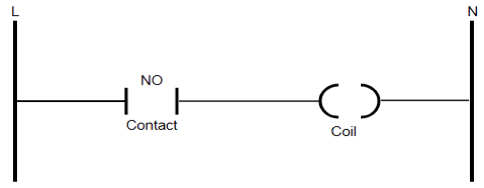
    A Ladder Logic program is structured like a ladder. On the left and right sides are two vertical rails, just like in an electrical diagram. Horizontal rungs connect these rails, and each rung represents one piece of logic.

    Every rung is a logical statement. It contains contacts and coils. Contacts represent conditions or inputs (such as a button being pressed). Coils represent actions or outputs (such as a motor starting).

    The PLC scans these rungs continuously in a loop. It reads the state of the inputs, evaluates the logic, and updates the outputs in a fraction of a second.

    Simple LD rung: Contact energizes coil

    Advantages of Ladder Logic

    Intuitive for electricians

    The graphical format is extremely familiar to anyone with an electrical background. Electricians and technicians can quickly see the logic flow without needing long explanations.

    Easy troubleshooting

    One of the biggest strengths is real-time monitoring. When a program runs, you can see which contacts are “on” and which are “off.” This helps technicians diagnose faults quickly and safely.

    High reliability and stability

    PLCs running Ladder Logic are robust. They are designed to survive harsh industrial environments like heat, dust, vibration, and electrical noise.

    They are also deterministic, meaning they execute tasks on a strict schedule — vital for safety-critical systems.

    Wide industry acceptance

    Ladder Logic is an industry standard. It is widely taught in schools, and almost all industrial hardware supports it.

    This ensures broad compatibility and makes it easier to hire skilled workers.

    Suitable for discrete logic

    Ladder Logic shines in applications with many on/off decisions, such as conveyor belts, packaging machines, or motor control circuits.

    Disadvantages of Ladder Logic

    Poor for complex tasks

    Handling advanced math, data manipulation, or algorithms is cumbersome. Loops are difficult to implement, leading to long, bloated code.

    In such cases, Structured Text or Function Block Diagram might be better choices.

    Limited functionality

    Ladder Logic was never intended as a general-purpose language. It struggles with advanced networking, string handling, or data analysis.

    Can be vendor-specific

    While Ladder Logic is standardized under IEC 61131-3, many vendors add their own features. This can lead to vendor lock-in, making it hard to switch platforms.

    Less intuitive for software developers

    People trained in computer science often find Ladder Logic inefficient. They are more comfortable with text-based coding.

    Large programs become complex

    As systems grow, so does the ladder diagram size. Large projects can span hundreds of rungs, which makes the program harder to read and maintain.

    Python: The Flexible Disruptor

    Python is a general-purpose programming language. It was not built for industrial automation, yet its simplicity and versatility have made it extremely attractive in the field.

    Today, Python is commonly used on industrial PCs, Raspberry Pi boards, or servers that work alongside PLCs. It is not meant to replace PLCs in safety-critical tasks, but it offers incredible value in handling complex or higher-level processes.

    How Python is Used in Automation

    Python does not completely replace the PLC. Instead, it often works side by side with it.

    The PLC takes care of real-time control, such as turning motors on and off. Python handles higher-level tasks, such as data logging, analysis, and communication.

    This creates what is called a hybrid automation system, where each technology does what it does best.

    Advantages of Python

    Extensive libraries and capabilities

    Python has thousands of ready-made libraries for almost any task. From machine learning to web servers, it has tools that Ladder Logic lacks.

    Excellent for complex logic and data

    Python handles math, algorithms, and data structures easily. It can process huge datasets, which is difficult in Ladder Logic.

    Rapid development and prototyping

    Python’s simple syntax makes it quick to learn and fast to write. Prototypes can be built in hours instead of weeks.

    Better for connectivity

    Python integrates seamlessly with databases, APIs, and cloud services. This is essential for IIoT and Industry 4.0 projects.

    Object-oriented capabilities

    Python allows code to be modular and reusable. This modern approach makes maintaining large projects easier.

    Open-source and cross-platform

    Python is free, open-source, and runs on many platforms. This avoids vendor lock-in.

    Disadvantages of Python

    Not real-time by default

    Python is an interpreted language. It is slower and not deterministic, making it unsuitable for safety-critical timing tasks.

    Troubleshooting can be harder

    Unlike Ladder Logic, Python does not show live “contact status.” Maintenance personnel may struggle with text-based debugging.

    Requires programming expertise

    Traditional electricians may need extra training to use Python effectively.

    Potential for dependency issues

    Python projects often rely on third-party libraries, which can create maintenance problems if those libraries stop being supported.

    Memory usage

    Python consumes more memory compared to PLC code. This is a limitation for embedded devices.

    Hybrid Approaches and the Future

    The discussion is not about choosing only one. In reality, most modern factories use a hybrid approach.

    The PLC remains responsible for mission-critical, real-time control, ensuring machine safety and reliability. Python is used in parallel to manage complex, high-level tasks.

    How a Hybrid System Works

    In such systems, Python usually runs on a PC or industrial server. It communicates with the PLC through standard industrial protocols such as Modbus TCP or OPC UA.

    For example, Python scripts can:

    • Collect and analyze data from the PLC.
    • Push this data to a central database or the cloud.
    • Apply machine learning to predict failures before they happen.
    • Generate custom reports and dashboards.
    • Connect the automation layer with enterprise systems like ERP or MES.

    Evolution and Training

    The industrial world is evolving quickly. New software practices like version control, DevOps, and continuous integration are entering automation.

    This shift means that companies must train their staff. Maintenance teams who are used to Ladder Logic need exposure to programming concepts.

    At the same time, programmers skilled in Python must learn the basics of PLC operation and industrial safety. 

    This combination of skills is becoming more valuable than ever.

    Key Takeaways: Ladder logic vs Python for Automation

    Ladder Logic continues to be a dominant force in industrial automation. It is reliable, robust, and easy to troubleshoot for everyday tasks.

    Its graphical nature is a huge advantage for technicians working on the factory floor.

    However, modern automation now requires much more. Tasks such as data analytics, IIoT integration, and AI-driven insights are common.

    These are areas where Ladder Logic struggles. Python, with its flexibility and libraries, provides the necessary power.

    The future lies in combining these tools. A hybrid approach provides the reliability of Ladder Logic for machine-level control and the intelligence of Python for higher-level connectivity and analysis. Together, they enable more powerful, smarter, and future-ready automation systems.

    FAQ: Ladder logic vs Python for Automation

    Can Python replace Ladder Logic completely?

    No. Python is not designed for hard real-time control. PLCs with Ladder Logic remain the safest and most reliable option for machine-level operations.

    Why do companies still prefer Ladder Logic?

    Because it is intuitive, proven, and supported by nearly all industrial hardware. It also matches the skillset of electricians.

    Where does Python shine the most?

    Python is excellent in data analysis, cloud connectivity, reporting, and advanced features like predictive maintenance or AI.

    Do technicians need to learn Python now?

    Yes, at least at a basic level. Industry is moving toward digitalization, and Python is a key tool in that journey.

    Will hybrid systems become the standard?

    Yes. Most factories are already moving in that direction. Hybrid setups give the best balance of safety, reliability, and flexibility.

    PLC in Conveyor Systems

    Programmable Logic Controllers (PLCs) are the brains of modern conveyor systems, replacing older, bulky relay logic that once dominated industrial automation.

    Unlike simple relay panels, a PLC is a robust industrial computer that uses a customizable program to monitor inputs and control outputs, enabling precise, repeatable, and efficient automation.

    From simple start-and-stop operations to complex sorting, counting, and product tracking, PLCs offer a reliable, flexible, and scalable solution for material handling across different industries.

    Conveyor systems powered by PLCs are now found in manufacturing, warehousing, mining, logistics, food processing, and packaging plants. 

    Their adaptability ensures they can handle everything from light consumer goods to heavy industrial components.

    This article explains the role of PLCs in conveyor, the core components for PLC to drive conveyors and PLC operation cycle.

    It further details how to program a conveyor, the benefits of PLC controlled conveyors and the future of PLC in conveyors.

    The Evolution of Conveyor Control

    Before PLCs, conveyor systems were controlled by complex arrangements of relays, contactors, and timers.

    This hardwired relay logic was not only bulky but also prone to frequent failure due to worn contacts, dust accumulation, or overheating. 

    It was incredibly difficult to modify or troubleshoot, especially when hundreds of relays were wired together in large panels.

    Changing an operation or adding a new feature required extensive rewiring, which often led to long and costly periods of downtime.

    The invention of the PLC in the late 1960s revolutionized industrial control. By using a software-based program, manufacturers could change or replicate operations simply by reprogramming the PLC, drastically reducing time and engineering costs. 

    PLCs brought unprecedented flexibility, faster troubleshooting, and greater reliability to conveyor control.

    What once took days of rewiring could now be accomplished in minutes with a simple logic change.

    The Core Components of a PLC-Driven Conveyor System

    A PLC-controlled conveyor system relies on a seamless interaction between several components that work together as a closed-loop control system.

    PLC Unit

    The central processor runs the control program. It executes logic instructions, makes decisions based on input data, and sends commands to output devices.

    Modern PLCs also support communication protocols like Ethernet/IP or Modbus for integration with higher-level systems.

    Sensors

    These devices provide real-time information to the PLC. Common types used in conveyors include:

    Photoelectric sensors

    Use a beam of light to detect the presence or absence of a product on the belt, widely used in packaging lines.

    Proximity sensors

    Detect objects without physical contact. Inductive models sense metals, while capacitive models can detect both metallic and non-metallic items like plastic or glass.

    Limit switches

    Triggered by physical contact with a product or diverter arm, often used in positioning.

    Encoders

    Measure the rotational speed and angular position of conveyor rollers, enabling precise control of product movement.

    Load cells

    Weigh items on the conveyor belt, ensuring quality control or accurate batching.

    Motors and Variable Frequency Drives (VFDs)

    An electric motor powers the conveyor belt. VFDs are often used to control the motor’s speed, allowing for smooth acceleration, controlled deceleration, energy savings, and precise speed adjustments during different stages of production.

    Actuators

    Devices that perform physical actions, controlled by the PLC. Examples include pneumatic cylinders for pushing or sorting products, solenoid valves for directing compressed air, or stepper motors for precision positioning in automated assembly lines.

    Human-Machine Interface (HMI)

    A touchscreen or display panel that allows operators to monitor the system’s status.

    Operators can adjust conveyor speed, acknowledge alarms, view production statistics, and switch between manual or automatic modes.

    Safety Devices

    Components like emergency stop buttons, safety pull cords along conveyor lines, and safety gates are wired to the PLC to ensure safe operation.

    Modern systems may use a dedicated Safety PLC or safety relays for critical functions, meeting international safety standards such as ISO 13849 or IEC 61508.

    The PLC Operational Cycle

    The PLC operates in a continuous loop called a scan cycle, which ensures fast and consistent responses to changing system conditions.

    Input Scan

    The PLC checks the status of all input devices, such as sensors, push buttons, and switches. This data is stored in memory for processing.

    Program Execution

    The PLC runs its stored program logic line by line. It processes the input data and makes logical decisions based on the defined instructions.

    Output Scan

    The PLC updates the status of all output devices, such as motors, actuators, and indicator lights, according to the program’s decisions.

    Housekeeping

    The PLC performs internal tasks such as communication with other PLCs, diagnostic checks, and self-monitoring.

    This rapid, repetitive process enables real-time control of the conveyor system, with scan times often measured in milliseconds.

    Programming a Basic Conveyor System

    PLC programming languages have evolved over time to make system development easier and more powerful.

    The most common is Ladder Logic, a graphical language that mimics the appearance of a relay logic diagram, making it easy for electricians and engineers to understand. 

    Other languages include Function Block Diagram (FBD) for modular design, Structured Text (ST) for advanced algorithms, and Sequential Function Chart (SFC) for step-by-step processes.

    A simple “start-stop” conveyor system illustrates basic PLC programming principles:

    • A normally open (NO) start button is wired to a digital input on the PLC.
    • A normally closed (NC) stop button is wired to another digital input.
    • The conveyor motor starter is wired to a digital output.
    • The Ladder Logic program has a “rung” that latches the motor starter on when the start button is pressed. The motor is de-energized if the stop button is pressed or if a safety interlock is activated.

    This simple design ensures reliable operation while protecting the conveyor from accidental restarts.

    Advanced PLC Control Applications

    Modern conveyor systems go far beyond simple start-stop functions, thanks to the flexibility and power of PLCs.

    Automated Sorting

    The PLC can use input from sensors, barcode scanners, or vision systems to direct products to different lanes.

    In a waste sorting system, an AI-driven camera can identify recyclable materials, and the PLC can activate a diverter arm or air jet to push the product into the correct bin.

    Variable Speed Control

    By controlling a VFD, the PLC can adjust conveyor speed in real time. This is crucial for synchronizing multiple conveyor sections or for precise positioning of products before packaging or labeling.

    Robotic Integration

    In automated assembly lines, the PLC coordinates conveyor movement with robotic arms.

    It ensures products arrive at the correct pick-up points exactly when the robot is ready.

    Tracking and Monitoring

    Using encoders, load cells, and RFID tags, the PLC can track products along the conveyor.

    This enables functions such as product counting, batch control, weight verification, or rejection of defective items.

    Predictive Maintenance

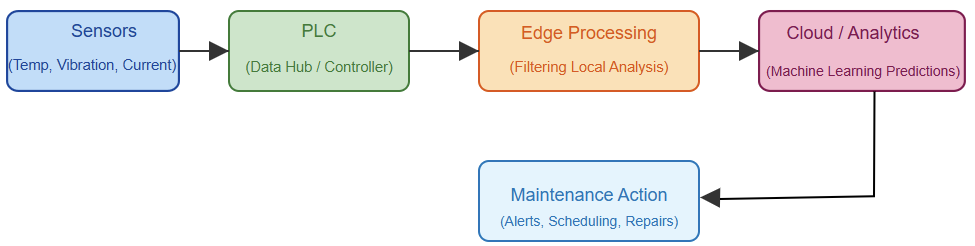
    PLCs can collect vibration, temperature, and current data from motors and sensors to monitor equipment health.

    This allows maintenance teams to anticipate failures before they occur, significantly reducing unexpected downtime.

    Networking and SCADA Integration

    Multiple PLCs can communicate with each other over industrial networks. They can also send data to a higher-level SCADA (Supervisory Control and Data Acquisition) system for plant-wide monitoring and decision-making.

    The Benefits of PLC-Controlled Conveyors

    The adoption of PLC technology offers a wide range of advantages over older relay-based methods.

    Increased Efficiency and Throughput

    PLCs operate with high speed and precision, minimizing errors, reducing downtime, and maximizing the number of products moved per hour.

    Enhanced Flexibility and Scalability

    PLCs can be reprogrammed quickly to accommodate new product lines or processes. Modular PLCs allow for easy expansion by adding additional I/O modules.

    Improved Safety

    PLCs can be integrated with safety interlocks, light curtains, emergency stops, and safety relays to ensure worker protection and prevent equipment damage.

    Reduced Operational Costs

    Automation reduces the need for manual labor, while simplified troubleshooting, remote monitoring, and predictive maintenance cut maintenance costs.

    Better Data Collection and Analysis

    PLCs provide valuable production and diagnostic data that can be used for process optimization, quality assurance, and continuous improvement.

    Future Trends

    The role of PLCs in conveyor systems continues to evolve with modern digital technologies.

    Integration with AI

    As seen in waste sorting and logistics, AI-driven vision systems are being integrated with PLCs to enhance accuracy and efficiency.

    Edge Computing

    PLCs with built-in edge computing capabilities can process large amounts of data locally, reducing latency and enabling smarter decision-making on the factory floor.

    Enhanced Cybersecurity

    As PLCs become more connected to networks and cloud platforms, cybersecurity is a growing priority.

    Future systems will feature secure communication protocols, firewalls, and multi-level authentication.

    Digital Twins

    The PLC can be linked to a digital twin—a virtual model of the conveyor system. This allows engineers to test, simulate, and optimize control strategies before deploying them in the real world.

    Conclusion

    The present article detailed the role of PLCs in conveyor, the core components for PLC to drive conveyors and PLC operation cycle.

    It also explained how to program a conveyor, the benefits of PLC controlled conveyors and the future of PLC in conveyors.

    So, from the discussion we can add that, PLs have fundamentally transformed how conveyor systems operate.

    They have replaced outdated relay logic with flexible, reliable, and powerful software-based control. 

    From managing simple belt movement to orchestrating complex sorting, tracking, and predictive maintenance, PLCs are at the heart of modern material handling.

    Their ability to increase efficiency, enhance safety, and adapt to changing production requirements makes them an indispensable part of industrial automation. 

    As technology continues to advance, the integration of PLCs with AI, edge computing, and digital twins will drive even greater innovation in conveyor systems, ensuring smarter, faster, and safer factories for the future.

    FAQ: PLC in Conveyor Systems

    What are the advantages of using a PLC instead of traditional relay‐logic for conveyor control?

    PLCs offer much more flexibility: logic can be changed, expanded or replicated via software rather than rewiring; They provide real‐time monitoring, diagnostics, and improved safety (interlocks, emergency stops) that relay systems typically lack or have in more complex/harder to maintain arrangements; PLCs can integrate better with modern systems (HMI, SCADA, cloud/edge computing) to enable remote monitoring and predictive maintenance. 

    What PLC programming languages are common, and which are best for conveyors?

    The IEC 61131-3 standard defines several languages: Ladder Diagram (LD), Function Block Diagram (FBD), Structured Text (ST), Sequential Function Chart (SFC), and Instruction List (IL); For many conveyor systems, Ladder Logic (LD) is often preferred since it’s intuitive for relay logic designers and maintenance staff; For more complex sequencing, tracking, or mathematical/logical processing, Structured Text (ST) or Function Block Diagram might be used. 

    How is PLC integrated with sensors, actuators, and other devices in a conveyor system?

    Sensors (photoelectric, proximity, load cells, encoders, etc.) feed inputs to the PLC.

    The PLC reads these sensors during its input scan to decide when to activate outputs; Outputs from the PLC can command motors (via starters or VFDs), actuators, indicator lights, diverters, gates, etc; Safety devices (emergency stops, safety gates) are usually wired in, sometimes via a safety PLC or safety-rated modules. 

    What kind of PLC scan cycle or timing issues affect conveyor systems?

    The scan cycle is the core loop in which the PLC reads inputs, executes the user program logic, updates outputs, and performs internal housekeeping.

    If the cycle time is too long, fast events (e.g. high‐speed sensors detecting an object) may be missed or delayed; Conveyor systems with high speed, lots of sensors and tight timing (for accurate stopping, diverter activation, etc.), require careful tuning of scan time and priority of tasks.

    Can I use a single PLC for large conveyor systems, or do I need multiple PLCs?

    In many systems, a single PLC is sufficient to manage a conveyor system, especially if the system is not extremely large or complex; Multiple PLCs are used when there are modular sections that are physically distant, for redundancy, easier maintenance, or when different subsystems need different performance or I/O counts.

    What safety features are necessary when using PLCs in conveyor systems?

    Emergency‐stop buttons, safety pull cords, safety gates, and interlock switches must be integrated.

    These should be wired such that they override other logic; Safety PLCs or safety modules are used for functions where failure could seriously risk personnel or equipment. These are designed to standard safety categories/PL/SL levels.

    How do PLCs handle varying conveyor speeds or synchronization between conveyor sections?

    Variable Frequency Drives (VFDs) are often controlled by the PLC, allowing precise acceleration, deceleration, and speed synchronization; PLC logic may coordinate multiple sections so products transfer smoothly from one section to another without collisions or excessive gaps.

    What is predictive maintenance in the context of PLC‐controlled conveyors, and how is it done?

    PLCs can collect data: motor currents, vibration (if sensors added), runtime, number of starts/stops, errors; This data can be analyzed (locally or via cloud/edge) to predict component wear, detect abnormal behavior, and schedule maintenance before failures.

    What are common problems people face when implementing PLCs on conveyors?

    Underspecified sensors or choosing sensors that don’t suit the environment (e.g. dust, moisture, high vibration); Delays or errors due to poor logic timing or scan cycle too slow; Synchronization problems between conveyor sections, especially during changes in direction or speed; Safety interlocks not properly designed or tested, leading to false trips or unsafe behavior; Insufficient diagnostics or logging, making troubleshooting difficult.

    How do costs compare (initial, maintenance, operational) when using PLCs vs older relay logic?

    Upfront cost of PLC hardware (CPU, I/O modules, power supply), plus programming, integration, sometimes network/HMI/SCADA setup is higher than simple relay panels; But lifecycle cost savings tend to be significant: lower maintenance, easier upgrades, less downtime, more efficient operation.

    How do I choose the right PLC size or model for my conveyor system?

    Consider number of inputs/outputs needed (digital, analog), size/complexity of logic, speed requirements; Environmental factors: temperature, dust, moisture, electrical noise; Require capacity for expansion or extra features (networking, safety I/O, vision/camera input) if future growth is expected.

    How is PLC connected/interfaced with modern technologies (vision systems, cloud, digital twins)?

    PLCs can receive input from vision systems / barcode scanners / AI systems; process or forward that data to make decisions (e.g., diverters, reject stations);

    Connectivity to edge/cloud allows remote monitoring, analytics, and model‐based control; Digital Twins (virtual models) can mirror the physical conveyor system; PLC data (status, sensor readings) feed the twin to simulate, troubleshoot, predict behavior under different conditions.

    What Causes a PLC to Go into Fault Mode?

    A Programmable Logic Controller (PLC) is the brain of an automated system. It controls machines and processes.

    When a PLC goes into a fault mode, it stops operating. This can cause a complete shutdown of production.

    In modern industries, even a few minutes of downtime can cost thousands of dollars in lost revenue, wasted materials, and missed deadlines.

    This article explains the many reasons a PLC might fault. The causes can be grouped into several categories.

    These include power, hardware, software, and environmental issues. Operator mistakes and communication failures also play an important role.

    What Causes a PLC to Go into Fault Mode?

    Understanding these issues is key to effective troubleshooting. With proper knowledge, technicians can minimize downtime, extend equipment lifespan, and ensure safer operations.

    Power Supply Problems

    A stable power supply is critical for a PLC. Without clean and reliable power, even the most advanced controller will eventually fail.

    Voltage Irregularities

    The PLC needs a specific voltage. Overvoltage or undervoltage can stress components.

    This can cause damage over time. For example, a PLC rated for 24V DC may malfunction if supplied with fluctuating voltage between 18V and 30V.

    Sensitive components such as the CPU and memory modules are highly vulnerable to such irregularities.

    Voltage Spikes and Surges

    Sudden spikes in voltage can damage internal circuits. These can be caused by lightning, large motors starting, or heavy loads switching on and off in the same network. Surge protectors and line filters are often installed to reduce this risk.

    Unstable Power Sources

    Fluctuating power from an unstable source can weaken the PLC’s reliability. This is common with backup generators or poor-quality inverters.

    A fluctuating frequency or unstable waveform can also affect the PLC’s timing functions.

    Grounding Issues

    Poor or missing grounding is a major cause of problems. It creates electrical noise. This noise can corrupt data or interfere with communication.

    In addition, improper grounding may increase the risk of electric shock and fire hazards.

    Power Loss

    A sudden power loss can cause memory corruption. This can cause the program to be lost.

    Many PLCs include battery-backed RAM or non-volatile memory, but frequent power failures still reduce system reliability.

    Hardware-Related Issues

    The PLC is made of many hardware parts. If any part fails, the entire system can be affected.

    Component Failure

    Like any electronic device, components have a lifespan. Capacitors, connectors, and fans can wear out over time.

    A component failure can trigger a fault. For example, a failed cooling fan may cause overheating that damages the CPU.

    I/O Module Failure

    The PLC’s input/output (I/O) modules connect it to sensors and actuators. A failure in an I/O module is a common fault source.

    This can be due to a short circuit, blown fuse, or physical damage. Loose terminal blocks or damaged wires can also cause I/O problems. A single bad sensor connection may be enough to shut down a line.

    Aging Hardware

    Older PLCs are more prone to failure. The components inside degrade over time. This can lead to decreased performance and faults.

    Capacitors dry out, solder joints weaken, and connectors become less reliable. Preventive replacement programs are essential for legacy systems.

    Physical Damage

    Vibrations from heavy machinery can loosen internal components. Drops, impacts, or rough handling during maintenance can cause unseen damage.

    Cracked circuit boards may still function for a while but eventually lead to intermittent faults.

    Loose Connections

    A loose wire or connector can cause an intermittent signal. This can cause the PLC to fault. Periodic inspection of wiring and tightening of terminals can prevent many issues.

    Software and Programming Faults

    Errors in the PLC’s programming can cause faults. The software is as important as the hardware.

    Programming Errors

    A small coding mistake can crash the system. Bugs may go unnoticed until a specific operation is triggered.

    For example, a missing reset condition in a timer could cause endless loops or watchdog expiration.

    Memory Corruption

    Electrical interference or power issues can corrupt the PLC’s memory. This can make the program unreadable by the CPU.

    Corrupted memory blocks may cause unpredictable machine behavior, creating safety risks.

    Watchdog Timer Expiration

    The PLC has a watchdog timer. This timer monitors the scan cycle. If the program takes too long to execute, the timer expires.

    This causes a fault. Infinite loops, too many nested subroutines, or heavy calculations can trigger this problem.

    Firmware Issues

    Outdated or incompatible firmware can cause system glitches. This is especially true when updating hardware.

    A mismatch between the CPU firmware and I/O firmware can result in errors or crashes.

    Incorrect Configuration

    Incorrectly configured I/O modules can cause communication problems. This can result in inaccurate readings or data.

    Misassigned addresses, wrong data types, or unconfigured modules are common mistakes.

    Conflict with Other Components

    An incompatible device added to the system can cause a fault. The PLC might not be able to understand the device.

    For instance, adding a high-speed encoder without enabling high-speed counters can trigger errors.

    Communication Network Problems

    Modern PLCs rely on networks. Communication ensures data flows smoothly between devices.

    Communication Loss

    The loss of communication between the PLC and other devices can trigger a fault. This can affect HMIs, other PLCs, or network peripherals. In distributed control systems, this issue can bring entire plants to a halt.

    Faulty Cables

    Damaged or loose Ethernet cables are a common cause. They can lead to data loss or dropped connections.

    Over time, repeated bending or exposure to harsh environments weakens cable shielding.

    Incorrect Network Settings

    Misconfigured IP addresses or network settings can prevent devices from communicating.

    A duplicated IP address can cause severe conflicts in industrial Ethernet networks.

    Network Congestion

    A high volume of network traffic can cause delays. This can lead to communication timeouts and faults. Overloaded switches or poorly designed topologies contribute to congestion.

    Typical PLC communication fault

    Environmental Factors

    The operating environment can severely impact PLC. Industrial settings often expose controllers to harsh conditions.

    Heat

    Excessive heat is a major problem. Overheating can damage the CPU and internal components.

    Poor ventilation or a malfunctioning cooling fan can cause heat buildup. Installing PLCs in climate-controlled cabinets helps mitigate this risk.

    Humidity and Moisture

    Moisture inside the PLC cabinet can short circuits. Condensation is a risk in humid environments.

    Protective enclosures with proper IP ratings are recommended for outdoor or washdown areas.

    Dust and Dirt

    Accumulation of dust can insulate components. This can prevent cooling and cause overheating. Conductive dust particles can also cause short circuits.

    Electromagnetic Interference (EMI)

    Electrical noise can corrupt data and interfere with signals. Large motors, welding machines, or variable frequency drives can be a source of EMI. Shielded cables and proper grounding reduce the effect.

    Corrosive Substances

    Corrosive substances in the air can degrade electronic components. Factories that handle chemicals, acids, or saltwater environments must use protective coatings and sealed cabinets.

    Operator Error

    Human actions can lead to a PLC fault. Even with advanced automation, human error remains one of the top causes of downtime.

    Incorrect Data Entry

    An operator entering wrong data can trigger an unexpected event. For example, entering the wrong temperature setpoint may exceed process limits and cause faults.

    Accidental Program Modification

    An operator might accidentally change a program variable. This could cause the process to behave unpredictably. Without proper access control, inexperienced staff may introduce errors.

    Improper Handling

    Not handling the PLC or modules correctly can cause damage. This includes plugging and unplugging modules incorrectly.

    Static discharge, bending connector pins, or forcing modules into slots can all result in faults.

    Key Takeways: What Causes a PLC to Go into Fault Mode?

    A PLC entering fault mode is a serious issue. It points to a problem that needs attention.

    The cause can be simple, like a loose wire. It can also be complex, like a corrupted program. A systematic troubleshooting approach is essential.

    Start with the most basic checks. Look for obvious problems like power and connections.

    Then, use software diagnostics to find the root cause. Many PLCs provide diagnostic LEDs, error codes, or built-in diagnostic tools to guide maintenance staff.

    Regular maintenance and proactive replacement of aging parts can prevent many faults.

    Proper operator training, software version control, and environmental protection also play critical roles.

    Understanding these potential issues helps keep industrial processes running smoothly and reliably. 

    Ultimately, fault prevention is less costly than fault recovery, making preventive strategies a smart long-term investment.

    FAQ: What Causes a PLC to Go into Fault Mode?

    What typically causes a PLC to enter fault or stop mode?

    Several factors can trigger a PLC to enter fault mode or stop mode, effectively halting its operation:

    Module failure, power outages, and network issues are among the most common triggers; Environmental conditions, such as overheating, moisture, and electromagnetic interference (EMI), also play a significant role; Electrical failures including power surges, voltage fluctuations, and short circuits can directly lead to faults; Software glitches like programming errors, memory corruption, or firmware incompatibilities may also cause the system to fault.

    Which root causes are most frequently observed in PLC faults?

    Field device problems, input/output (I/O) module failures, and power supply issues account for approximately 80% of all PLC failures; Grounding issues can introduce electrical noise that causes erratic behavior or faults.

    How should I approach troubleshooting a PLC that has entered fault mode?

    A structured, step-by-step diagnosis is critical:

    • Check basics first: Inspect power supply, wiring, connections, and ensure input/output modules are functioning correctly.
    • Use diagnostic tools: Refer to the PLC’s fault code or LED indicators; programming environments often provide error descriptions to guide troubleshooting.
    • Reset and reload: Power cycle the PLC, reload the program from a verified backup, and check if the fault persists.
    • Inspect hardware: Physical inspection of the PLC, including the CPU, I/O modules, and power modules, can help identify failures.
    • Check communication systems: Network misconfigurations, damaged cables, or incompatible firmware can also cause faults.

    What are the less obvious or extended causes of PLC faults?

    Watchdog timer expiration, program download or memory mismatch, hardware inputs for stop/run controland/ormathematical overflow faults.

    Do internal fault-handling routines affect how the PLC responds to errors?

    Yes. For example, on Allen-Bradley systems: Minor faults (like low battery warnings) don’t stop the PLC and are often just logged; Recoverable major faults can be handled via user-defined fault routines (fault handlers), allowing the PLC to potentially recover and continue operation; non-recoverable major faults— checksum errors—cannot be recovered from with a fault routine and will cause the PLC to fault and stop.

    Common PLC Brands Explained

    Programmable Logic Controllers (PLCs) are the heart of industrial automation. They control machines with precision, processes, and even entire plants, from small packaging machines to huge automotive lines. They ensure reliable operation.

    Different PLC brands dominate different markets which varies regionally. Each brand has its own style, strengths, and weaknesses and different trade-offs.

    For beginners, it can be confusing to understand why there are so many options.

    In this article, we will discuss the most common PLC brands, their uniqueness and where are they used, examples are included. By the end, you will have a clear view of the global PLC landscape.

    What is a PLC?

    A PLC is a digital computer made for industrial use. It reads signals from inputs such as sensors and switches.

    It processes these signals using a special program, and then controls outputs like lights, valves, or motors.

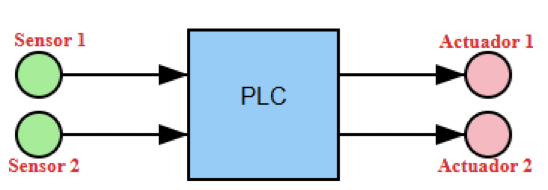
    Schematically, the structure of a PLC looks like what is shown in the following diagram:

    From the above structure shortly, the inputs bring information to the CPU. Furthermore, the CPU makes decisions after manipulating the information brought by the inputs.

    Finally, outputs (actuators) take action. This basic structure is the same for all brands. What changes is the hardware, software, and philosophy of design.

    Common PLC Brands

    The well-known brands include: Siemens, Allen-Bradley (Rockwell Automation), Mitsubishi, Schneider Electric Omron and ABB.

    Other known PLC brands are Delta Electronics, Honeywell, Keyence, Bosch Rexroth, and Toshiba. In this article we will discuss about the most famous ones. 

    Siemens

    Siemens is one of the largest PLC brands worldwide. The most popular family today is the S7 series. Its main line is called SIMATIC.

    Brief History

    In the Year 1847, Siemens was established in Berlin under the name Telegraphen-Bauanstalt von Siemens & Halske, created by Werner von Siemens and Johann Georg Halske as a telegraph manufacturing company.


    Over the years, it rapidly evolved into a worldwide leader in electrical engineering, branching out into power generation, transportation, and telecommunications.


    By 1966, the modern Siemens AG came into existence through the merger of three Siemens firms, and today the company stands as a global technology giant with headquarters in Munich and Berlin.

    Key Features

    • Strong presence in Europe and Asia.
    • Many models: S7-1200, S7-1500, and legacy S7-300/400.
    • Powerful software IDE: TIA Portal for programming.
    • Robust communication protocol.
    • Integrated safety and motion control.
    • Industry 4.0 support

    Siemens PLCs are modular. You can add safety modules, analog modules and communication cards.

    Their systems are robust and scalable. The software environment can feel complex for beginners. But once you learn it, you get access to very advanced functions.

    Major Areas

    Siemens is strong in 

    • Process industries. 
    • Factory automation for controlling production lines.
    • Packaging machines
    • Robotic systems.
    • HVAC and security systems
    • Chemical.
    • Automotive.

    Allen-Bradley (Rockwell Automation)

    Allen-Bradley is the leader in North America. It is owned by Rockwell Automation. Their PLCs are famous in the U.S. and often found in large plants.

    Brief History

    Allen-Bradley was originally founded in 1903 as the Compression Rheostat Company by Dr. Stanton Allen and Lynde Bradley.

    In 1910, it officially became the Allen-Bradley Company after creating controllers and resistors designed for both industrial and commercial applications.


    These products gained major importance during the radio expansion of the 1920s and later in WWII, where demand surged.


    Its continuous innovation in industrial automation, particularly in the advancement of PLCs, eventually led to its acquisition by Rockwell Automation in 1985, where today Allen-Bradley remains a core brand within the company.

    Key Features

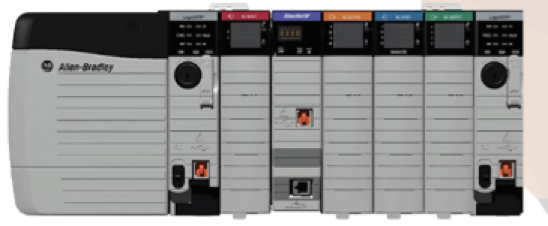
    • Main families: MicroLogix, CompactLogix, ControlLogix.
    • Uses RSLogix 5000 and Studio 5000 software.
    • Strong integration with HMIs and drives.
    • Programming flexibility.
    • Redundancy.
    • Built-in diagnostics and safety.

    Allen-Bradley products are designed with user-friendly hardware. They have easy wiring, clear labeling, and rugged design. They are also known for high prices compared to other brands.

    Major Areas

    • Oil and gas.
    • Automotive.
    • food production.
    • Manufacturing process.
    • Transportation systems.
    • Material handling.
    • Building automation.
    • Water and wate-water.

    In the U.S. Allen-Bradley is often the default choice.

    Mitsubishi Electric

    Mitsubishi is a well-known brand in Asia. It offers reliable and cost-effective PLCs. The two most popular lines are FX series and Q series.

    Brief History

    Mitsubishi traces its origins back to 1870, when YataroIwasaki founded it as a shipping business.

    Over time, it grew into a large, diversified industrial group known in Japan as a zaibatsu.


    After WWII, the Allied occupation ordered the dissolution of the zaibatsu, which resulted in the creation of independent companies.


    Today, firms such as MitsubishiCorporation, MitsubishiHeavyIndustries, and Mitsubishi Electric still carry the iconic threediamondlogo and share a common legacy, though they operate separately without a central governing body.

    Key Features

    • Compact PLCs with strong motion control support.
    • Programming software: GX Works.
    • Good integration with Mitsubishi robots and drives.
    • Wide product range.
    • High-speed processing.
    • Strong networking.

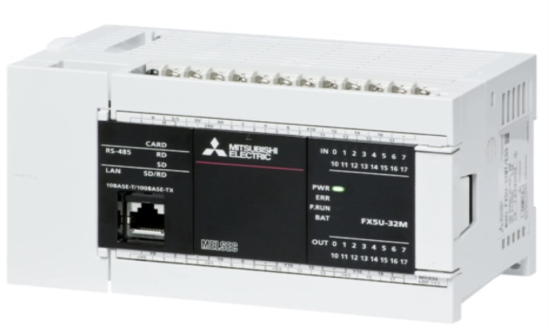
    Their FX series is widely used in packaging and small machines and Q series is modular and used in larger systems.

    Mitsubishi stands out for motion and robotics. Factories that use Mitsubishi robots often also use Mitsubishi PLCs.

    Major Areas

    • Process industries
    • Utilities
    • Building automation.
    • Automotive industry.
    • Electronics and semiconductors.
    • Industrial automation.
    • Manufacturing.

    Schneider Electric

    Schneider Electric produces the Modicon line of PLCs. This is historically important, since Modicon invented the first PLC in 1969.

    Brief History

    The story of Schneider Electric dates back to 1836, when the Schneiderbrothers established Schneider& Cie, an iron and steel enterprise in France.

    During the late 19th and early 20th centuries, the company expanded into a major player in heavy industry.

    After WWII, it redirected its strategy toward the fast-growing electrical equipment and automation sectors.

    By the 1960s, Schneider had positioned itself as a specialist in electrical equipment. A pivotal step came in 1981 with the acquisition of Modicon, the inventor of the PLC. 

    The 2000 merger with Square D further extended its reach into North America. In 2007, Schneider strengthened its role inpower distribution and data centers by acquiring APC (American Power Conversion).

    Key Features

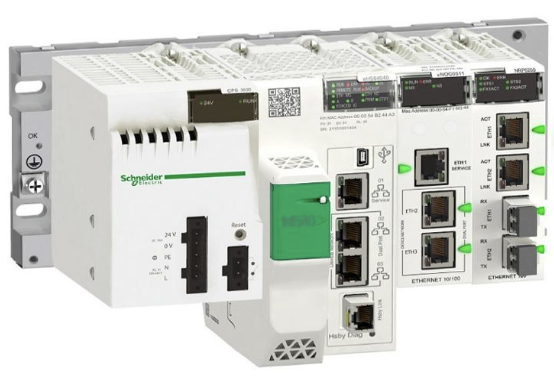
    • Famous series: M221, M241, and M580.
    • Uses EcoStruxure Machine Expert software.
    • Good energy management integration.
    • Robustness.
    • Flexible programming.
    • Built-in cybersecurity.

    Their PLCs are strong in power monitoring and smart grid applications.

    Major Areas

    • Water treatment and electrical distribution.
    • Power and Energy
    • Manufacturing and machinery
    • Process industries
    • Building automation

    Omron

    Omron is a Japanese brand with a global footprint. It is known for its mid-size PLCs and sensors. The CJ series and NX series are common choices.

    Brief History

    Omron was founded in 1933 in Osaka, Japan, by KazumaTateishi as Tateishi Electric Works, initially producing timer switches for X-ray photography.

    In 1945, the company relocated to Kyoto, and by 1948 it was incorporated as Tateishi Electric Corporation.

    The Omron brand was launched in 1959, signaling a new wave of innovation.

    Notable achievements included introducing the world’s first contactless proximity switch in 1960 and developing the first online cash machinein1971.

    Later, the company officially adopted the name Omron Corporation, derived from its founding district in Kyoto, to highlight both its globalexpansion and its mission of advancing society through technology.

    Key Features

    • Easy integration with Omron sensors.
    • Good networking options: EtherCAT, Ethernet/IP.
    • Programming software: CX-Programmer and Sysmac Studio.
    • High-speed processing.
    • Durability and scalability
    • Safety and security

    .
    Their PLCs are often paired with vision systems for quality inspection.

    Major Areas

    • Automation of packaging, food, and logistics.
    • Electrical components.
    • Equipment and systems.
    • Medical devices.

    ABB

    ABB is a Swiss-Swedish company. It is better known for drives, motors, and robotics. But ABB also makes solid PLCs.

    Brief History

    ABB was created in 1988 through the merger of ASEA from Sweden and Brown, Boveri & Cie from Switzerland, both established in the late 19th century and recognized as pioneers in electrical engineering. 

    Since then, ABB has grown into a global leader in electrification and automation. Among its major achievements are the invention of the 3-phase power system.

    Also, the introduction of the world’s first commercial high-voltage shore-to-ship power connection. 

    With deep roots in innovation from its predecessor companies, ABB has continued to shape progress in power generation, robotics, and digital technologies.

    Key Features

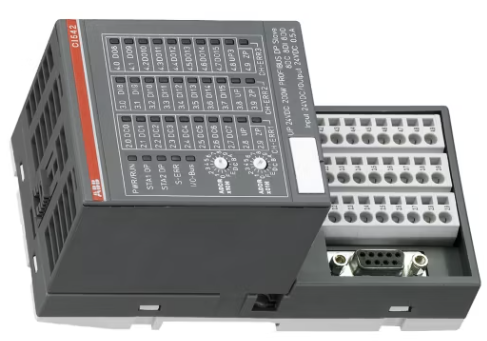
    • Popular series: AC500.
    • Strong in process automation and utilities.
    • Supports many communication protocols (PROFINET, Modbus, CANopen).
    • Safety and integration.
    • Motion control capabilities.
    • Modular and scalable design.

    The AC500 series is modular and scalable. It fits well into large energy and infrastructure projects.

    Major Areas

    • Infrastructure and transportation.
    • Marine and offshore.
    • Process industries.
    • Power and utilities.
    • Water and wastewater.

    Delta Electronics

    Delta is a Taiwanese company. It is known for affordable automation products. Its PLCs are growing in popularity in Asia and developing markets.

    Brief History

    Delta Electronics was established in Taiwan in 1971 by Bruce Cheng, beginning with the production of TV deflection coils and electronic components.

    The company quickly expanded by focusing on high-efficiency switching power supplies, which helped it rise as a worldwide leader in power electronics. 

    Over the years, it extended its global footprint with numerous R&D centers and manufacturing facilities across different regions.


    Today, Delta is recognized as a leading provider of power and thermal managementsolutions, emphasizing energy efficiency and sustainability.

    Its product portfolio now spans industrial automation, networking, display technologies, and other advanced applications.

    Key Features

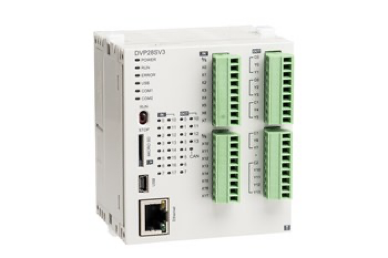
    • Main family: DVP series.
    • Simple, compact, and low-cost.
    • Easy connection with Delta HMIs and drives.
    • Wide I/O options.
    • Advanced motion control.
    • Energy efficiency.

    Delta is popular for small to medium machines. Many OEMs use them for cost-sensitive projects.

    Major Areas

    • Textile and printing.
    • HVAC and building control.
    • Electronics assembly. 
    • Material handling.
    • Packaging machine.

    Keyence

    Keyence is famous for sensors and vision systems. But they also provide compact PLCs. Their main line is the KV series.

    Brief History

    Keyence was founded in 1974 by Takemitsu Takizaki in Osaka, Japan, beginning with the development of photoelectric sensors for manufacturing applications.

    By 1982, the company had broadened its product range to include barcode readers and laser markers. 

    It entered the North American market in 1990 and was later listed on the Tokyo Stock Exchange in 1997.

    Today, Keyence stands as a global leader in industrial automation, recognized for its cutting-edge sensors, machine vision systems, microscopes, and precision measuring instruments, all distributed through its worldwide direct sales network.

    Key Features

    • Series: KV-X and KV-8000
    • Strong integration with vision inspection.
    • Very compact designs.
    • Fast scan times for small automation tasks.
    • Ultra-high-speed motion control.
    • High-performance CPU.

    Major Areas

    • Packaging labeling.
    • High-speed inspection systems.
    • Electronics manufacturing.
    • Automated testing stations.
    • Sorting and logistics. 

    Panasonic

    Panasonic also produces PLCs, though less common globally. They are mainly used in Asia.

    Brief History

    Panasonic began in 1918 as Matsushita Electric Housewares Manufacturing Works, founded by Kōnosuke Matsushita to make lamp sockets and plugs.

    Over time, the company expanded into a broad portfolio of consumer and industrial electronics, including irons, radios, televisions, and stereo systems. 

    It was incorporated in 1935 and introduced the “Panasonic” brand for its audio products in 1955.

    Later, in 2008, the company officially changed its name to Panasonic Corporation, and in 2022, it transitioned to Panasonic Holdings Corporation under a new holding company framework.

    Key Features

    • FP series is their main line.
    • Compact and suited for small machines.
    • Good cost-performance ratio.
    • High-speed motion control.
    • Robust IEC 61131-3 software.
    • Compactness and scalability.

    Panasonic PLCs integrate well with their sensors and servo drives.

    Major Areas

    • Assembly automation.
    • Electronics manufacturing.
    • Packaging equipment.
    • Building automation.
    • Textile and printing.

    Which PLC Brand to Use

    Choosing a brand depends on several factors:

    • Region
      Availability and support vary by country.
      In the U.S., Allen-Bradley dominates.
      In Europe, Siemens is common.
      In Asia, Mitsubishi and Omron are strong.
    • Industry
      Automotive plants often use Siemens or Allen-Bradley.
      Packaging companies may prefer Omron or Mitsubishi.
      Energy utilities may use ABB or Schneider.
    • Integration
      If a plant already uses a brand of drives or robots, the same brand of PLC may be easier to integrate.
    • Budget
      Delta and Panasonic are more cost-effective.
      Siemens and Allen-Bradley are premium but powerful.

    The Future of PLC Brands

    The PLC world is evolving. Trends like IIoT, cloud integration, and edge computing are shaping the future.
    Major brands now focus on connectivity and data analysis.

    • Siemens promotes digital twins and Industry 4.0.
    • Allen-Bradley pushes connected enterprise solutions.
    • Omron and Keyence focus on vision and AI integration.

    Despite changes, the core role of PLCs remains. They must be reliable, rugged, and real-time.

    Conclusion

    This article explored the leading PLC brands, highlighting what makes each unique and where they are most commonly used.

    By the end, we gained a clear picture of the global PLC market, recognizing that PLCs come in a wide variety of brands and models.

    Siemens is the dominant player in Europe, Allen-Bradley holds strong in North America, while Mitsubishi, Omron, and others stand out in Asia.

    Brands like Delta, Panasonic, ABB, Schneider, and Keyence also play significant roles worldwide.

    When it comes to selecting a PLC, every brand offers distinct advantages. The ideal choice often depends on the region, industry requirements, and system integration needs.

    At their core, however, all PLCs perform the same essential function: they take inputs, process logic, and control outputs.

    The underlying principle is universal understanding the differences simply help engineers make better, more informed decisions.

    FAQ: Common PLC Brands Explained

    Which PLC brand is the most widely used?

    According to market share, Siemens’ SIMATIC PLCs are the most commonly used, followed by Rockwell.

    How do I choose the right PLC brand for my application?

    You should consider factors like regional support, industry requirements, software compatibility, and scalability.

    Are there significant differences in programming software among PLC brands?

    Yes, each brand offers unique programming environments. Siemens uses STEP7, Rockwell Automation offers Studio 5000, and Omron provides Sysmac Studio

    Can PLCs from different brands communicate with each other?

    Yes, many modern PLCs support standard communication protocols like Modbus, Ethernet/IP, and Profinet, allowing for interoperability between different brands.

    Cloud-Connected PLCs

    Programmable Logic Controllers (PLCs), are everywhere in the industrial automation.

    They control industrial processes, machines, production lines, and entire plants. They have done so for decades. 

    Historically, PLCs were standalone devices. They operated on-site, so their data stayed locally but, industries want data everywhere.

    The rise of cloud computing changed this. Now, cloud-connected PLCs are transforming manufacturing. 

    They are a core part of Industry 4.0. This new generation of PLCs connects industrial systems to the cloud.

    This connectivity unlocks many new possibilities. This shift represents a major change because it moves operations beyond traditional factory walls.

    This article explores what cloud-connected PLCs are, how they work, and why they matter. We will also look at benefits, challenges, use cases, and the future of this technology.

    PLC in Short

    A PLC is an industrial computer that controls machines and processes. It reads inputs, processes logic, and activates outputs.

    Inputs can be sensors, switches, or transmitters. Outputs can be motors, valves, or relays.

    The PLC follows a program. Most programs use ladder logic or function block diagrams.

    PLCs are reliable, robust, and designed for harsh environments. That is why they are used in factories, oil rigs, water plants, and energy systems.

    Traditional to Cloud-Connected PLC

    Traditional PLCs were powerful but they had a larger number of limitations. They lacked deep analytics and their data was trapped locally, which means remote access was difficult. 

    Sharing data with enterprise systems was a chore, this created a divide. Operational Technology (OT) and Information Technology (IT) were separate, fortunately, cloud-connected PLCs bridge this gap.

    They act as edge devices by processing some data locally. Next, they send relevant data to the cloud. This streamlines the flow of information

    What is the Cloud?

    The cloud is not a single place, instead it is a network of servers. These servers store data, run applications, and provide services.

    Cloud computing allows remote storage and analysis. It provides scalability, flexibility, and accessibility.

    Companies use cloud platforms like AWS, Azure, and Google Cloud. Industrial platforms also exist, such as Siemens MindSphere and PTC ThingWorx. The cloud is everywhere that is why it is transforming automation.

    Cloud-Connected PLCs Explained

    A cloud-connected PLC is a PLC that communicates with the cloud. It collects machine data and sends it to cloud servers.

    This connection can be direct because some PLCs have built-in cloud support. They can send data natively using protocols like MQQT and OPC-UA, while others connect through gateways.

    The cloud then processes the data. It can then store, analyze, or visualize it, or even send commands back to the PLC.

    This situation creates a two-way link as shown in the diagram below. The machine is no longer isolated, it is part of a global system instead.

    Why Connect PLCs to the Cloud?

    Industries need more than control, and they also need insights. They want predictive maintenance, energy optimization, and global monitoring.

    Cloud-connected PLCs make this possible since they allow decision-makers to see real-time data.

    For example, a plant manager in Tanzania can monitor machines in Mexico. A service engineer can detect faults before they happen. So, this can prove that cloud-connected PLCs create smarter factories.

    Key Features of Cloud-Connected PLCs

    • Visualization: Dashboards show trends, graphs, and alerts.
    • Analytics: Cloud software runs AI and machine learning models.
    • Data Logging: Machine data is stored in the cloud.
    • Integration: Cloud platforms connect with ERP, MES, and SCADA systems.
    • Remote Access: Engineers can log into the PLC from anywhere.

    Benefits of Cloud-Connected PLCs

    Remote Monitoring

    Operators do not need to be on-site. They can monitor machines from a laptop or smartphone. This saves time and reduces travel. 

    Predictive Maintenance

    Machine data predicts failures. The cloud runs algorithms to detect early signs of wear. This reduces downtime. 

    Scalability

    One PLC or one thousand. The cloud can handle it. Companies can expand operations without major changes. 

    Lower Costs

    Cloud platforms reduce the need for local servers. Maintenance costs are lower. 

    Better Collaboration

    Different teams can access the same data. Engineers, managers, and executives work together more effectively.

    Challenges of Cloud-Connected PLCs

    Cybersecurity

    Connecting PLCs to the cloud increases risks. Hackers may target machines. Strong encryption and firewalls are critical.

    Connectivity

    Factories in remote areas may lack reliable internet. Without stable connections, cloud integration suffers. 

    Latency

    Cloud data transfer takes time. For time-critical processes, this can be an issue. 

    Cost of Transition

    Upgrading old PLCs to support cloud can be expensive. Some need gateways or replacements. 

    Training

    Operators and engineers must learn new skills. Cloud systems require IT and OT collaboration.

    Use Cases of Cloud-Connected PLCs

    Manufacturing

    Factories can track production in real time. Machine performance and energy use are visible in dashboards.

    Energy

    Power plants use cloud-connected PLCs for monitoring turbines and generators. Renewable energy farms use them for wind and solar optimization. 

    Water Treatment

    Water plants monitor pumps, valves, and chemical dosing. Remote access allows central control. 

    Oil and Gas

    Pipelines and drilling sites often span large areas. Cloud-connected PLCs provide visibility from a central hub.

    Building Automation

    HVAC, lighting, and security systems can be controlled remotely. Data helps reduce energy costs.

    How Do PLCs Connect to the Cloud?

    There are different methods.

    Direct Connection

    Some PLCs have cloud-ready firmware. They send data directly to platforms like AWS IoT.

    IoT Gateways

    A gateway collects PLC data and forwards it. This is common with older PLCs.

    Edge Devices

    Edge devices preprocess data before sending it to the cloud. This reduces bandwidth use.

    SCADA Integration

    Existing SCADA systems can bridge the gap between PLCs and cloud servers.

    Security in Cloud-Connected PLCs

    Security is a major concern cloud-connected technology. To achieve it, the following best practices must be attained:

    • Encryption: Protects data in transit.
    • Authentication: Only authorized users can access systems.
    • Firewalls: Block unauthorized traffic.
    • Network Segmentation: Isolates critical systems.
    • Regular Updates: Keeps firmware safe from vulnerabilities.

    Companies must balance connectivity with safety.

    The Future of Cloud-Connected PLCs

    Cloud adoption in industry is still growing. In the future, cloud-connected PLCs will be standard. We expect to see:

    • More AI Integration: Cloud AI will optimize entire factories.
    • Digital Twins: Virtual models of machines will simulate performance.
    • 5G Networks: High-speed connections will reduce latency.
    • Edge-Cloud Hybrids: Edge devices will handle local control. The cloud will handle big data analysis.

    Conclusion

    This article addressed cloud-connected PLCs. It detailed what are they, how they work, and why they matter.

    It also showed the benefits, challenges, use cases, and the future of this technology.

    So from the above we can say that the PLCs transformed industry decades ago, and the cloud is transforming them again today.

    Cloud-connected PLCs bring visibility, efficiency, and intelligence. They reduce downtime, improve collaboration, and cut costs.

    Challenges exist, but the benefits are clear. Cybersecurity, training, and connectivity must be addressed.

    The future of automation is connected, and cloud-connected PLCs are not just a trend. They are the foundation of Industry 4.0.

    Factories are no longer isolated. Machines are no longer silent. Data flows freely, and decisions are smarter. We are already in the age of cloud-connected PLCs.

    FAQ: Cloud-Connected PLCs

    How does cloud-connected plc work

    By transmitting operational and control data from a manufacturing or industrial automation environment to a cloud platform for real-time monitoring, data analysis, and remote management. 

    Do cloud-connected PLCs replace SCADA?

    No. SCADA systems still play a key role. Cloud platforms extend SCADA with global access.

    Are cloud-connected PLCs safe?

    Yes, if proper cybersecurity measures are in place.

    Can old PLCs connect to the cloud?

    Yes, through gateways or edge devices.

    Do cloud-connected PLCs need constant internet?

    Not always. Some store data locally and sync when internet returns.

    What industries benefit most?

    Manufacturing, energy, oil and gas, and utilities see the biggest benefits.

    PLC in the Automotive Industry

    PLCs have remained a constant backbone of manufacturing for more than fifty years. Their robustness, ability to withstand harsh industrial environments, and versatility in programming make them indispensable in automotive plants. 

    Whether it is welding robots on the production line, conveyor belts transporting car bodies, or automated quality checks, PLCs play an essential role in ensuring reliability, precision, repeatability, and efficiency.

    This article explores the significance of PLCs in the automotive industry, their applications, benefits, challenges, and future trends shaping their role in modern vehicle production.

    Understanding PLCs in Automotive Context

    A PLC is a digital computer specifically designed to control electromechanical processes in industrial environments.

    It receives input signals from sensors, processes these signals according to a programmed logic.

    After that, it sends commands to the output devices such as motors, solenoids, robotic arms, among others.

    In automotive manufacturing, this means a PLC could take data from a proximity sensor and detecting the presence of a car chassis.

    Next, process that information, and then trigger a robotic arm to weld a joint or move the chassis to the next workstation. 

    Unlike conventional computers, PLCs are ruggedized. This helps to withstand high temperatures, dust, humidity, and electrical noise typically found in automotive plants.

    The flexibility of PLCs also makes them suitable for the dynamic nature of automotive manufacturing. 

    Production lines often need to be reconfigured for new models. So, PLCs allow engineers to adjust programming rather than rebuild entire control systems as the used to do back then in 1960s.

    Evolution of PLC Use in Automotive

    The first PLCs appeared in the late 1960s, introduced to replace hard-wired relay logic in industries such as automotive. Before PLCs, factories relied on panels full of relays and timers to sequence operations. 

    These systems were not only bulky and costly but also difficult to modify whenever a new car model was introduced.

    The automotive industry, with its high volume and frequent model changes, was among the earliest adopters of PLC technology.

    By the 1970s and 1980s, major automakers like Toyota, General Motors, and Ford had integrated PLCs into their production facilities.

    PLCs became essential for controlling stamping presses, welding machines, painting booths, and conveyor systems.

    As cars became more sophisticated and factories moved toward mass customization, PLCs evolved as well. Modern PLCs support high speed processing, advanced networking, safety protocols, and even integration with enterprise-level systems. 

    This evolution has aligned perfectly with the automotive sector’s push toward lean manufacturing and Industry 4.0.

    Key Applications of PLCs in Automotive Manufacturing

    The automotive factory is a vast and complex ecosystem that integrates mechanical, electrical, and digital systems. PLCs serve as the control nerve center across various stages of production.

    Painting and Coating

    Painting is one of the most sensitive processes in car manufacturing. PLCs regulate temperature, humidity, and spray patterns to achieve a flawless finish while minimizing material waste. 

    Assembly Line Automation

    One of the most visible applications of PLCs is in assembly line control. From moving a chassis through different stations to synchronizing robotic arms.

    PLCs ensure that every component is added at the right time and in the right sequence. 

    This coordination minimizes downtime and guarantees a smooth flow of production.

    Robotic Welding

    Modern automotive plants rely heavily on robotic welding for precision and speed. PLCs monitor welding parameters, control robot movement, and ensure safety interlocks are followed.

    With PLCs, thousands of welds on a single car body can be completed with micron-level accuracy.

    Automated paint shops rely on PLC-controlled robots to deliver consistent coating thickness and quality.

    Conveyor and Material Handling

    PLCs manage conveyor belts, lifts, and automated guided vehicles (AGVs) that move parts and assemblies across the plant.

    The precise timing and synchronization of these systems prevent bottlenecks and allow just-in-time manufacturing.

    Quality Control and Inspection

    Automotive production demands strict quality assurance. PLCs control automated testing rigs that check parameters such as engine performance, braking systems or electrical circuits.

    Then, Sensors feed real-time data into the PLC, which determines whether a component passes or fails the test.

    Safety Systems

    Worker safety is important in environments filled with heavy machinery and robotics.

    PLCs are often integrated with emergency stop systems and light curtains. Then proceeding with interlocks to immediately halt operations if unsafe conditions are detected.

    Benefits of PLCs in Automotive Industry

    The integration of PLCs into automotive plants delivers several advantages that go beyond simple automation.

    Reliability

    Automotive production requires long hours of continuous operation, and PLCs are designed to run non-stop with minimal downtime.

    Their rugged design ensures that they can withstand harsh conditions while maintaining accuracy.

    Flexibility

    Automotive plants must frequently reconfigure lines to accommodate new models or variations.

    PLCs allow engineers to reprogram control logic quickly, avoiding costly rewiring or hardware changes.

    Efficiency

    By managing complex processes with precision, they reduce waste, optimize resource utilization, and improve throughput.

    This efficiency translates into lower production costs and faster time to market.

    Quality assurance

    Quality assurance cannot be overstated. By automating inspection and testing, they minimize human error and ensure consistent standards across millions of units.

    Safety

    Through integration with safety devices and adherence to standards such as IEC 61508. So, PLCs ensure that dangerous processes can be immediately halted in emergencies, protecting both workers and equipment.

    Integration with Industry 4.0

    The automotive industry is at the forefront of Industry 4.0 industrial revolution. This industry is characterized by cyber-physical systems, IoT connectivity, and data-driven decision-making.

    PLCs, though a legacy technology, have evolved to integrate seamlessly into this new digital ecosystem.

    Modern PLCs are not just standalone controllers. They feature Ethernet/IP, ProfiNet, and Modbus TCP/IP communication protocols, enabling them to connect with higher-level Manufacturing Execution Systems (MES). Also, with Enterprise Resource Planning (ERP) systems.

     This connectivity ensures real-time visibility into production data, which is essential for predictive maintenance, supply chain optimization, and quality control.

    With embedded data logging and connectivity, PLCs act as bridges between the shop floor and the cloud.

    This capability supports advanced analytics, machine learning applications, and remote monitoring. 

    For example, a PLC controlling a robotic welder can transmit data about weld quality and equipment health to a central dashboard, allowing engineers to detect issues before they cause costly downtime.

    Key Takeaways: PLC in the Automotive Industry

    The significance of PLCs in the automotive industry was detailed in this article. Their applications, benefits, challenges, and future trends were also addressed successfully. 

    Their ability to control complex processes, adapt to new requirements, and integrate with digital platforms makes them indispensable in an industry that constantly evolves. 

    While challenges such as cost, skills shortage, and cybersecurity remain, the continued advancement of PLCs ensures they will remain a cornerstone of automotive automation for decades to come.

    As the automotive world transitions toward electric mobility, sustainable practices, and smart factories, PLCs will continue to serve as the silent yet powerful brains behind the machines that build the cars of the future.

    FAQ: PLC in the Automotive Industry

    What is a PLC and how did it originate in automotive manufacturing?

    A Programmable Logic Controller (PLC) is a ruggedized industrial computer that monitors inputs, processes them to obtain the desired output that control the actuators (motor, lamps)

    What are the key applications of PLCs in automotive manufacturing?

    Used in painting and coating, assembly line automation, robot welding, conveyor and material handling, quality control and inspection, among others

    How are automotive PLC applications evolving with Industry 4.0?

    Modern PLCs are not just standalone controllers theyfeatureEthernet/IP, ProfiNet, and Modbus TCP/IP communication protocols 

    What are the benefits of PLCs in the automotive industry?

    They provide a number of benefits such as reliability precision, repeatability, and efficiency, to mention the few.

    Why Is My PLC Output Not Working?

    Programmable Logic Controllers (PLCs) are the heart of modern industrial automation.

    They monitor inputs, and through outputs, they bring systems to life. But what happens when you download your program, set everything up, run the PLC and nothing comes output not working?

    This problem is one of the most common headaches for engineers, technicians, and even students learning PLCs.

    It is headache cause could be almost anywhere, in the program, in the hardware, in the wiring, or even in the external power supply.

    So, this article explores the different reasons a PLC output may not respond, how to approach troubleshooting without, and how to prevent these issues from happening again.

    Understanding PLC Outputs

    To understand why an output isn’t working, we first need to understand what a PLC output actually is. 

    An output is the way a PLC communicates with the outside world. If the input side is like our human senses, the outputs are the hands and voice that make things happen. 


    Depending on the application, outputs can be switching a relay, turning a motor on, or energizing a solenoid.

    Types of PLC Outputs

    Different PLCs have different output modules, and this matters when troubleshooting.

    Relay Outputs

    Think of them as little switches inside the PLC. They’re versatile because they can handle both AC and DC loads, but they’re relatively slow.

    Transistor Outputs

    These are fast and reliable for DC applications, commonly used when precision is needed 

    TRIAC Outputs

    These are designed for AC loads such as lamps, heaters, and solenoids. They’re slower than transistors but ideal for AC switching.

    Each type has strengths and weaknesses. Knowing which one you’re using is essential. A common mistake is connecting the wrong type of load to the wrong output module.

    How PLC Output Problems Show Up

    A PLC output that isn’t working doesn’t always fail in the same way. Sometimes it’s obvious, other times it’s subtle. Here are common symptoms:

    • The PLC software shows the output is ON, but the field device doesn’t respond.
    • The output never turns ON, even though the program conditions seem right.
    • The output works but behaves erratically, flickering or dropping out.
    • The output seems frozen, stuck either ON or OFF.

    Each symptom is like a clue that points you closer to the real cause.

    Why Isn’t My PLC Output Working?

    Now let’s look at the most common culprits, explained in plain language.

    The Program Isn’t Doing What You Think

    The number one cause isn’t hardware — it’s the logic itself. Maybe the conditions in your rung don’t actually turn on the output, or maybe another part of the program is switching it off again. 

    In some cases, the program may require the machine to be in “Auto” mode, but you’re testing it in “Manual.”

    What to do

    Go online with the PLC and watch the logic in real time. If the output coil isn’t energizing in the software, the issue is with your code, not the hardware.

    The Output Has Been Forced

    Most PLC software allows inputs and outputs to be forced ON or OFF for testing. If someone forced an output OFF before and forgot to clear it, no amount of correct logic will bring it back.

    What to do

    Always check if any outputs are forced. Clear them before running the program.

    Power Supply Problems

    Outputs usually require an external power supply for example, a 24 VDC transistor output needs that 24 VDC source to energize the load. If that supply is missing, disconnected, or incorrectly wired, the output won’t work.

    What to do

    Measure the voltage at the PLC’s output terminal with a multimeter. If no voltage is present, trace the wiring back to the power supply.

    Protection Devices Have Tripped

    Many PLC output modules are protected by fuses or circuit breakers. If a short circuit or overcurrent occurred, the fuse may have blown, silently cutting off the output.

    What to do

    Inspect the module for fuses or check the control panel for tripped breakers. Replace or reset as needed, but also investigate why the fuse blew in the first place.

    Wiring Mistakes

    Incorrect wiring is one of the simplest yet most common reasons for output problems. Maybe the common terminal wasn’t connected, maybe the polarity is reversed, or maybe a wire has come loose.

    What to do

    Trace the wiring carefully. Confirm with a continuity tester that the path from PLC to device is intact. Don’t overlook simple things like loose screws or corroded terminals.

    The Load Device Itself Has Failed

    Sometimes the PLC is working perfectly, but the motor, valve, or lamp is faulty. For example, a solenoid coil could be burned out, or a lamp filament could be broken.

    What to do

    Test the device independently by applying power directly to it. If it doesn’t respond, replace it.

    The Output Module Has Failed

    Just like any other electronic device, PLC modules can fail. Surges, overheating, or overloading can damage them.

    Symptoms include outputs that never energize, outputs that are stuck ON, or modules that smell burnt.

    What to do

    If your PLC has spare channels, try moving the output to another one. If that works, the module channel is bad. If not, you may need to replace the entire module.

    Wrong Output Type for the Load

    It is a classic mistake: connecting an AC load to a DC output or vice versa. A transistor output will never drive an AC lamp, no matter how perfect your wiring is.

    What to do

    Double-check that the load matches the output type (relay, transistor, or TRIAC).

    Electrical Noise or Interference

    In noisy industrial environments, electromagnetic interference (EMI) can cause strange behavior. Outputs may chatter, flicker, or respond inconsistently.

    What to do

    Improve grounding, use shielded cables, and add suppression devices like RC snubbers or diodes.

    PLC CPU or System Faults

    Finally, though rare, the PLC’s brain itself may have issues. A hardware fault in the CPU or a major error in the system could stop outputs from updating.

    What to do

    Check diagnostic LEDs, review error codes, and, if necessary, perform a restart.

    A Logical Approach to Troubleshooting

    When you face a dead output, the worst thing you can do is panic and start changing everything at once. A structured approach saves time and prevents mistakes.

    1. Start with the program: Is the coil actually ON in the software?
    2. Check for forces: Make sure the output isn’t locked out.
    3. Look at indicators: Most PLC output modules have LEDs that show if they’re active.
    4. Measure with a meter: Is voltage present at the terminal?
    5. Trace the wiring: Is the connection to the load solid?
    6. Test the load: Does it work with an independent power source?
    7. Inspect protection devices: Any blown fuses or tripped breakers?
    8. Try another channel or module: To rule out hardware failure.
    9. Review system diagnostics: Are there CPU or module error codes?

    This step-by-step process narrows down the possibilities quickly and logically.

    Preventing Output Problems Before They Happen

    Troubleshooting is necessary, but prevention is better. Here are best practices to avoid output issues in the first place:

    • Choose the right module for your load — don’t overload channels or use the wrong type.
    • Wire correctly and neatly, following manufacturer diagrams.
    • Use protective devices such as fuses, breakers, and surge suppressors.
    • Maintain equipment regularly, tightening terminals and checking loads.
    • Write clean, documented code so logic errors are less likely.
    • Test devices periodically so you catch failing components before they cause downtime.

    Key takeaways: Why Is My PLC Output Not Working?

    In this article, we addressed the causes, troubleshooting steps, and preventive measures to solve output-related issues in PLCs. Because a non-working PLC output is not a mystery. 

    With a clear understanding of PLC hardware and a structured troubleshooting approach, you can bring systems back online quickly and prevent downtime in the future. When a PLC output is not working, it can bring entire systems to a halt. 

    Fortunately, most problems can be traced to logical errors, wiring issues, power supply faults, or failed field devices.

    By systematically checking program logic, module indicators, wiring, power, and load, you can pinpoint the issue efficiently.

    FAQ: Why Is My PLC Output Not Working?

    The output LED is ON but the device doesn’t move—what next?

    Revise a blown fuse, broken wire, or bad device

    There’s no voltage at the output—could it be a missing supply/common?

    Check if there is power the power block, if yes then could be different reasons. One of them may be the output was forced OFF. In this case run your PLC in online mode

    Could safety circuits or interlocks be blocking outputs?

    Yes, in this case check what causes them to be triggered

    Do wiring mistakes cause “no output”?

    Absolutely yes, it might be causing for safety circuit to be triggered

    Could environmental or power issues be affecting outputs?

    Yes, especially if you are located in area with high amount of electromagnetic interference (EMI).

    Ladder Logic vs Function Block diagram vs Structured Text

    Programmable Logic Controllers (PLCs) are specialized computers used in industrial automation.

    In order for PLCs to run must have some instructions or programming languages inside their CPU.  

    The most famous languages like Ladder Logic (LD), Function Block Diagram (FBD), and Structured Text (ST) are under standard of International Electrotechnical Commission IEC-61131-3.

    This organization is in charge of defining standard of several programming languages for PLCs

    In this article we are going to see the foundation of each one, their advantages and disadvantages, and finally we will conclude by how to choose one. 

     Ladder Logic (LD)

    Ladder Logic is a graphical programming language that is the oldest and most widespread of the IEC 61131-3 standards. It was designed to resemble the electrical diagrams of relay-based control systems

    Structure of Ladder Logic

    The structure of Ladder Logic has two vertical bars representing the power line connected by horizontal “rungs” that contain the logic as shown in the figure below. 

    From the figure, the rungs are read from left to right and top to bottom. This simulates the physical flow of power through contacts (X) and coils (Y) to control output devices. 

    Structure of Ladder Logic

    Advantages of Ladder Logic

    Simple for beginners

    For fresh engineers, technicians and electricians, Ladder Logic is highly comfortable. 

    Easy Debugging

    Modern PLC software can animate Ladder Logic diagrams, highlighting active elements as the program runs. This provides real-time feedback, allowing you to quickly trace the logic flow.

    Ideal for Discrete Logic

    Ladder Diagram is highly effective for straightforward on/off control.

    Broad Familiarity

    With its long-standing use in industry, Ladder Diagram is the most widely adopted PLC language. 

    Disadvantages of Ladder Logic

    Data Handling Limitations

    Ladder Logic is not naturally designed for working with complex data types such as arrays or strings. 

    Low Portability

    Compared to Structured Text, Ladder Logic is harder to transfer between different PLC platforms.

    Differences in vendor-specific instructions and graphical layouts often mean programs must be rewritten from scratch.

    Complexity Management Issues

    Ladder Logic diagrams can become crowded with numerous rungs and intricate interconnections.

    This visual complexity makes large programs difficult to read, troubleshoot, and maintain.

    Weakness in Calculations

    LD is inefficient for advanced arithmetic, algorithms, or heavy data manipulation. Implementing such tasks typically produces bulky code that is harder to understand and less efficient than text-based approaches.

    Function Block Diagram (FDB)

    Function Block Diagram is a graphical language that represents the program as a network of interconnected blocks.

    Inside the block there may be other languages embedded such as Ladder Logic or any of the other PLC languages. 

    Structure of Function Block Diagram

    The figure below illustrates the structure of the Function Block Diagram. Notice that the block named function could be performing any specific task, such as a timer, a counter, PWM block, a PID controller, or a custom-defined function. 

    Data and signals flow from the output of one block to the input of another, creating a clear visual representation of the program data flow.

    Structure of Function Block Diagram

    Advantages of Function Block Diagram

    Reusable Modular Design

    One of Function Block Diagram main advantages is its modular structure. Developers can build custom function blocks for specific tasks and reuse them across different programs or projects.

    Clear Troubleshooting

    FBD environments often provide animated data flow, making it easy to trace signals as they move between blocks.

    This visual feedback helps technicians quickly identify where a value is being created, modified, or interrupted.

    Language Flexibility

    Many PLC platforms allow Function Block Diagrams to work seamlessly with other programming languages.

    For example, an FBD routine can be called from Ladder Logic, enabling developers to apply the most appropriate language for each task within a project.

    Process Control Strengths

    FBD is particularly effective for continuous control applications, such as tuning PID loops for variables like temperature, flow, or pressure.

    The graphical, block-based structure makes it easy to visualize how data moves and changes through the system.

    Clear Representation of Complex Systems

    Unlike Ladder Logic, which can become difficult to follow in large programs, FBD organizes operations into compact, functional blocks.

    This provides a cleaner, more understandable view of complex logic, simplifying both analysis and maintenance.

    Disadvantages of Function Block Diagram

    Harder to learn

    While more intuitive than Structured Text, FBD can be more challenging for beginners and maintenance staff to grasp compared to the straightforward relay logic of Ladder Logic. 

    Potentially complex layout

    For very large and complex systems, the diagram can still become a maze of interconnecting lines and blocks.

    While still generally cleaner than complex LD, poor organization can hinder readability.

    Overhead for simple tasks

    For basic discrete logic, FBD can feel like overkill. Simple on/off logic is often faster and easier to implement directly in Ladder Logic.

    Structured Text (ST)

    Structured Text is a high-level, text-based programming language that uses a syntax similar to Pascal or C.

    It is the most powerful and flexible of the IEC-61131-3 languages. So, offers advanced features like loops, conditional statements, and complex data structures. 

    Structured Text is ideal for programmers with a traditional software background, as it closely mirrors the programming languages, they are familiar with.

    Structure of ST

    The following figures shows the structure of ST language. Notice the resemblance with the other high level programming languages like Pascal and/or C. 

    Structure of ST language

    Advantages of Structured Text

    Efficiency for complex tasks

    ST is excellent at handling complex mathematical calculations, data manipulation, and advanced algorithms. It can perform these tasks in a compact, efficient manner.

    Modularity and portability

    ST code is highly modular, supporting functions and function blocks that can be easily reused.

    Because it is text-based, it is also the most portable language between different PLC manufacturers that adhere to the IEC standard.

    Compact code

    The text-based format of ST makes the code much more compact than the graphical representations of LD and FBD. This can reduce the program size and memory usage.

    Advanced control structures

    ST provides advanced programming constructs like FOR, WHILE and REPEAT loops, as well as CASE statements, which are very difficult or impossible to implement cleanly in Ladder Logic.

    Data handling

    ST is a natural fit for working with strings, arrays, and complex data types, making it ideal for tasks like data logging, report generation, and communication protocols.

    Disadvantages of Structured Text

    Hard to Learn

    The biggest drawback of ST is its lack of visual representation, making it less intuitive for maintenance technicians without a programming background.

    Troubleshooting a problem requires a deeper understanding of the code rather than simply looking at a visual flow.

    Debugging challenges

    While modern IDEs offer watch windows to monitor variable states, debugging ST is generally more abstract than the visual animation provided by graphical languages. 

    Higher entry barrier

    ST requires a higher level of programming knowledge to use effectively, which can increase training costs and limit the pool of available personnel.

    Poor readability for simple logic

    While excellent for complex tasks, Structured Text can be less readable and less immediately clear than Ladder Logic for simple, discrete logic sequences.

    A straightforward interlocking circuit is much more intuitive when represented graphically.

    What Language to Use?

    The choice between Ladder Logic, Function Block Diagram, and Structured Text is not a matter of one being inherently superior, but rather of selecting the right tool for the specific application and environment.

    For simple, discrete logic and high-speed troubleshooting

    Ladder Logic is the clear winner. Its visual nature aligns with the skills of electrical and maintenance personnel, minimizing downtime when problems arise.

    For complex, continuous processes and modularity

    Function Block Diagram is the better choice. It provides a clean, modular structure for complex algorithms like PID control and makes data flow easy to follow.

    For complex math, data handling, and large projects

    Structured Text is the most powerful and efficient. It offers the flexibility and advanced control structures needed for sophisticated, algorithm-intensive applications.

    In reality, most modern industrial projects use a combination of these languages within the same PLC program.

    A common approach is to use Ladder Logic for simple I/O and discrete control, while using Function Blocks for analog control and Structured Text for complex calculations or data manipulation. 

    This blended strategy leverages the strengths of each language, creating a robust, efficient, and maintainable program that is accessible to a wider range of technical personnel.

    Conclusion

    This article reviewed three PLC programming languages, Ladder Logic, Function Block Diagram, and Structured Text. It also studied the foundation of each one, their advantages and disadvantages. 

    Finally, it showed an analysis of which language to choose between the three. So, any language of the three can be chosen depending what function, projects, or what is you are trying to achieve in your application.

    FAQ: Ladder Logic vs Function Block diagram vs Structured Text

    What are these languages—and are they officially recognized?

     Ladder logic (LD), Function Block Diagram (FBD) and Structured Text (ST) are standard PLC programming languages. Yes, they are recognized under IEC-61131-3 standard.

    What is the origin and core purpose of each?

    The LD was designed to get rid of relay-control systems due to larger numbers of relay in one system. FBD for reusable modular and ST to get high level languages advantage.

    What are the strengths of each?

    LD is simple good for those who start to learn about PLC. FBD is modular, so good for large scale project. While ST is better for complex data manipulation

    What are the challenges or limitations of each language?

    LD is not well for data manipulation, FBD may have complex layout when it comes to big program and ST as it’s high-level language, hard to learn and debug.

    Which language is best for which scenarios?

    LD simple to learn and for simple calculation, FBD for its modularity and ST for data manipulation and complex projects.

    Is it common to use multiple languages in one project?

    Yes, for example a PID controller block in many PLC as been implemented using all these languages.

    Which language should beginners learn first?

    Ladder Logic is usually the best starting point due to its intuitive visual nature and strong prevalence across PLC systems. Once you are comfortable, you can expand into FBD the ST.