Temperature Transmitter Calibration

Temperature transmitters are critical instruments in industrial measurement and control systems.

They convert temperature signals into standardized outputs. These outputs are commonly 4–20 mA or digital signals. 

Accurate temperature measurement is essential for safety. Also, for quality and efficiency. Over time, transmitters can drift.

Environmental conditions and aging cause errors. To detect and correct these errors, the process of calibration comes into action. 

Correct calibration provides measurement reliability and regulatory compliance. This article explains temperature transmitter calibration in detail.

It covers principles, equipment, and procedures. In addition, it details the errors and best practices. 

A Temperature Transmitter

A temperature transmitter is an electronic device. It acquires an input signal from a temperature sensor.

RTDs or thermocouples are the typical sensors used. The transmitter converts this signal into a standardized output. 

The output is sent to a controller or monitoring system. This allows temperature values to be read remotely. It also improves noise immunity.

Transmitters are used in process industries. Examples include oil and gas, power plants, and food processing.

Temperature Transmitter Calibration

Basic Calibration Concepts

Calibration compares an instrument to a reference. The reference must be more accurate. The difference between the two is the error. Calibration may include adjustment. 

Verification-only calibration checks accuracy without adjustment. Traceability is essential. This means the reference is linked to national standards. Also, uncertainty must be known. Plus, calibration results should be documented.

Why Calibration Is Necessary

Calibration ensures measurement accuracy. No instrument remains accurate forever. Temperature transmitters drift due to component aging.

Vibration and thermal cycling also affect performance. Incorrect temperature readings can cause product defects. 

They can also create safety risks. Regulatory standards often require periodic calibration. Calibration verifies that the transmitter output matches the true temperature. It also allows adjustment when errors exceed tolerance.

Temperature Sensors Used with Transmitters

Temperature transmitters work with different sensors. RTDs are common in industrial applications.

They offer high accuracy and stability. Platinum RTDs like Pt100 are widely used. On the other hand, the thermocouples are also popular. 

They cover a wide temperature range. Plus, they are rugged and simple. Each sensor type affects calibration. The transmitter must be calibrated for the correct sensor.

Calibration Standards and References

Accurate calibration requires reliable references. Dry block calibrators are widely used. They provide stable temperature sources.

In addition, liquid baths are used for high-accuracy work. Reference thermometers measure the true temperature. 

These may be standard RTDs or precision thermometers. Electrical simulators can also be used. They simulate sensor signals directly. This is common for bench calibration.

What is temperature transmitter calibration?

Calibration is the process of comparing the performance of a device against a known standard. For a temperature transmitter, this involves two distinct steps. First, we test the sensing element, such as an RTD or thermocouple. 

Second, we test the transmitter’s ability to convert that sensor data into a standardized output. Currently, most technicians perform a loop calibration.

This tests the entire measurement chain. Usually, from the heat source to the control room display. 

If both the transmitter and the standard read 100°C, the system is within tolerance. Any deviation requires adjustment to align the transmitter with the reference. 

Types of Temperature Transmitter Calibration

Calibration can be done in different ways. In-situ calibration is performed in the field. The transmitter remains installed.

While bench calibration is done in a workshop. Loop calibration checks the entire measurement loop. 

Point calibration checks specific temperatures. And multi-point calibration checks linearity. Two-point calibration is common. It is used to check zero and span.

Calibration Range and Span 

The calibration range is the temperature interval tested. The span is the difference between the upper and lower limits. Calibration should cover the operating range. Testing outside the range is not useful.

Zero corresponds to the lower range value. Span corresponds to the upper range value. Errors at zero and span affect the entire range.

Common Calibration Equipment

To perform a professional calibration, specialized equipment is required. A temperature standard, such as a dry-block calibrator or a stirred liquid bath, is used to provide a stable and known temperature reference. 

A reference thermometer is also necessary, typically a high-accuracy probe like a Platinum Resistance Thermometer, which serves as the master measurement for comparison.

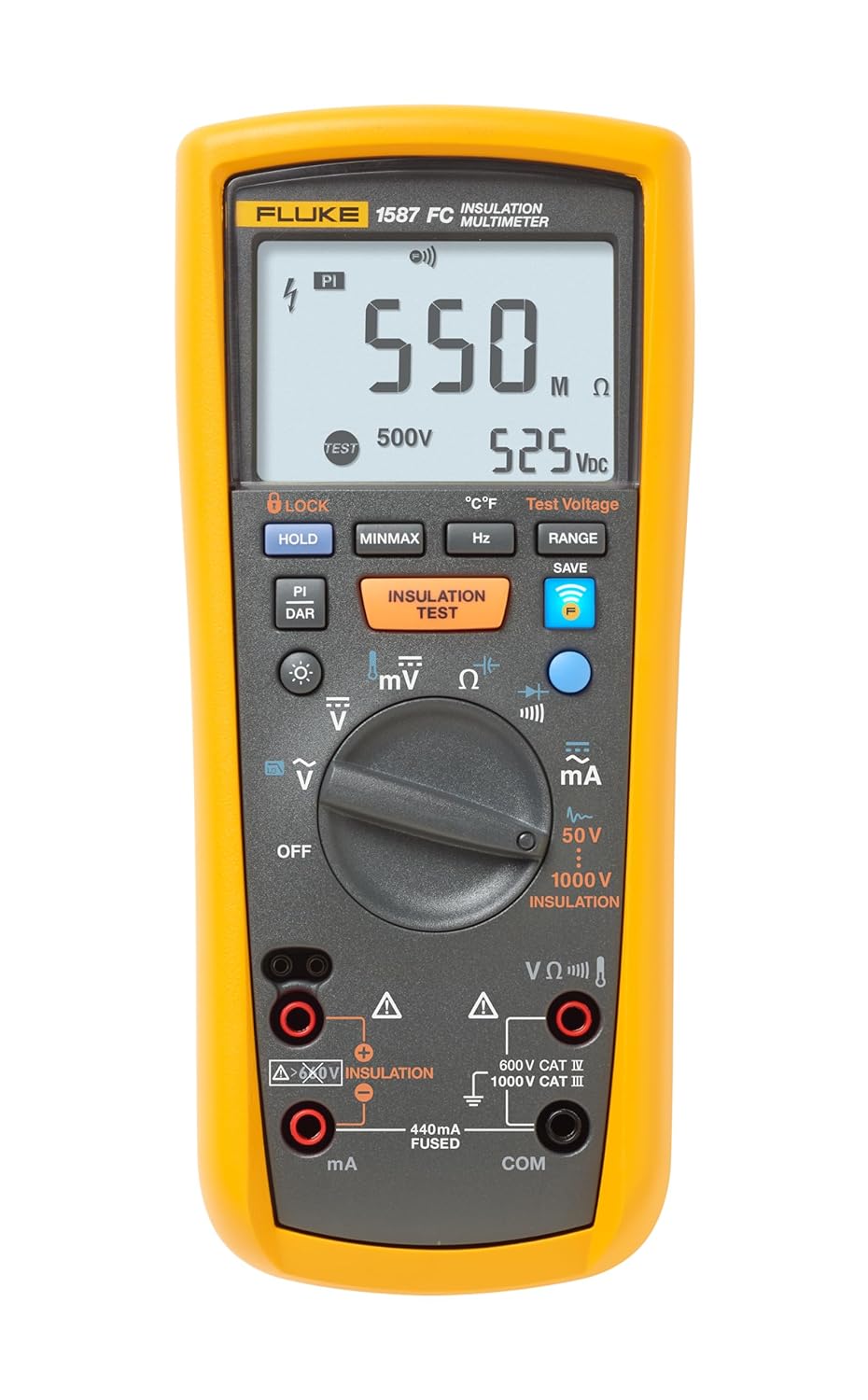
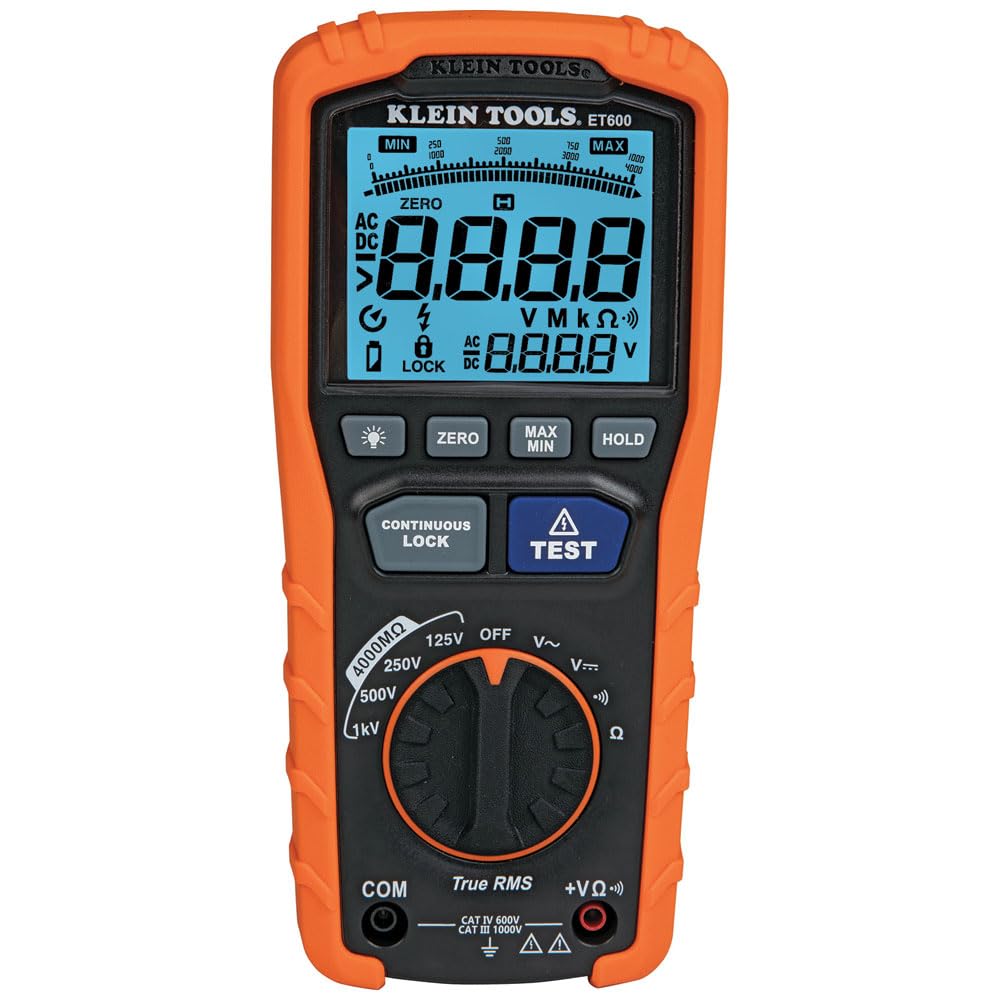
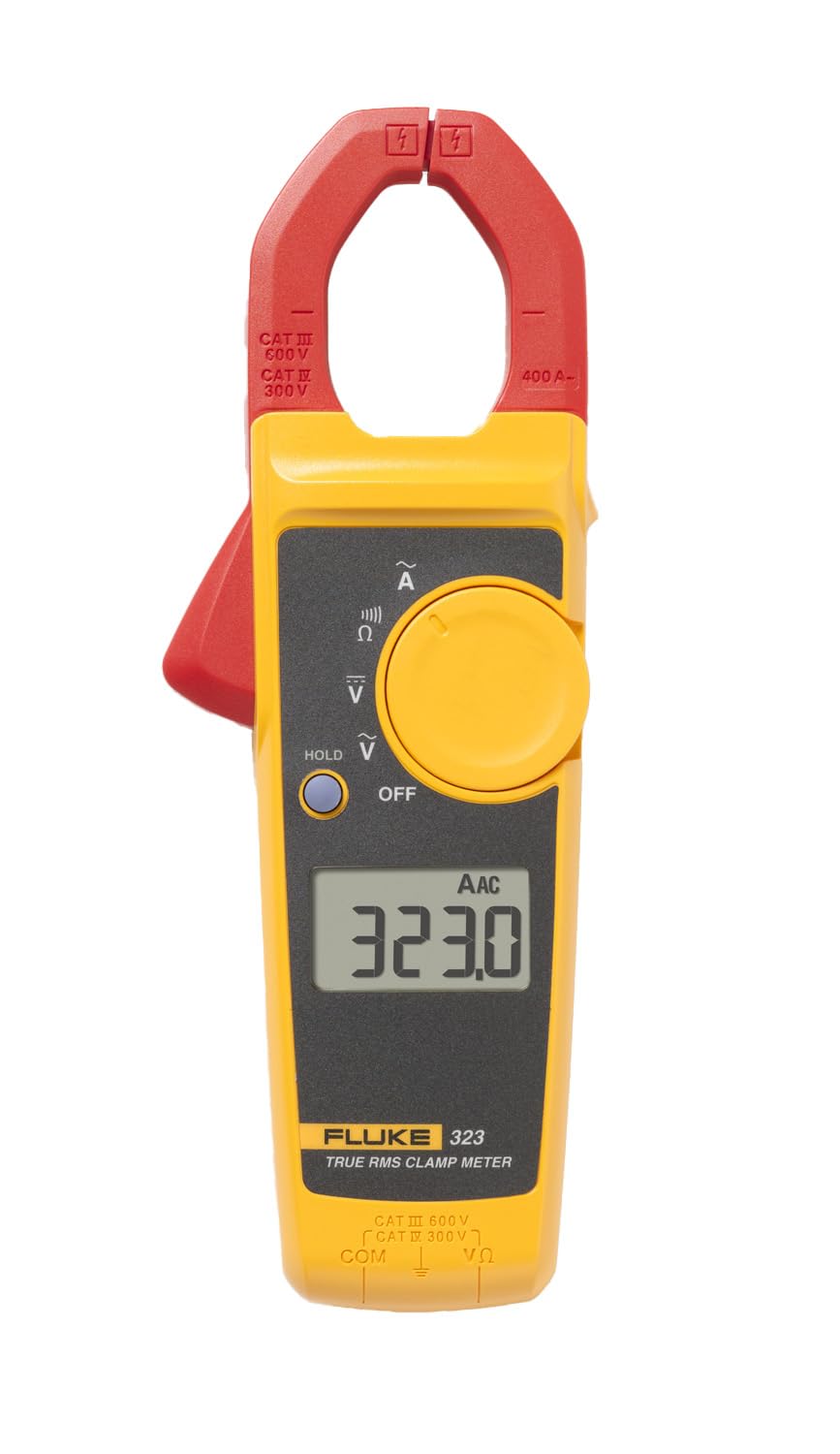
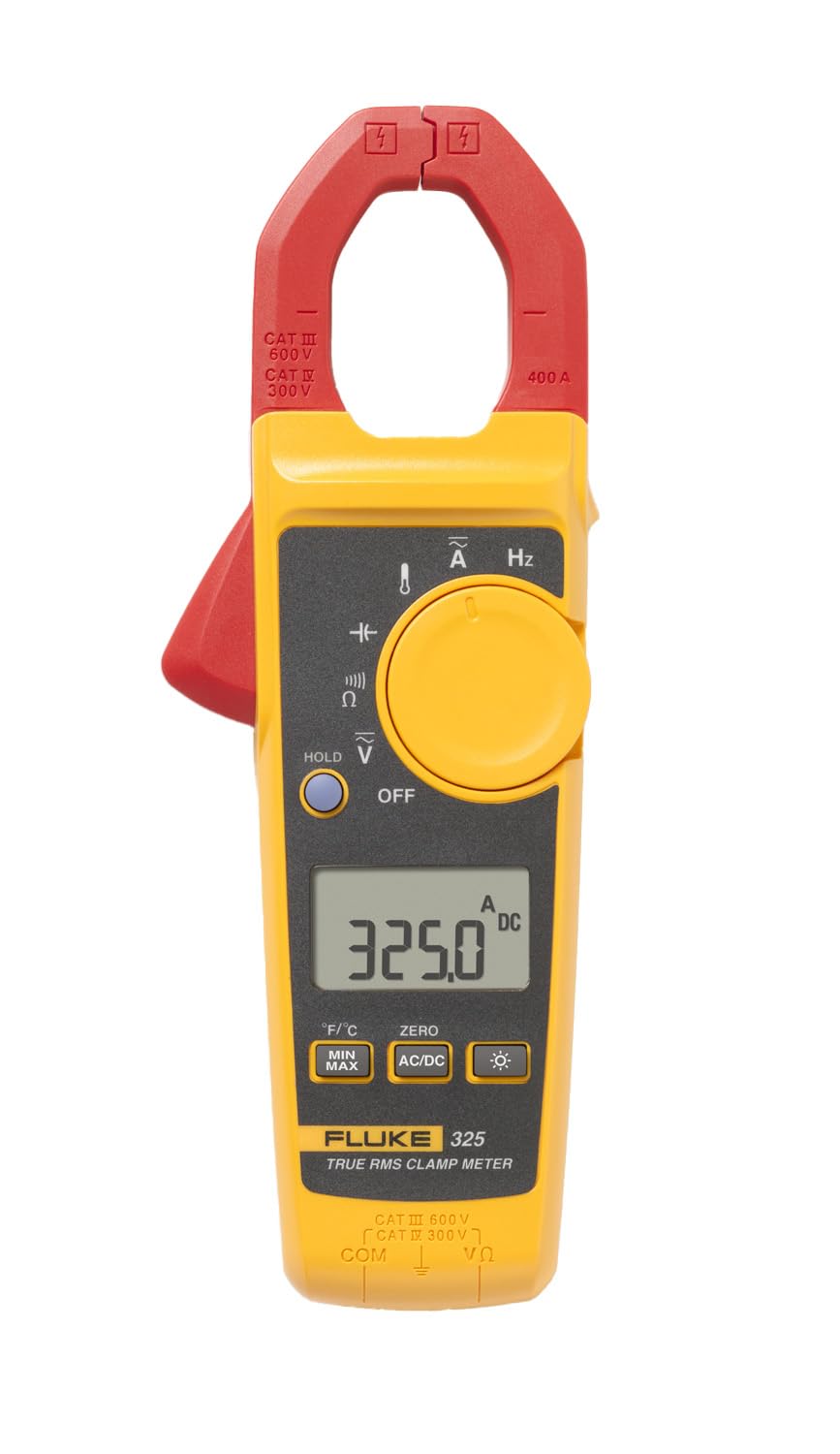
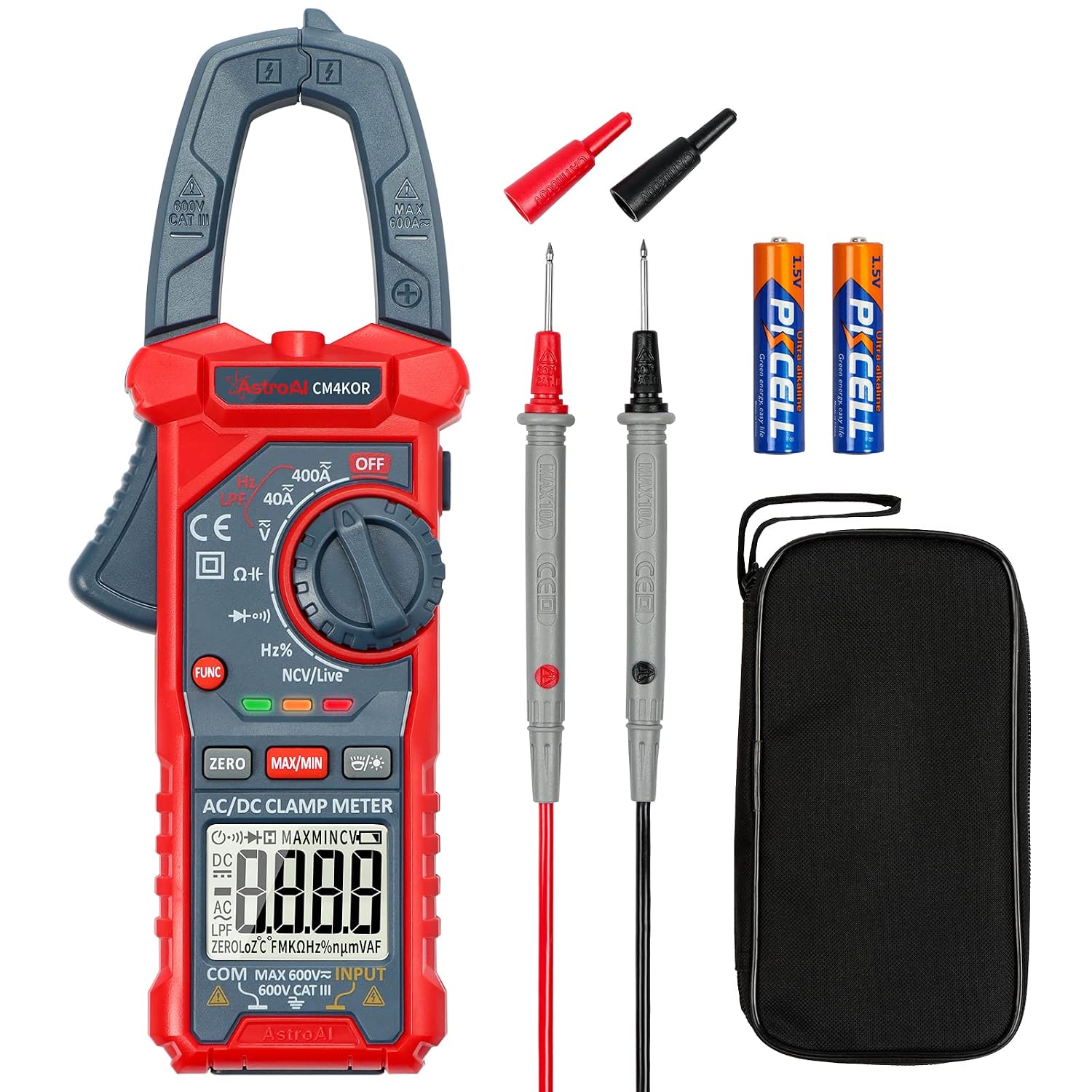
In addition, a process calibrator is used to measure the 4–20 mA output signal from the transmitter. 

For smart transmitters, a HART or Fieldbus communicator is required to adjust internal parameters and complete the calibration process accurately.

Calibration Procedure Overview

Calibration follows a structured process. First, review transmitter specifications. Check the sensor type and range.

Inspect the transmitter physically. Apply power and allow warm-up. Apply known temperature points. 

Measure the output at each point. Compare results with expected values. Then, adjust if necessary. Repeat measurements after adjustment and document all results.

Step-by-Step Calibration Example

A Pt100 temperature transmitter operates over a range of 0 to 100 °C and provides a 4–20 mA output signal.

Insert the sensor into a dry block. Set the dry block to 0 °C and allow stabilization. Measure the output current. 

The latter should be 4 mA. Record the value. Increase the temperature to 100 °C. Allow stabilization. Measure the output again.

This should be 20 mA. Adjust zero or span if needed. To confirm accuracy, the process must be repeated.

Smart Temperature Transmitter Calibration

Smart transmitters use digital communication. Protocols include HART and Modbus. And calibration can be done via software. Sensor trimming and output trimming are possible. 

Sensor trimming aligns the input measurement. Output trimming aligns the analog output.

Some transmitters store calibration data internally. This improves traceability. Smart calibration is faster and more precise.

Loop Calibration

Loop calibration checks the entire signal path. This includes the transmitter, wiring, and control system. A loop calibrator injects or measures signals.

This verifies that the controller reads correctly. Loop calibration is useful for troubleshooting. It ensures system-level accuracy.

Sources of Calibration Errors

Several factors cause calibration errors. Temperature instability is common. Poor thermal contact affects readings.

In addition, electrical noise can disturb measurements. While incorrect reference accuracy causes bias. 

Wiring resistance affects RTD signals. Cold junction compensation affects thermocouples. Human error is also significant. Proper procedure reduces these errors.

Environmental Effects on Calibration

Ambient conditions such as temperature and humidity matter. The affect electronic components and devices. Also, vibration can cause unstable readings. Air drafts affect dry block stability.

So, calibration should be done in controlled conditions. Allow sufficient stabilization time. Do not forget to avoid touching sensors during calibration.

Calibration Frequency

Calibration frequency depends on the application. When it comes to critical processes, frequent calibration is needed. But stable systems need less frequent checks. So, following manufacturer recommendations is a must.

Regulatory requirements may apply. Historical data helps determine intervals. Drift trends can be analyzed.

Documentation and Records

Calibration results must be recorded. Records include date and technician name. Equipment used must be listed. Reference serial numbers are important. Measured values and errors are recorded.

Pass or fail status is noted. Adjustment details should be included. Proper records support audits.

Standards and Guidelines

Several standards guide calibration. ISO 9001 requires measurement control. ISO/IEC 17025 defines calibration competence.

IEC standards cover temperature measurement. Industry-specific standards may apply. Using recognized standards guarantees consistent and high-quality results.

Temperature Transmitter Calibration: Best Practices

Always use traceable references. Follow written procedures. Also, allow sufficient warm-up time. Use appropriate calibration points. Plus, avoid unnecessary adjustments.

Verify results after calibration. Train personnel properly and regularly the calibration equipment should be maintained.

Diagnosing Calibration Problem

Some transmitters fail calibration. Wiring and connections should first be checked properly.

Verify sensor type settings. Inspect for damaged sensors. Checking power supply stability is crucial.

Reference accuracy must be confirmed. Replace faulty components if needed. Forcing adjustment beyond the limit is a bad practice. So not force adjustments beyond limits.

Safety Considerations

Calibration involves hot and cold surfaces. The risk of burns and frostbite is present. Also, electrical hazards may exist.

Hence, use proper personal protective equipment. Follow lockout procedures when required. It is recommended to ensure safe handling of equipment.

Applications Requiring High Accuracy

Most of the industry’s high accuracy is not an option; it is a must. The vivid example is pharmaceutical manufacturing.

Food processing also requires precision. Power generation depends on accurate temperature control.

Chemical reactions are temperature sensitive. Proper calibration supports these applications.

Automation and Calibration Management

Calibration management systems are used widely. Their main function is to schedule calibration tasks. Also, to store calibration records.

They generate reports automatically. Integration with asset management systems is common. This improves efficiency and compliance.

Key takeaways: Temperature Transmitter Calibration

This article details temperature transmitter calibration in detail. It addressed principles, equipment, procedures, errors, and best practices. Accurate temperature measurement requires correct transmitter calibration.

It ensures accuracy, safety, and compliance. Drift and environmental effects make calibration necessary.

Proper equipment and procedures are required. Understanding sensors and transmitters is important. 

Documentation and standards support quality systems. Regular calibration prevents costly errors.

Following best practices improves confidence in measurements. As technology advances, calibration methods will continue to improve.

Accurate temperature measurement will remain a critical requirement in industrial systems.

FAQ: Temperature Transmitter Calibration

What is temperature transmitter calibration?

Calibration is the process of comparing the transmitter’s output to a traceable reference standard to determine measurement error and, if necessary, make adjustments so that the output accurately reflects true temperature values. 

Why do I need to calibrate a temperature transmitter?

Transmitters drift over time due to aging, vibration, and environmental effects. Calibration ensures accuracy, process control, safety, and compliance with quality or regulatory standards. 

How often should a temperature transmitter be calibrated?

There is no universal interval. Frequency depends on how critical the process is, environmental conditions, historical drift data, and any applicable standards or industry requirements. Many industries perform calibration annually or more frequently for critical systems. 

What tools are used for calibration?

Common equipment includes dry-block calibrators, precision resistance simulators (for RTDs), millivolt simulators (for thermocouples), and loop calibrators to check 4–20 mA outputs. 

Can I calibrate just the transmitter electronically?

Yes. Transmitter-only calibration simulates the sensor input (resistance for RTDs, millivolts for thermocouples) and checks that the analog output corresponds correctly to the input. 

Should I calibrate the sensor and transmitter together?

For the highest accuracy, calibrate the full system (sensor + transmitter) under real temperature conditions. This accounts for the entire measurement chain. 

How many calibration points should be used?

Best practice uses at least 3–5 evenly spaced points across the range (e.g., 0%, 25%, 50%, 75%, 100%) to verify linearity and accuracy through the span. 

What Is a Capacitive Water Level Sensor, and How Does It Work?

The demand for precise fluid management is crucial in many applications. For instance, the basic one is water. So, accurately measuring water levels is essential in many engineering systems.

Applications may vary from simple household water tanks to industrial processes. Traditional methods include float switches and pressure sensors. 

However, these methods may suffer from wear or mechanical failure. Capacitive water level sensors offer a reliable alternative.

They operate without moving parts. They provide continuous measurement. They are also suitable for harsh environments.

Capacitive water level sensors are widely used today. They appear in water treatment, HVAC, agriculture, and consumer electronics. Their popularity comes from simplicity and durability. 

This article explains what a capacitive water level sensor is. It also describes how it works. Construction, operating principles, advantages, limitations, and applications are discussed in detail.

Capacitive Water Level Sensor: Definition

A capacitive water level sensor is a device used to detect the liquid level. It works by measuring changes in capacitance.

These changes occur as the water level varies. The sensor does not require direct contact with the liquid.

In many designs, the sensing element is placed outside the container. The working principle of the sensor is the conductive nature of water. Compared to air, water contains a higher dielectric constant. 

As the water level rises or falls, the effective capacitance changes. This change is processed by electronics. The result is a level indication. The output may be analog or digital.

Key Components

  • Sensing Electrode: The primary probe that interacts with the medium.
  • Reference Electrode: Forms the second plate of the capacitive system and can be implemented as a rod or as the container itself.
  • Insulating Coating: This part is often made of polytetrafluoroethylene (PTFE) or glass. Its main purpose is to prevent short-circuiting situations. The process takes place when measuring conductive liquids like salt water.
  • Signal Processing Unit: Amplifiers and filters are used to convert the capacitance data into a standardized output.

Basic Concept of Capacitance

Capacitance is the ability to store electrical charge. It exists between two conductive surfaces (a parallel plate capacitor). These surfaces are separated by an insulating material. This material is called a dielectric.

Capacitance depends on three factors. These are plate area, separation distance, and dielectric constant. The basic formula is

Where:
  C: Capacitance

ϵ: The dielectric constant.

A: The surface area of the plates.

d: The gap between the plates

The capacitance changes directly proportional to the change in dielectric. This is due to the fact that water has a high dielectric constant. Air has a much lower one. This difference forms the basis of capacitive sensing.

Principle of a Capacitive Water Level Sensor

The sensor forms a capacitor. One electrode is the sensing element, while the other may be a reference electrode or ground.

The space between them includes the container wall and liquid. When the container is empty, air dominates the dielectric. So, the capacitance is low. 

As water rises, air is replaced by water. The effective dielectric constant increases, and capacitance rises accordingly. The sensor electronics measure this change. 

The measured value is converted into a signal. This signal represents the water level. The relationship is continuous. This allows for level measurement rather than simple detection.

Sensor Construction and Design

Capacitive water level sensors use simple structures. The sensing electrode may be a metal strip or foil. It can be mounted externally. In non-contact designs, the electrode sits outside the tank wall.

The tank wall acts as part of the dielectric. Plastic or glass containers work well. Metal containers require insulation. Some sensors use coaxial designs. Others use parallel plates.

The electronics are usually integrated. They include an oscillator or capacitance-to-digital converter.

Signal conditioning circuits process the raw measurement. Temperature compensation may also be included.

Types of Capacitive Water Level Sensors

Capacitive sensors can be classified by design. Contact and non-contact types are common. Contact capacitive sensors place electrodes inside the liquid. They provide high sensitivity. 

However, they may be affected by contamination. Corrosion is also a concern. Non-contact capacitive sensors mount externally. They never touch the water. This improves durability and hygiene. 

These sensors are common in drinking water systems. Sensors can also be point-level or continuous-level.

Point-level sensors detect specific heights, while continuous sensors provide full-level measurement.

Signal Processing and Output

The capacitance change is very small. Hence, accurate electronics are required. Many sensors use oscillators since capacitance affects oscillation frequency.

This frequency shift is measured. Other designs use charge-discharge timing. The time constant changes with capacitance. 

Digital converters process the signal. A simple microcontroller may be used. The final output, most of the time, is analog.

Common outputs include 0–10 V or 4–20 mA. Digital outputs are also available, such as I²C, UART, or switching signals.

Calibration of Capacitive Water Level Sensors

Calibration ensures accurate measurement. It aligns sensor output with the actual water level.

Calibration may be factory-set, or it may also be field-adjustable. Typically, empty and full levels are recorded. Intermediate points may be added. 

Software-based calibration is common. Some sensors support auto-calibration. Calibration compensates for tank material and accounts for wall thickness. Temperature effects can also be corrected.

Advantages of Capacitive Water Level Sensors

Capacitive sensors have no moving parts. This improves reliability because mechanical wear is eliminated. They support continuous measurement. Accuracy is generally good. Sensitivity can be adjusted. 

Non-contact designs improve hygiene, and installation is simple. External mounting avoids tank modification. Maintenance requirements are low. Power consumption is also minimal.

Limitations and Challenges

Capacitive sensors detect variations in dielectric constant. Water composition affects performance, such as conductivity and impurities. Temperature variations influence the dielectric constant, so compensation may be required. 

In addition, the tank material also affects the measurement. Thick or metallic walls can cause errors.

Also, foam and condensation may introduce noise. Hence, careful design is necessary. Proper calibration is critical.

Applications of Capacitive Water Level Sensors

Capacitive water level sensors are widely used. Water tanks are a common application. They are used in residential and commercial systems. In industrial processes, they monitor liquid levels. Examples include chemical tanks and cooling systems. 

They are also used in HVAC equipment as well as agricultural irrigation systems. Consumer appliances also rely on them. For instance, include water dispensers and coffee machines.

Shortly,

  • Industrial Automation: Precise control of liquids in pharmaceutical reactors. Also, in food processing, to ensure batch consistency.
  • Smart Home Appliances: Integrated into coffee makers and dishwashers. Also, in floor scrubbers, to provide compact, leak-resistant level sensing.
  • Environmental Monitoring: Early effect of a flood can be predicted if rivers and reservoirs are continuously monitored. Also, to aid sustainable water resource management.
  • Agriculture: Applied in smart irrigation systems to help optimize water usage by relying on real-time water storage data.

Comparison with Other Level Measurement Methods

Float switches are simple but mechanical. This means they wear out over time, and accuracy is limited. Ultrasonic sensors are non-contact since they depend on sound waves. Foam and vapor can interfere.

Pressure sensors measure hydrostatic pressure. But they require contact. Density changes affect accuracy.

Capacitive sensors offer a balance. They are compact and reliable. So, they suit many applications.

Installation Considerations

Proper installation improves accuracy. Sensor placement matters. Such that external sensors must align with the water level range.

Tank material must be evaluated. For instance, plastic walls are ideal. Metal tanks need insulation layers.

Also, environmental factors should be considered. Moisture and temperature matter. In addition, electrical noise should be minimized.

Maintenance and Reliability

One advantage here is that maintenance requirements are minimal. Non-contact sensors require almost none. Periodic calibration may be needed. Electronics should be protected.

Enclosures must suit the environment. Long-term stability is generally good. With correct design, the lifespan is long. Reliability is high in static applications.

Future Developments

Capacitive sensing continues to evolve. Integration with IoT platforms is increasing. Smart sensors provide diagnostics. Improved algorithms enhance accuracy. Adaptive calibration is becoming common.

Multi-level detection is also advancing. Energy-efficient designs are in focus. Wireless connectivity is growing. Capacitive sensors remain relevant.

Conclusion

This article addressed capacitive water level sensors and their operation. The basic principle of capacitance was explained.

Sensor construction and signal processing were described. Types and applications were reviewed. 

Advantages and limitations were discussed clearly. Capacitive water level sensors provide reliable measurement. They operate without moving parts. Non-contact designs improve durability and hygiene. 

While calibration and material considerations are important, the benefits are significant. As industries adopt smarter systems, capacitive water level sensors continue to play an important role in accurate and efficient level measurement.

Frequently Asked Questions

What is a capacitive water level sensor?

It is a sensor that detects water level by measuring changes in capacitance caused by liquid between electrodes. 

How does a capacitive water level sensor work?

Two electrodes form a capacitor. As water replaces air between them, the dielectric changes, increasing capacitance, which the electronics convert to a level signal. 

Can these sensors be used without touching the liquid?

Yes. Some designs detect the level through the container wall, enabling non-contact sensing. 

What kinds of outputs do they provide?

Outputs vary and can include analog signals like 4–20 mA or digital communications, depending on the model. 

Are capacitive sensors reliable in harsh environments?

They are solid-state with no moving parts and can be sealed for durability, but calibration may be needed for variable liquids.

Transducer vs Sensor: What are the Differences?

In modern engineering and industrial systems, detecting and measuring physical quantities is essential. These quantities must also be converted into usable signals.

Applications range from temperature control in furnaces to pressure monitoring in pipelines. 

Motion detection in robotics is another common example. Devices known as sensors and transducers perform these tasks. In the area of measurement and control systems, they play a critical role. 

Notice that these terminologies are not identical even if they are often used interchangeably.

This confusion can cause errors in system design and instrumentation selection. This article explains the concepts of sensors and transducers. 

It describes their operating principles. It also clearly outlines the differences between them using practical examples and suggested diagrams.

Understanding Measurement Systems

Every measurement system follows a logical sequence. A physical quantity is a measurable property found in the real world.

Examples include temperature, pressure, displacement, and light. This quantity cannot be processed directly by control systems or computers.

The quantity must first be detected. It must then be converted into an interpretable form. This form allows transmission, processing, or analysis.

This conversion process is central to instrumentation engineering. Several devices may be involved. 

Some detect physical phenomena. Others convert energy, condition signals, or transmit information.

Sensors and transducers operate within this chain. Their roles are distinct and hierarchical.

The following figure indicates a block diagram showing physical quantity, sensor, signal conditioning, and output.

What is a sensor?

A sensor is often defined as a device that receives and responds to a signal or stimulus.

The stimulus is the quantity, property, or condition that is sensed and converted into an electrical signal.

It might be temperature, pressure, force, light, humidity, gas concentration, or motion. The primary role of a sensor is detection.

A sensor does not necessarily provide a standardized electrical output. In many cases, it produces a change in a physical property.

For example, an RTD changes resistance as temperature varies. A thermistor behaves similarly but with nonlinear characteristics.

These devices sense temperature effectively. However, their outputs are not directly usable by control systems.

Sensors are therefore considered the first element in a measurement chain. They are in direct contact with the process or environment.

Careful selection is of key importance. Durability, repeatability, and accuracy must match operating conditions. The next figure shows an illustration of different physical quantities interacting with sensors.

Characteristics of Sensors

Sensors are defined by several performance parameters. These include sensitivity, range, accuracy, resolution, and response time.

Sensitivity describes output change relative to input change. Range defines the limits of reliable detection.

Environmental robustness is also critical. Take into account that industrial sensors may face vibration and moisture.

In addition, face corrosive chemicals and/or extreme temperatures. For this reason, adequate protective housings or coatings are often required.

A sensor alone may not produce a usable signal. Additional circuitry is often needed. This circuitry converts, amplifies, or standardizes the output.

What Is the Meaning of a Transducer?

A transducer converts energy (variation) from one form to another. In the world of instrumentation, this usually means converting a physical quantity into an electrical signal.

This physical quantity could be pressure or brightness. A thermocouple is one of the most well-known examples. Hence, conversion is the defining function. 

A pressure transducer is used to convert mechanical pressure into two formats. These formats could be voltage form or current form.

For instance, a microphone converts sound into an electrical signal. While a loudspeaker performs the reverse conversion.

In many systems, a transducer contains a sensor. It also includes components for signal conversion. The result is a usable and standardized output.

Types of Transducers

Transducers are commonly classified as input or output devices. Input transducers convert physical quantities into electrical signals. Examples include pressure accelerometers, thermocouples, and transducers.

Output transducers perform the opposite function. General actuators, solenoids, and motors convert electrical signals into physical action.

Transducers may also be active or passive. Active transducers generate output without external power. 

Thermocouples are a typical example. Passive transducers require excitation. Strain gauges and RTDs fall into this category. This classification differs from sensors.

Sensors are grouped based on the quantities they detect rather than their energy conversion method.

Sensors and Transducers: Relationship

The relationship is best explained hierarchically. A sensor is often part of a transducer. The sensor detects the physical quantity. The transducer ensures usable energy conversion.

Consider an industrial pressure transmitter. A sensing element detects pressure-induced deformation. This sensing element changes resistance. On its own, it is only a sensor.

The transducer circuitry converts this change. It produces a standardized 4–20 mA signal. This signal can be transmitted reliably over long distances. All transducers contain sensors. Not all sensors are complete transducers.

Sensor and Transducer: Key Differences

The important difference is based in functionality of each one. A sensor detects a physical quantity.

A transducer converts energy. Detection indicates the presence of change. Conversion produces a usable output. Sensor outputs may be resistance or displacement changes. 

Transducer outputs are typically voltage, current, or frequency. From a system perspective, sensors interface with the process.

Transducers interface with control systems. This distinction is important in specifications and procurement.

Examples Illustrating the Difference

A bimetallic strip bends whenever there is a change on temperature change. It senses temperature, but it does not generate an electrical signal. It functions as a sensor.

The system turns into a transducer when the aforementioned motion is converted into an electrical signal.

A light-dependent resistor changes resistance with light intensity. It is a sensor. When paired with a circuit that outputs voltage, it becomes a light transducer.

In industry, datasheets often reflect this distinction. The sensing element is called a sensor. The complete device is called a transducer or transmitter.

Applications in Engineering and Industry

Sensors and transducers are used across many fields. These include robotics, automotive systems, and most importantly, automation. In addition, they are also useful in medical equipment and electronics. 

In control systems, accurate sensing ensures stability. Reliable transduction ensures compatibility with controllers.

In process industries, transmitters enable remote monitoring. In robotics, sensors detect position and force. 

Transducers convert these detections into electrical signals. This enables real-time control. Understanding the distinction improves device selection.

Common Misunderstanding

A large number of technicians and/or engineers have a common misconception. This is to think that sensors and transducers are identical. This is not true. Every transducer includes sensing, but not every sensor performs transduction.

Another misunderstanding is assuming sensors always produce electrical outputs. Many do not.

Loose terminology contributes to confusion. One of the essential requisites in engineering communication is precise language.

A Sensor and a Transducer?

The choice depends on application needs. Simple detection may only require a sensor. System integration usually requires a transducer.

Engineers must consider signal compatibility and the environment. Accuracy and cost are also factors. Complete transducers often reduce complexity and improve reliability.

Key Takeaways: Transducer vs Sensor

This article addressed the fundamental differences between sensors and transducers. It clarified how both are used in measurement systems. A sensor is responsible for detecting physical quantities. 

These quantities include temperature, pressure, light, or motion. A transducer performs energy conversion.

It produces a usable output signal, most often electrical. Although the terms are often used interchangeably, they represent different functions. 

Sensors are closest to the physical process. Transducers interface directly with control and monitoring systems.

Understanding this distinction improves device selection. It also reduces design errors and specification ambiguity. 

Clear terminology supports reliable system design. It ultimately leads to better performance in industrial and engineering applications.

FAQ: Transducer vs Sensor

What is a sensor?

A sensor detects a physical quantity and responds to changes in the environment.

What is a transducer?

A transducer converts one form of energy into another, usually into an electrical signal.

Are sensors and transducers the same?

No. A sensor detects, while a transducer converts energy into a usable output.

Does a transducer contain a sensor?

Yes, most measurement transducers include a sensor as the sensing element.

Can a sensor work without being a transducer?

Yes. Some sensors only change a physical property and do not provide a usable output.

Does a sensor always produce an electrical signal?

No. Some sensors produce resistance, capacitance, or mechanical changes.

What kind of output does a transducer provide?

Typically, a usable electrical signal is a voltage, current, or frequency.

Is every sensor a transducer?

Not necessarily. Only sensors that perform energy conversion qualify as transducers.

Why is the difference important?

It helps in proper device selection and clear engineering communication.

Can a transducer work in reverse?

Yes. Some transducers act as actuators, converting electrical energy into physical output.

Thermocouple Working Principle

Temperature measurement plays a critical role in engineering systems. Process stability and efficiency can be ensured by a correct temperature.

So, this provides safety. Many industrial processes depend on reliable temperature sensing devices. 

Thermocouples are among the most widely used temperature sensors. They are valued for wide temperature capability, durability, and simplicity. Thermocouples operate based on a fundamental thermoelectric phenomenon. 

This phenomenon converts temperature differences into measurable electrical voltage. No external power source is required for thermocouple operation. They function reliably under harsh industrial environments. 

Corrosive conditions, vibrations, and high temperatures do not easily damage them. Technicians and engineers need to understand the thermocouple working principle. Correct knowledge ensures accurate measurements and proper sensor selection. 

This article explains thermocouple operation, construction, characteristics, and their applications in industry.

Basic Concept of Thermocouples

A thermocouple uses two unlike metallic wires. These wires are joined together electrically at one end.

The joint point is called the measuring junction. The free ends connect to a measuring instrument. When a temperature difference exists, a small electrical voltage appears.

This voltage depends on the metals used. Thermocouples measure temperature indirectly using voltage generation.

The measured voltage represents the temperature difference. Proper interpretation converts voltage into temperature values.

Seebeck Effect and Its Role

Thermocouples operate based on the Seebeck effect. This outcome explains a relationship between heat and magnetism. German physicist Thomas Seebeck discovered this thermoelectric phenomenon. 

It occurs when dissimilar conductors form a closed circuit. A temperature gradient causes charge carriers to move. This movement generates an electromotive force within conductors. 

The resulting voltage is proportional to the temperature difference. Each metal pair has a unique Seebeck coefficient. This coefficient determines thermocouple sensitivity and output characteristics.

Hot Junction and Cold Junction Concept

Thermocouples contain two essential temperature junctions. The hot junction senses the process temperature directly.

It is placed inside the measurement environment. The cold junction serves as the reference junction. It remains at a known reference temperature. 

Voltage develops due to the temperature difference between junctions. Accurate reference temperature ensures reliable measurements. Modern instruments compensate for reference temperature electronically.

Cold Junction Compensation

Cold junction compensation is required for accurate thermocouple readings. It corrects errors caused by reference temperature variations.

Earlier systems used ice baths as reference junctions. Modern systems use electronic temperature sensors instead. 

Compensation circuits adjust the measured thermocouple voltage. This adjustment ensures correct temperature calculation.

Without compensation, significant measurement errors occur. Digital instruments perform compensation automatically.

Thermocouple Voltage Generation Characteristics

In general, a very small number of electrical voltages is generated by thermocouples. Typical outputs are in microvolt ranges.

Voltage increases as the temperature difference increases. Each thermocouple type produces characteristic voltage curves. These curves are nonlinear across temperature ranges. 

Signal conditioning improves measurement accuracy significantly. Amplifiers increase voltage to measurable levels. Filtering reduces electrical noise interference.

Common Thermocouple Types

Many standardized thermocouple types are widely used worldwide. Each type uses specific metal combinations.

Type K uses nickel-chromium and nickel-aluminum materials. Type J uses iron and constantan metals. 

Type T uses copper and constantan conductors. Types R and S use platinum alloys. Each type supports specific temperature ranges. Material choice affects accuracy and longevity.

Materials and Construction

Thermocouple materials are selected for long-term stability and must withstand high temperatures and oxidation effects.

Insulation prevents electrical short circuits between conductors. Common insulation materials include fiberglass and ceramic compounds. 

Protective sheaths improve mechanical strength significantly. Metal sheaths resist corrosion and vibration effectively.

Construction affects response time and durability. Proper selection ensures long-term reliable operation.

Measurement Circuit and Instrumentation

Thermocouples connect to specialized temperature-measuring instruments. These instruments convert voltage into temperature readings.

Analog meters display temperature using calibrated scales. Digital instruments use internal conversion algorithms. 

Microcontrollers apply polynomial approximations for conversion. Signal conditioning improves accuracy and stability.

Electrical isolation protects sensitive measurement circuits. Proper grounding reduces electrical noise problems.

Accuracy and Sensitivity Considerations

The accuracy of a thermocouple depends on multiple influencing factors. Material purity strongly influences output stability.

Junction quality affects thermal response accuracy. Cold junction compensation accuracy is essential. 

Long-term measurement reliability can be improved by performing calibration. It has been proven that thermocouples are less accurate than RTDs.

However, they tolerate extreme temperatures better. Sensitivity varies depending on thermocouple type.

Response Time Characteristics

Generally, relatively fast response times are offered by all thermocouples. Smaller junctions respond faster to temperature changes.

Sheathed probes respond more slowly due to thermal mass. Response time depends on construction and environment. 

Bare junctions provide the fastest measurements. However, they offer minimal mechanical protection.

Engineers balance speed and durability requirements. Application determines optimal probe selection.

Advantages of Thermocouples

Thermocouples operate over extremely wide temperature ranges. They require no external power supply.

Their construction is simple and robust. They perform reliably in harsh environments. Thermocouples resist vibration and mechanical shock. 

They are relatively inexpensive sensors. Maintenance requirements remain minimal. They suit high-temperature industrial applications.

Limitations of Thermocouples

Thermocouples produce very low output voltages. This makes them susceptible to electrical noise interference. Accuracy is lower compared to RTDs. The output voltage is nonlinear with temperature. 

Cold junction compensation increases system complexity. Material aging causes long-term measurement drift.

Periodic calibration may be required. Signal conditioning increases overall system cost.

Industrial Applications

Many industries across the world use thermocouples in daily basis. They monitor furnace and kiln temperatures.

Power plants use them for turbine monitoring. Engines use thermocouples for exhaust measurements. 

Steel manufacturing requires high-temperature thermocouples. Chemical processes rely on temperature feedback.

Food processing equipment uses thermocouple sensors. Aerospace systems also depend on thermocouples.

Comparison with Other Temperature Sensors

Thermocouples differ significantly from thermistors and RTDs. Thermistors provide high sensitivity at low temperatures.

RTDs offer higher accuracy and stability. Thermocouples are suitable in operation where much higher temperatures are involved. 

They withstand harsher operating environments. Response time is generally faster. Sensor choice depends on application requirements. Cost and durability influence selection decisions.

Installation and Best Practices

Proper installation ensures accurate temperature measurement results. Avoid sharp bends near the junction.

Use correct extension and compensation cables. Also, ensure good thermal contact with surfaces. 

One of the very unwanted disruptions in an electronic circuit is electromagnetic interference (EMI).

Hence, wires must be protected at all costs from this phenomenon. Also, avoid mixing different thermocouple materials.

Follow the manufacturer’s installation recommendations carefully. Regular checks enhance reliability over extended periods.

Calibration and Maintenance

Calibration verifies thermocouple measurement accuracy periodically. Reference temperature sources are used for calibration.

Periodic calibration compensates for material drift. High temperatures accelerate aging effects. 

Maintenance includes checking the insulation condition regularly. Damaged probes should be replaced promptly. Clean junctions improve thermal contact. Documentation ensures traceability and compliance.

Key takeaways: Thermocouple Working Principle

This article reviewed the thermocouple working principle thoroughly. Thermocouples are essential temperature measurement devices.

They operate using the Seebeck thermoelectric effect. Two dissimilar metals generate voltage from temperature differences. 

Their simple design enables widespread industrial use. They perform reliably in extreme temperature environments.

Despite limitations, their advantages remain significant. Proper selection ensures accurate and stable measurements. 

Understanding their working principle improves engineering decisions. Thermocouples are, and will remain, vital in industrial instrumentation systems.

FAQ: Thermocouple Working Principle

What is a thermocouple?

A thermocouple is a temperature sensor made from two dissimilar metal wires joined at a junction.

How does a thermocouple work?

It generates a small voltage proportional to the temperature difference between two junctions. 

What principle explains thermocouple operation?

Thermocouples operate based primarily on the Seebeck effect

What is the Seebeck effect?

When two dissimilar metals form a junction and experience a temperature difference, a thermoelectric voltage (EMF) is produced. 

Does a thermocouple measure absolute temperature?

Not directly, it measures the difference between the hot junction and a reference (cold) junction.

What is the “hot junction”?

The hot junction is the point where the two different metals are joined and exposed to the measured temperature.

What is a Transmitter and How it operate?

A transmitter is an essential component in industrial automation and communication systems.

In industrial settings, it measures a physical process variable. It then converts that reading into a standardized signal. 

This signal is then sent to a control system or a display device. Without transmitters, operators would be unable to observe key parameters. These parameters include temperature, pressure, or flow.

 In communications, transmitters send information over long distances. This article focuses on transmitters used in industry.

It explains what they are, their parts, categories, and their purpose. A solid understanding of transmitters is a core part of process control engineering.

What is a Transmitter and How it operate?

A transmitter senses a physical input and converts it into a standardized output signal. This input can be a process variable such as flow, pressure, temperature, or level. The output is usually an electrical signal like a  4-20 mA DC current loop.

It can also be a digital protocol such as HART, Foundation Fieldbus, or Profibus. The signal is proportional to the measured value. It can be reliably sent long distances.

This enables central control rooms to monitor processes in remote areas. It allows operators to observe them in real time.

Principles of Operation

Transmitter operation involves several conversion stages:

  1. Sensing: A primary sensor detects the physical variable.
  2. Conversion: A transducer converts the sensor’s small electrical change into a usable electrical signal.
  3. Transmission: The signal conditioning circuitry amplifies and formats the signal into the standard output. It is then sent wired or wireless to a receiving device.

The final output represents the measured variable in a simple, usable form. For example, 4 mA may represent 0%. 20 mA output may indicate 100% of the measurement range.

Key Components

Modern transmitters are advanced instruments. They are made up of several coordinated components.

The Sensor (Primary Element)

This component directly contacts the process. Examples include thermocouples for temperature and diaphragms for pressure.

They also include differential pressure devices for flow measurements. Its function is to sense the physical condition accurately.

The Transducer

The transducer changes the physical measurement into an electrical signal. For instance, a strain gauge on a pressure diaphragm transforms mechanical movement into small electrical resistance or voltage changes.

Signal Conditioning and Electronics

This section acts as the transmitter’s intelligence. Many modern units include a microprocessor. The electronics amplify, filter, and linearize the raw transducer signal. They apply calibration settings to maintain accuracy. 

They also convert the signal into the standard output form. These circuits are typically sealed. This protects them from tough industrial conditions.

The Enclosure

The enclosure protects the electronics from environmental hazards. Industrial sites often expose equipment to dust, humidity, and vibration.

Enclosures are usually built from stainless steel or cast aluminum. They are often designed to be explosion-proof in hazardous zones.

The Display/Interface

Many transmitters include a local display for real-time readings. They may also have buttons or magnetic tools for adjustment and calibration.

The following figure depicts a block diagram of an industrial transmitter showing the sensor/transducer, signal conditioner, microprocessor, and output stage.

Types of Transmitters by Measured Variable

Transmitters are classified based on the physical parameter they measure.

Pressure Transmitters

These devices measure differential, gauge, or absolute pressure. They use sensing technologies like piezoresistive, capacitive, or strain-gauge-based designs. They are vital for ensuring system integrity. They also support closed-loop control.

Temperature Transmitters

These use RTDs or thermocouples as sensors. They convert resistance or voltage variations into standard signals. These signals help maintain proper temperature levels in processes.

Flow Transmitters

Flow transmitters measure fluid movement within pipes. They use elements such as orifice plates, vortex sensors, or magnetic flow meters. They ensure the proper flow of materials in industrial operations.

Level Transmitters

These measure the level of materials in containers. They use radar, ultrasonic waves, hydrostatic pressure, or capacitance. They help prevent tanks from overfilling or running dry.

Signal Types: Analog and Digital

Transmitters use analog or digital signals to communicate with control systems.

Analog Signal (4–20 mA)

The 4-20 mA current loop remains the industry standard. It is dependable and resistant to noise. It uses 4 mA as the “live zero” to indicate a valid reading rather than a wiring fault. This method has been widely used for many years.

Digital Communication 

Digital communication protocols are sets of rules that govern how data is exchanged between devices over a network.

They are defining the format, timing, and sequence of data transmission. Newer transmitters communicate using digital protocols. These include:

  • HART: Adds a digital signal onto the 4-20 mA loop. It permits remote setup and diagnostics.
  • Foundation Fieldbus and Profibus PA: Fully digital networks. They allow bi-directional communication and multiple devices on one cable pair.

The Role of Wireless Transmitters

Wireless transmitters are becoming increasingly common. They communicate using radio frequency signals.

  • Benefits: Reduced installation effort and greater flexibility in placement. They are ideal for remote or difficult locations.
  • Technologies: WirelessHART is a widely used standard.
  • Applications: Environmental monitoring and asset tracking. They are also used for adding extra measurement points without running cables.

The following figure shows a comparison of a 4-20 mA analog loop against a digital network such as HART or Fieldbus.

Advantages and Disadvantages

Transmitters provide many benefits in automation. They deliver accurate and dependable measurement data. They make remote monitoring possible. They use standardized signals that simplify system integration. 

Their robust construction suits harsh industrial settings. However, they can be expensive. They require periodic calibration. They may also face compatibility issues between different digital communication systems.

Installation and Calibration

Proper installation is essential for correct performance. Transmitters should be mounted in a way that minimizes vibration. They must also reflect accurate process conditions. Pressure taps must be correctly positioned. 

Temperature sensors must be located where they can accurately read the process temperature. Calibration maintains measurement accuracy. It involves comparing the transmitter’s reading to a precise reference standard.

 Routine calibration ensures reliability. It also supports compliance with quality regulations. The International Society of Automation (ISA) provides recognized guidelines for proper installation and calibration.

Conclusion

This article evaluated the essential role of transmitters in modern industrial automation and process control. These devices act as the critical link between the physical world and the digital control environment. 

They convert real-world variables into standardized and reliable signals. Whether measuring pressure, temperature, flow, or level, transmitters ensure that control systems receive accurate data. 

They support safe and efficient operation. The   analog standard remains widely trusted. Digital and wireless technologies continue to improve diagnostics and integration. These technologies also increase flexibility in system design. 

A solid understanding of transmitter types, functions, installation, and calibration is vital. This knowledge is important for engineers and technicians. It is also important for anyone responsible for maintaining high-performance industrial systems.

FAQ: What is a Transmitter?

What is a transmitter in process control?

A transmitter is a device that converts a physical measurement (such as pressure, temperature, flow, or level) into a standardized output signal.

How does a transmitter work?

It senses the process variable via a sensor, converts the sensor signal into electrical form via a transducer, then conditions and outputs a standard signal to a control system. 

What are common output signals for transmitters?

Typical outputs are analog (e.g., 4-20 mA) and digital protocols like HART, Foundation Fieldbus or Profibus. 

What kinds of process variables can transmitters measure?

They can measure pressure, temperature, flow, level, and other variables such as pH, gas concentration, and humidity. 

Why are transmitters important in industrial automation?

They enable accurate remote monitoring and control by converting real-world process variables into signals that controllers and displays can use. 

What is the difference between a sensor and a transmitter?

A sensor detects the physical variable. The transmitter takes that sensor output and converts it into a standardized signal for further use. 

What are “smart” transmitters?

Smart transmitters include microprocessor electronics, diagnostic features, and digital communication capabilities in addition to the standard signal output.

What is a Capacitive Proximity Sensor?

A capacitive proximity sensor is a contactless sensing device. It is designed to detect the presence of nearby objects. It functions based on the principle of capacitance. Inductive sensors detect only metal. 

Capacitive sensors detect both conductive and non-conductive materials. This makes them useful in industrial automation. They are used for level measurement. They are also used for counting and position monitoring.

This article explains the fundamentals of capacitive proximity sensors. It presents their structure and working principle. It also describes their applications and benefits. Understanding how they work is important for automation and control engineers.

A Capacitive Proximity Sensor

A capacitive proximity sensor is a contactless sensing device. It is designed to detect the presence of nearby objects. It functions based on the principle of capacitance. Inductive sensors detect only metal. 

Capacitive sensors detect both conductive and non-conductive materials. This makes them useful in industrial automation. They are used for level measurement. They are also used for counting and position monitoring.

This article explains the fundamentals of capacitive proximity sensors. It presents their structure and working principle. It also describes their applications and benefits. Understanding how they work is important for automation and control engineers.

The Principle of Operation

The working mechanism is based on the concept of a capacitor. A capacitor stores energy within an electric field. In a capacitive sensor, the sensing face acts as one plate of a virtual capacitor. The target object serves as the second plate. 

The air or other material between them forms the dielectric. The sensor continuously monitors the capacitance between its internal plate and the surrounding environment.

Key Components

A capacitive proximity sensor consists of several internal sections. These parts work together to detect objects effectively.

The Sensing Electrode (Plate)

This is the active part of the sensor. It is usually a flat metal disc at the sensor’s front. It emits the electric field. Its geometry and dimensions define the detection distance and field pattern.

The Oscillator

The oscillator produces a high-frequency alternating voltage. It typically operates in the megahertz range. This voltage is applied to the electrode to create the electrostatic field.

The Trigger Circuit

This circuit observes the oscillator’s amplitude. When a target nears the sensor, capacitance rises. This causes a change in amplitude. The trigger circuit compares this signal to a threshold. It switches the output on or off accordingly.

The Output Stage

The output section transmits the electrical signal to external devices. It may use a transistor (NPN/PNP), a relay, or a voltage output. This stage interfaces with PLCs, counters, or alarms. 

The next figure indicates cross-section diagram of a capacitive proximity sensor showing the oscillator, electrode plate, trigger circuit, and output stage.

How It Works: Step-by-Step

The detection process involves a sequence of electrical reactions:

  1. The oscillator generates an electric field at the sensing face.
  2. This field extends into the surrounding space.
  3. When a target approaches, it enters the field region.
  4. The object alters the dielectric characteristics of the medium.
  5. This change increases the capacitance of the sensor’s virtual capacitor.
  6. The oscillator’s amplitude is affected by the capacitance variation.
  7. The trigger circuit detects this alteration.
  8. The output stage activates and sends a detection signal.
  9. When the object departs, capacitance returns to normal.
  10. The output resets to its original state.

Detecting Different Materials

Capacitive sensors can detect a wide range of substances. Detection depends on each material’s dielectric constant (ϵr). The dielectric constant shows how well a material stores electrical energy.
Air has a dielectric constant near 1. Water has a value of about 80. Metals have extremely high constants. Materials with higher dielectric constants are easier to sense.

  • Water, liquids, and moist: Substances with high ϵr are easily detected.
  • Plastics, paper, and wood: Possess medium ϵr can be detected at shorter distances.
  • Air: Contains low ϵr reserves as the reference baseline.

The figure below shows a bar chart comparing dielectric constants for air, water, oil, plastic, wood, and metal. 

Key Features and Adjustments

Capacitive sensors have some adjustable features, which are detailed in this section.

Sensing Range

The sensing distance is the farthest point at which an object can be detected. It usually ranges from a few millimeters to several centimeters. The range depends on sensor size and the target material.

Sensitivity Adjustment (Trimmer)

Most sensors include a sensitivity control, often a small potentiometer. It allows fine-tuning of the detection threshold. This adjustment helps eliminate background interference. It can also focus the detection on specific materials.

Shielding

The sensor’s sides and rear are usually shielded. This prevents interference from nearby structures. It also concentrates the electric field forward for accurate detection.

Applications of Capacitive Sensors

Capacitive proximity sensors are widely used in industrial automation. Their robustness and versatility make them ideal for many uses.

Level Sensing

They are ideal for measuring liquid or solid levels inside non-metallic tanks or containers. They can even detect materials through the container wall. This feature makes them suitable for chemical and food processing environments.

Object Counting

On conveyor systems, they count items such as bottles, boxes, or other packaged goods. They can detect items regardless of the material type.

Position Detection

They verify the presence or alignment of machine components. This helps ensure that a part is in place before the next operation begins.

Moisture Detection

Changes in dielectric constant can reveal moisture levels in materials like paper, wood, or grain. This allows for indirect humidity measurement.

Advantages and Disadvantages

This section details the pros and cons of proximity sensors.

Advantages

Capacitive sensors are contactless. This minimizes mechanical wear. They can detect many types of materials. They also perform well in dusty or contaminated environments. In addition, they are cost-effective and durable.

Disadvantages

They are sensitive to environmental changes such as humidity and temperature. These variations may cause drift or false triggering.

Their sensing range is relatively short. They often require periodic recalibration. Their wider sensing field can also complicate installation in tight spaces.

Capacitive vs. Inductive Sensors

This section shows the comparison of capacitive and inductive sensors. By comparing the two helps clarify their best use cases.

  • Inductive sensors detect only metallic targets using magnetic fields. They are less affected by dirt or moisture.
  • Capacitive sensors detect both metals and non-metals, including liquids and powders. They use electric fields instead of magnetic ones. While more flexible, they require careful adjustment and setup.

The final choice depends on the sensing requirements of each application.

Installation Considerations

Proper mounting ensures consistent performance. The sensor should be securely fixed and oriented directly toward the target. Shielding helps minimize false triggers from nearby objects.

Environmental factors such as temperature and humidity should be considered. These conditions can influence sensor stability.

Detailed mounting guidelines and technical datasheets are available from major manufacturers. Examples include Omron and Sick AG.

Key takeaways: What is a Capacitive Proximity Sensor?

This article reviewed the fundamentals, operation, and applications of capacitive proximity sensors. A capacitive proximity sensor is a non-contact device. It detects materials by measuring changes in capacitance.


Its internal components work together to ensure accurate detection. These components include the oscillator, the sensing electrode, the trigger circuit, and the output stage.
These sensors are used for level sensing. 

They are also used for object counting and position monitoring. They need proper installation. They also need periodic calibration. Despite this, they remain highly versatile and reliable. 

They perform well in environments that require contactless detection. Capacitive sensors play an important role in modern industrial automation. They support efficient control and monitoring.

FAQ: What is a Capacitive Proximity Sensor?

What is a capacitive proximity sensor?

It is a non-contact sensor that detects objects by measuring changes in capacitance. It can sense both metallic and non-metallic materials.

How does it work?

It creates an electric field at the sensing face. When an object enters this field and changes the capacitance, the sensor switches its output.

What materials can it detect?

It can detect metals, plastics, wood, glass, liquids, powders, and most materials with a measurable dielectric constant.

How is it different from an inductive sensor?

Inductive sensors detect only metals using magnetic fields. Capacitive sensors detect many materials using electric fields.

What are common applications?

Level detection in tanks, object counting on conveyors, position sensing, and detecting moisture in materials.

What affects installation and performance?

Humidity, temperature, nearby objects, grounding, and sensor orientation. Sensitivity adjustment is often required.

What are the advantages?

Non-contact operation, ability to detect many materials, and reliable performance in dusty or dirty environments.

What are the disadvantages?

Shorter sensing range and sensitivity to environmental changes like humidity and temperature.

Why do false triggers occur?

Changes in humidity, temperature, or nearby conductive objects affecting the electric field. Adjusting sensitivity or shielding helps.

Can it detect through non-metallic walls?

Yes. It can detect liquids or solids through plastic or glass containers because the electric field penetrates non-metallic materials.

What is a Manometer?

A manometer is a simple yet essential scientific instrument used for measuring pressure. More precisely, it measures the difference between an unknown pressure and a known reference pressure. 

The reference is often atmospheric pressure. It is a key tool in fluid mechanics and engineering. Its operation is based on the principles of fluid statics.

Typically, a liquid column, such as mercury or water, is used to indicate pressure levels. 

This allows for a direct and accurate visual reading. This article explains what a manometer is. It also describes its working principles, types, components, and practical applications.

A Manometer

A manometer is an instrument that measures gauge or differential pressure. It operates by balancing a column of liquid against an unknown pressure. The height of the liquid column represents the pressure magnitude. 

It is one of the oldest pressure-measuring devices. It contains no moving mechanical parts.

This makes it highly dependable. The liquid inside the instrument is known as the manometric fluid. This fluid must have specific characteristics suitable for accurate readings.

Principles of Operation

The manometer functions according to Pascal’s principle and the laws of fluid statics. In a continuous fluid, pressure remains the same at any given horizontal level. The fundamental equation governing its operation is:

Here  P is pressure, 𝜌 is fluid density, 𝑔 is gravitational acceleration, and ℎ is the fluid column height. The difference in pressure is directly proportional to the difference in liquid levels. 

The measurement is usually expressed in units such as millimeters of mercury (mmHg) or inches of water (inHO).

Key Components of a Manometer

A basic manometer consists of only a few components. It includes a glass or plastic tube that holds the manometric fluid. There is also a scale placed behind the tube for precise level readings. 

The open ends or connection ports attach to pressure sources. The materials used must be compatible with both the manometric and process fluids. 

Types of Manometers

Manometers come in several types. The choice depends on the pressure range and the specific application. The three main types are the U-tube, well-type (cistern), and inclined manometers.

U-Tube Manometer

The U-tube manometer is the simplest and most widely used form. It consists of a bent “U”-shaped tube. Both ends are either open or connected to pressure sources. When one side is exposed to the atmosphere, it measures gaugepressure. 

The pressure is determined by the height difference between the two liquid columns. It also serves as a primary calibration standard.

The following figure represents a simple diagram of a U-shaped tube. It includes the manometric fluid, the scale, and the pressure connection points.

Left connection: unknown pressure; right connection: reference (often atmosphere). Then the difference in fluid heights is used to compute pressure via P=𝜌𝑔ℎ.

Well-Type Manometer (Cistern Manometer)

The well-type manometer features a large reservoir, or well, on one side. This replaces one arm of the U-tube.

Because the well has a large surface area, its fluid level changes only slightly. The pressure can be read from the single moving column. 

The scale is adjusted to compensate for the small variation in the well. This provides a direct pressure reading.

The next figure illustrates a diagram of a well-type manometer showing the large reservoir and the single vertical tube with a scale.

Well (left), a large reservoir so level changes minimally. Right, a single vertical measuring tube with a scale displays the relative change in height used to compute pressure.

Inclined Manometer

In the inclined manometer, the measuring tube is set at an angle to the horizontal. This arrangement increases measurement sensitivity. A small vertical change in fluid level produces a larger movement along the inclined scale.


It is ideal for measuring very lowpressures. It is used for airflow, small pressure drops, or ventilation drafts.

The above figure indicates a diagram of an inclined manometer with the angle clearly labeled and the long, inclined scale shown.

Long inclined scale increases sensitivity. Left reservoir changes little; fluid moves along the incline for fine readings.

Other Manometer Types

Additional variations include the micromanometer for ultra-precise readings. There are also digital manometers.

These devices use electronic sensors but still follow traditional measurement principles. They provide digital displays and data logging capabilities.

Manometric Fluids

Selecting the correct fluid is essential. It must be stable, non-volatile, and immiscible with the process fluid. Common manometric fluids include:

  • Water: Used for very low pressures. It is safe and inexpensive.
  • Mercury: Suitable for high pressures because of its high density. It must be handled carefully due to toxicity.
  • Oil: Used for special chemical compatibility or specific pressure ranges.
  • Alcohol: Chosen for certain temperature ranges or low-pressure measurements.

Temperature affects fluid density. Corrections must be applied for accurate readings.

Measuring Different Pressures

Depending on its configuration, a manometer can measure gauge, absolute, or differential pressure.

  • Gauge Pressure: One end of the manometer is open to the atmosphere. The other side measures system pressure relative to it.
  • Absolute Pressure: One side of the U-tube is sealed and evacuated to create a vacuum. The other side connects to the process to measure pressure relative to zero absolute pressure.
  • Differential Pressure: Both ends are connected to different pressure points. This measures the pressure difference, often used across filters or orifices.

Common Applications

Manometers serve many fields. Their uses range from simple air systems to industrial and scientific processes.

  • HVAC Systems: Used to check duct static pressure. They also help balance airflow and monitor filter pressure drops.
  • Medical Field: The traditional mercury sphygmomanometer measures blood pressure in mmHg. Mercury use is declining because of toxicity concerns.
  • Weather Monitoring: Barometers, a type of manometer, measure atmospheric pressure. They assist in weather forecasting. High pressure indicates fair weather. Low pressure suggests storms.
  • Industrial Processes: Used to monitor pressures in pipelines, tanks, and reactors. They also calibrate electronic pressure instruments.

Advantages and Disadvantages

Advantages:

  • Simple design and high reliability.
  • No calibration required when used correctly.
  • High accuracy and low cost for basic measurements.

Disadvantages:

  • Bulky and not convenient for frequent readings.
  • Fluid levels can be difficult to read precisely.
  • Limited by fluid properties such as mercury toxicity or water freezing.
  • Not suitable for direct integration with digital systems.

Manometer vs. Pressure Gauge

A manometer determines pressure using the height of a liquid column. A mechanical pressure gauge, such as a Bourdon tube, uses an elastic element.

This element flexes when pressure is applied. Electronic sensors rely on piezoresistive materials.

Manometers are more accurate at low pressures and for calibration. Gauges are better for high-pressure applications and automation. Both instruments remain important in industrial use.

Calibration and Accuracy

Manometers are considered primary standards for pressure calibration. Their accuracy depends on the correct fluid density and precise level readings.

The liquid’s meniscus must be read properly. Temperature compensation is essential for precision. Correct installation and handling also ensure accurate results.

Key Takeaways: What is a Manometer?

This article addressed the concept, operation, and applications of the manometer in detail. The manometer remains a cornerstone in the measurement of pressure. It combines simplicity with scientific accuracy. 

Based on basic fluid mechanics principles, it shows how liquid columns can represent pressure differences clearly and visually.

Its various forms, such as the U-tube, well-type, and inclined manometer, serve different pressure ranges and sensitivities. 

This makes it useful in laboratories, industry, and education. Despite the growth of digital sensors and electronic gauges, the manometer remains widely used. It continues to be a trusted calibration standard and an effective teaching tool.

Its precision, reliability, and straightforward design make it an enduring instrument in both science and engineering.

FAQ: What is a Manometer?

What does a manometer measure?

It measures the difference between an unknown pressure and a reference pressure, usually atmospheric.

How does a manometer work?

It balances a column of liquid against the applied pressure. The liquid height shows the pressure value.

What are the main types of manometers?

U-tube, well-type (cistern), and inclined manometers are the most common.

What fluids are used in manometers?

Water, mercury, oil, and alcohol. The choice depends on the pressure range and fluid compatibility.

What types of pressure can a manometer measure?

It can measure gauge, absolute, and differential pressure.

Where are manometers commonly used?

In HVAC systems, medical instruments, weather monitoring, and industrial pressure testing.

What are the advantages of a manometer?

It is simple, accurate, reliable, and inexpensive.

What are its disadvantages?

It can be bulky, hard to read, and limited by fluid properties.

How accurate is a manometer?

Very accurate when the fluid density, temperature, and meniscus are correctly accounted for.

Why is the manometer still used today?

Because it is easy to use, highly reliable, and ideal for calibration and educational purposes.

Types of Proximity Sensor

Proximity sensors are essential components in the development of automated and intelligent systems.

They can sense objects without physical contact. This capability has made them indispensable in industries such as manufacturing and automotive.

They are also widely used in consumer electronics and home automation. Understanding the different types of sensors and how they function is important. It also helps to know their potential applications. 

This knowledge allows engineers and system designers to choose the most suitable sensor for optimal performance and reliability.

This article reviews the different types of proximity sensors, how they work, their applications, and their advantages in modern systems.

How Proximity Sensors Work

Proximity sensors detect objects by emitting a signal. This signal can be electromagnetic, ultrasonic, or optical. The sensor monitors any changes caused by an object entering its detection field. The detection mechanism depends on the sensor type:

  • Inductive sensors sense variations in magnetic fields caused by metal objects.
  • Capacitive sensors detect changes in capacitance due to nearby materials. They work for both metallic and non-metallic objects.
  • Ultrasonic sensors measure the time it takes for sound waves to reflect off an object.
  • Optical or photoelectric sensors use light beams to identify interruptions or reflections caused by objects.

Once the sensor detects the signal, it converts it into an electrical output. This output can trigger actions such as starting a motor, opening a gate, or counting items on a conveyor belt.

The following figure illustrates block diagram showing a sensor emitting a signal (electromagnetic, ultrasonic, or optical) and receiving a response when an object enters the field.

Types of Proximity Sensors

Inductive Proximity Sensors

These sensors detect only metal objects. They operate using electromagnetic induction. When a metal target enters the sensor’s magnetic field, it disturbs the field. 

This disturbance generates a response. They are widely used in industries to detect metal components, such as gears or metal fragments.

Capacitive Proximity Sensors

Capacitive sensors detect both metallic and non-metallic materials, including plastics, glass, and wood.

They operate based on the target material’s capacitance. Common applications include fluid level detection, packaging lines, and presence detection of objects.

Ultrasonic Proximity Sensors

These sensors utilize high-frequency sound waves to locate objects. The sensor emits a sound pulse and measures the time it takes for the echo to return. This determines the object’s distance. 

They are ideal for distance measurement, detecting objects in dusty environments, and sensing transparent materials.

Infrared (IR) Proximity Sensors

IR sensors use infrared light to detect nearby objects. They emit an IR beam and sense its reflection to identify objects in the area. 

Applications include smartphones, for turning screens on or off during calls. They are also used in automatic faucets and simple obstacle detection in robotics.

Photoelectric Proximity Sensors

Photoelectric sensors detect objects using a light beam. They come in three varieties:

  • Through-beam: The emitter and receiver face each other. An object is detected when it interrupts the beam.
  • Retroreflective: The emitter and receiver are on one side, with a reflector opposite. Detection occurs when the beam is interrupted.
  • Diffuse: The sensor detects light reflected directly off the object.

Magnetic Proximity Sensors

Magnetic sensors respond to changes in magnetic fields. They often use reed switches or Hall effect sensors. They are common in industrial limit switches and security systems. 

Examples include monitoring doors and windows. The next figure indicates a diagram of the proximity sensor (inductive, capacitive, ultrasonic, infrared, magnetic) detecting a metal or object.

Applications of Proximity Sensors

Industrial Automation

Proximity sensors are crucial in manufacturing. They detect items on assembly lines, control robotic arms, and provide warnings to prevent collisions or operational errors.

Automotive Systems

In vehicles, these sensors support parking, object detection, automatic braking, and seat belt reminders. They enhance both safety and user convenience.

Consumer Electronics

IR-based proximity sensors are found in smartphones and tablets. They turn off screens during calls. They are also used in touchless home appliances such as automatic faucets and soap dispensers.

Medical Equipment

Proximity sensors help monitor fluid levels. They control automated functions in patient care devices. They also support hygienic, contactless operation.

Smart Home and IoT Devices

They are used in lighting systems, security automation, and energy-saving applications. They detect occupancy and control devices accordingly.

Security Systems

Proximity sensors detect unauthorized entry. They monitor doors and windows. They help manage restricted areas without physical contact.

The upcoming figure shows Illustration of general applications of proximity sensor as mentioned above. 

Advantages of Proximity Sensors

High-Speed Response

Proximity sensors detect objects almost instantly. This makes them suitable for high-speed automation and real-time monitoring.

Reliable in Harsh Conditions

Since they do not rely on physical contact or optical clarity, many sensors remain accurate in dirty, greasy, or hazardous environments. Examples include food processing, chemical plants, and mining.

Compact and Flexible Design

Available in various sizes, from small surface-mount devices to large industrial units. They can easily integrate into embedded systems or circuit boards.

Energy Efficiency

Proximity sensors generally consume minimal power, especially when idle. This makes them ideal for battery-powered devices, IoT applications, and portable systems.

Enhanced Safety and Automation

Their reliability allows safe operation in accident prevention, machinery protection, elevators, and autonomous vehicles. This reduces the need for human intervention.

Long Service Life

With no moving parts to wear out, proximity sensors offer extended operational life. They are capable of millions of cycles without degradation.

Easy Installation and Maintenance

They require minimal calibration and are simple to install. Many models support plug-and-play integration with PLCs, controllers, or digital systems.

Choosing the Right Proximity Sensor

Depending on the selection factor (application), this is how the proximity sensor can be chosen

  • Sensing Range: Maximum distance at which objects can be detected.
  • Target Material: Type of object, such as metallic, non-metallic, transparent, or liquid.
  • Environmental Conditions: Ability to withstand temperature, moisture, dust, and vibration.
  • Mounting & Size: Compact sensors may be needed for limited spaces.
  • Output Type: Options include analog, digital, normally open (NO), or normally closed (NC).
  • Integration Options: Compatibility with PLCs, microcontrollers, or other control systems.

Installation Tips and Best Practices

  • Mount sensors securely to avoid vibration errors.
  • Avoid areas with strong magnetic or electrical fields.
  • Reduce EMI with proper wiring and grounding.
  • Adjust sensors according to manufacturer specifications.
  • Test sensing range and outputs before deployment.

Future Trends in Proximity Sensor Technology

Future trends in proximity sensor technology include miniaturization for wearable and portable devices.

This allows them to be easily integrated into small systems. Intelligent sensors with built-in processing are becoming more common. 

They enable faster and more autonomous decision-making. Wireless integration through Bluetooth, Zigbee, or Wi-Fi is also on the rise. This improves connectivity and data sharing.

Additionally, AI-driven adaptive learning and predictive maintenance are being incorporated to enhance performance. They help anticipate failures. They also optimize sensor operation in real time. 

Sensors are becoming more energy-efficient. This is crucial for battery-powered and IoT applications.

Another trend is the development of multi-functional sensors. These combine several detection methods into a single device.

Finally, there is a growing focus on enhanced durability and reliability. This ensures sensors can withstand harsh industrial and outdoor environments.

Key Takeways: Types of Proximity Sensor

This article reviewed proximity sensors and their role in automation and intelligent systems. Proximity sensors detect objects without physical contact. This feature makes them safe and reliable.

They are widely used in manufacturing. They help control machinery and manage assembly lines. In the automotive industry, they support parking, object detection, and safety systems.

In consumer electronics, they help manage smartphones and smart home devices. Medical equipment also benefits from contactless sensing. Proximity sensors improve efficiency. They also reduce wear on mechanical components.

Understanding the different types and how they work is essential. Engineers and system designers can then select the right sensor for each application. Proper selection ensures maximum performance, reliability, and safety.

FAQ: Types of Proximity Sensor

What is a proximity sensor?

A device that detects objects without physical contact.

What are the main types of proximity sensors?

Inductive, capacitive, ultrasonic, optical/photoelectric, and magnetic.

How do inductive sensors work?

They detect metal objects by sensing changes in a magnetic field.

Can capacitive sensors detect non-metal objects?

Yes. They sense changes in capacitance from metal or non-metal objects.

Difference between ultrasonic and optical sensors?

Ultrasonic uses sound waves; optical uses light beams.

What factors should I consider when choosing a sensor?

Target material, range, environment, speed, and output type.

What are common limitations?

Inductive: metal only. Capacitive: sensitive to environment. Optical: line-of-sight required.

Where are proximity sensors used?

Industrial automation, smartphones, automotive systems, and smart home devices.

Ten Types of Sensors

A sensor is a device that detects and measures a physical input from its environment. It then converts this input into a signal that can be read and processed by an electronic system. 

This input can be light, heat, motion, pressure, or many other physical phenomena. In essence, sensors act as the “eyes and ears” of smart devices and industrial automation systems. They also play a key role in countless everyday products.

These devices use sensors to interact with the world and make intelligent decisions. From the automatic doors at a supermarket to the precision instruments in a spacecraft, sensors are everywhere. 

They are an integral part of our increasingly connected world. This article provides an in-depth look at ten types of sensors. These are the fundamental components driving modern technology.

Temperature sensor

A temperature sensor measures heat or cold. It converts temperature changes into an electrical signal. Temperature sensors fall into two main groups: contact and non-contact

Contact types, such as thermocouples, thermistors and RTDs need to touch the object or medium they measure. For instance, thermocouple uses two dissimilar metals joined at one end.

When this junction is heated or cooled, it produces a voltage. The voltage is proportional to the temperature difference. Another type, a thermistor, changes its electrical resistance with temperature. 

Resistive Temperature Detectors (RTDs) are very accurate and use materials like platinum. Applications range from thermostats in homes to industrial process control.

Another type non-contact, such as Infrared sensors. These infrared sensors or pyrometric sensors measure temperature without touching the object. They sense the infrared radiation emitted by a surface.

Their application including consumer electronics (like remote controls), security systems (motion detection and alarms), industrial automation (quality control, temperature sensing), and medical devices (non-invasive imaging).

 The next figure illustrates a simple diagram of a thermocouple showing the two metal wires joined at the hot junction and connected to a voltmeter at the cold junction.

Proximity sensor

A proximity sensor detects the presence or absence of an object. It does this without any physical contact. This is useful for delicate or unstable objects. An inductive proximity sensor creates an electromagnetic field. 

When a metallic object enters this field, eddy currents are induced. This causes a change in the sensor’s coil impedance, triggering the sensor. A capacitive proximity sensor generates an electrostatic field. It detects changes in this field’s capacitance. 

This allows it to detect both metallic and non-metallic objects. Applications include automatic doors and robotics. 

Photoelectric sensor

A photoelectric sensor uses a light beam to detect objects. It consists of a light emitter and a receiver. There are three main types: through-beam, retro-reflective, and diffuse. In a through-beam system, the emitter and receiver face each other. 

An object is detected when it breaks the light beam. Retro-reflective sensors use a reflector. The emitter and receiver are in one housing. An object is detected when it interrupts the beam traveling to and from the reflector. 

Diffuse sensors detect light reflected directly off the target object. These sensors are used in sorting products on a conveyor belt.

Ultrasonic sensor

An ultrasonic sensor uses high-frequency sound waves. It measures the distance to an object. A transducer emits sound pulses. These pulses travel outward and reflect off a target. The sensor then receives the echo. 

It calculates the distance based on the time-of-flight. Ultrasonic sensors work well in various lighting conditions. They are not affected by smoke or dust. However, soft materials can absorb the sound waves. Applications include parking assistance systems and obstacle detection in robots. 

Hall effect sensor

A Hall effect sensor detects magnetic fields. It produces a voltage proportional to the magnetic field strength. This effect was discovered by Edwin Hall. A current flows through a thin strip of conductive material. 

When a magnetic field is applied perpendicular to the strip, it deflects the charge carriers. This creates a voltage difference across the material. Hall sensors are non-contact devices. They are very durable and immune to dust and dirt.

Applications include speed sensing in anti-lock braking systems and electronic compasses.

Pressure sensor

A pressure sensor converts pressure into an electrical signal. It can measure gas or liquid pressure. Many use the piezoresistive effect. The electrical resistance of a material changes when it is strained by pressure. 

Some use strain gauges, which measure mechanical deformation. Others use capacitive sensing. They measure changes in capacitance caused by a diaphragm flexing. Pressure sensors are used in automotive systems to monitor tire pressure.

They are also used in medical devices like breathing apparatuses.

Strain gauge

A strain gauge measures the deformation of an object. It is attached to the object with adhesive. As the object deforms, the gauge also deforms. This deformation changes the electrical resistance of the foil inside. 

The change in resistance is proportional to the strain. A Wheatstone bridge circuit is typically used to measure this small resistance change. Strain gauges are used in force and weight measurement. They are a key component in load cells. 

Infrared (IR) sensor

IR sensors detect infrared radiation. All objects with a temperature above absolute zero emit IR radiation. An IR sensor measures this energy. Passive Infrared (PIR) sensors detect heat emitted by objects, like a human body. 

They are commonly used in security systems to detect motion. Active IR sensors have an emitter and a detector. They measure the reflection or interruption of their own emitted IR radiation. This makes them useful for proximity sensing and object detection.

 Motion sensor

A motion sensor detects movement within a defined area. Many motion sensors use passive infrared (PIR) technology. They are sensitive to the infrared radiation emitted by a moving body. The sensor has two halves, or elements, that detect IR radiation. 

When a warm body moves, it creates a change in the differential signal between the two elements. This triggers the sensor. Motion sensors are used in security systems and automatic lighting.

Light-dependent resistor (LDR)

A Light-Dependent Resistor (LDR) is a light sensor. It is also known as a photoresistor. Its resistance changes depending on the light intensity. In darkness, the resistance is very high. As the light level increases, its resistance decreases. 

The LDR is made from a semiconductor material. This material’s conductivity changes with the light hitting it. Applications include automatic streetlights and simple light-activated switches.

Conclusion

This article has explored ten common types of sensors that form the foundation of today’s automated and intelligent systems. Each sensor, whether it measures temperature, light, pressure, or motion—plays a specific and vital role in connecting the physical world to the digital one.

Sensors enable machines to detect changes, interpret their surroundings, and respond in real time. They allow devices to become “aware” and act intelligently, from regulating industrial processes to improving comfort and safety in our daily lives.

In modern technology, the importance of sensors cannot be overstated. They make automation possible, enhance precision, and increase efficiency across fields such as manufacturing, healthcare, automotive systems, and environmental monitoring. 

As industries continue to advance, sensors are evolving to become smaller, more accurate, and more energy-efficient. The integration of wireless communication and IoT technologies has also transformed sensors into networked devices capable of sharing data instantly.

In summary, sensors are the bridge between the physical and digital domains. They make smart technology truly smart. As innovation progresses, the role of sensors will only grow, powering the next generation of intelligent systems that shape how we live, work, and interact with our environment.

FAQ: Ten Types of Sensors

What is a sensor?

A sensor is a device that detects physical changes and converts them into readable signals.

Why are there many sensor types?

Different physical quantities need different sensing methods, like heat, light, or motion.

How do I choose the right sensor?

Match it to what you’re measuring, the environment, and the required accuracy.

What’s the difference between contact and non-contact sensors?

Contact sensors touch the object; non-contact ones detect from a distance.

Can one sensor serve many uses?

Some can, but most are optimized for specific conditions or materials.

What’s a proximity sensor used for?

To detect objects without touching them, often in automation or robotics.

Why are temperature sensors important?

They help control heating, cooling, and safety in machines and systems.

What’s the main use of photoelectric sensors?

Detecting objects or changes using light beams, often on conveyor lines.

What do ultrasonic sensors measure?

Distance or level, using sound waves instead of light.

How do sensors support IoT and automation?

They collect real-world data so systems can monitor and react automatically.

The Difference between Sensors and Transducers

In the realms of engineering, instrumentation, and modern technology, the words “sensor” and “transducer” are frequently used. People often treat them as though they mean the same thing. However, they actually describe two different concepts.

Although every sensor can be considered a type of transducer, the reverse does not hold true. Recognizing this difference is vital for effective system design. It is also crucial for proper calibration and long-term maintenance. 

Having a clear definition of each device helps in understanding their distinct contributions to data acquisition and automation.

This article examines the operating principles, structures, characteristics, and real-world uses of both sensors and transducers. It points out their main differences and explains where the technologies are heading.

Working Principle

In this section, the working principle of both sensors and transducers is detailed

Sensors as Detectors

A sensor is essentially a device that perceives and reacts to an external stimulus from its surroundings. Its main purpose is to measure a physical parameter.

It then converts this into a form of signal that can be observed or interpreted by an instrument or human operator. 

Sensors act as the “perceptive organs” of a system. They detect and measure variables such as temperature, light, motion, pressure, or humidity.

Their focus is primarily on detecting and measuring rather than performing broad energy conversion. 

The output signal is most commonly electrical (current or voltage). In some cases, it may also be mechanical or optical.

Transducers as Converters

A transducer, by definition, converts one form of energy into another. Its functional range is wider than that of a sensor. While sensors turn physical measurements into readable signals, transducers perform general energy transformations.

This applies whether in the input or output stage. Typical examples include microphones (converting sound into electrical signals), speakers (electrical to sound), electric motors (electrical to mechanical), and heating coils (electrical to thermal).

In measurement systems, a sensor serves as the initial component of a transducer setup. The physical input is first sensed. It is then converted into a usable signal.

Types

This section talks the differences based on their types

Sensors

Sensors are grouped based on what they measure. Examples include temperature sensors (like thermocouples and thermistors), motion sensors (such as accelerometers), light sensors (photodiodes or LDRs), pressure sensors, and proximity sensors.

Transducers

Transducers represent a broader classification, organized either by power source (active or passive) or by the kind of energy converted. Active transducers generate signals without needing external power (e.g., thermocouples via the Seebeck effect). 

Passive ones require an external source to operate (like thermistors). Transducers can also be categorized as electrical, mechanical, optical, or thermal. This depends on the energy transformation involved.

Structure

Here internal structure is the main topic for the differences 

Sensors

Sensors are usually less complex than complete systems. They contain a sensing element and, in many cases, a small conditioning circuit. The sensing element is the part that directly interacts with the physical stimulus. 

For example, a bimetallic strip measures temperature, a strain gauge measures force, and a photodiode detects light. In modern designs, sensors often incorporate microelectronics such as embedded microcontrollers and digital communication interfaces. 

These form “smart sensors.” They allow for built-in data processing, signal filtering, and communication capabilities.

The next figure illustrates a simple block diagram of a modern smart sensor, showing the sensing element connected to a signal conditioning circuit, an ADC, a microcontroller, and a communication interface (e.g., I2C, SPI).

Transducers

Transducers tend to have more elaborate designs, typically consisting of two key sections: the sensing element and the transduction stage. The sensing element (which can itself be a sensor detects the physical input. 

The transduction stage then changes the sensor’s output. It is often already an electrical signal. It is converted into the desired final form of energy. 

For measurement transducers, this stage may amplify, modulate, or linearize the signal for further transmission or display. For output transducers, it converts an electrical input into a physical effect. This can include motion or sound.

Characteristics

In this section, the differences are analyzed based on their characteristics

Sensors

Important characteristics of sensors include resolution, accuracy, measurement range, and response speed. They are built for measurement precision. Linearity is a key factor, ensuring that output signals are directly proportional to the measured input across a certain range. 

Sensitivity; how much the output changes per unit change in input, is also crucial. Ideally, sensors should have high sensitivity to pick up even minor variations. Hysteresis and repeatability are equally significant for dependable measurements.

Transducers

Transducers are evaluated based on factors such as conversion efficiency, power handling capability, impedance matching, and frequency response. Efficiency is especially important for output transducers like motors and loudspeakers, where minimizing energy losses is critical. 

Power handling defines the maximum energy the device can safely process. Each transducer’s characteristics depend on its particular energy transformation purpose. This may involve much higher power levels than those handled by standard measurement sensors.

Pros and Cons

In this section, the differences are analyzed based on their pros and cons

Sensors

  • Pros: High precision and accuracy; small size and easy system integration; can directly interface with microcontrollers; consume little power.
  • Cons: Limited to detecting inputs; produce low output power; require accurate calibration; prone to environmental noise and gradual drift.

Transducers

  • Pros: Capable of both input and output energy conversion; can handle high power levels; essential in control mechanisms like motors and actuators.
  • Cons: Usually more expensive and complex; potential efficiency losses during conversion; require sophisticated designs to handle various energy types; in measurement systems, both sensing and conversion stages may introduce errors.

Applications

In this section, the differences are analyzed based on their area of application

Sensors

Sensors are found everywhere in today’s technology. In the automotive field, oxygen, pressure, and speed sensors help regulate engine operation. They also help manage safety systems.

In electronics, gyroscopes and accelerometers enable motion detection in smartphones. Industrial automation uses level and temperature sensors for process control. The Internet of Things (IoT) depends heavily on sensor networks. These networks collect data from countless environments.

Transducers

Transducers are applied in an even wider array of areas. In medicine, ultrasonic transducers emit and receive sound waves for imaging. In automation, actuators (output transducers) move mechanical parts like valves. 

In audio systems, microphones and speakers are classic examples. Electric motors and fans act as power transducers in machines and vehicles. In measurement systems, pressure transducers combine a sensor with conditioning circuitry. This produces a standardized output. For instance, a 4–20 mA signal is suitable for control systems.

Technology

In this section, the differences are analyzed based on the current technologies

Miniaturization and Integration

Both sensors and transducers have greatly benefited from micro-electro-mechanical systems (MEMS) innovations. This technology enables the production of miniature, highly integrated sensing components such as MEMS-based accelerometers and pressure sensors. 

These smart devices often integrate the full transducer chain within one chip. The resulting miniaturization reduces cost. It also makes portable and wearable devices possible. Emerging fields like silicon photonics are further improving optical sensing precision.

Smart and Wireless

The latest direction for both devices leans toward “smart” and “wireless” capabilities. Wireless transducers and sensors simplify system layouts and make installations feasible in hazardous or inaccessible locations. 

With the addition of artificial intelligence (AI) and machine learning (ML), these smart devices can automatically calibrate. They can recognize irregularities. They can also predict failures before they happen. This leads to higher dependability and performance.

Challenges During Design

In this section, the differences are analyzed based on the challenges during the design process

Sensors

Designing sensors demands ensuring both accuracy and long-term reliability while limiting environmental interference. The biggest challenge is separating the intended measurement signal from unwanted effects. 

These effects can include temperature variations or external noise. Another key issue is physical packaging, allowing the sensor to interact with the environment while protecting it from damage. Calibration over wide temperature or pressure ranges is also time-consuming. It is technically demanding.

Transducers

Creating efficient transducers involves tackling problems like optimizing energy transfer between systems operating in different domains (for instance, electrical to mechanical). Proper impedance matching between sections is vital.

High-power transducers also require effective heat management. This prevents overheating. Reliability under harsh industrial conditions, such as vibration or temperature extremes, is another design difficulty.

Future Trends

The future trending is the main factor in this chapter in order to differentiate between sensor and transducer

Sensors

Upcoming developments in sensors include ultra-miniaturization, biodegradable designs for environmental and biomedical use, and self-powering systems through energy harvesting. 

There’s also a push toward multimodal sensors that can measure several parameters at once. Another trend is global sensor networks for real-time environmental and climate tracking.

Transducers

Future transducers aim for greater efficiency, intelligent energy management, and the use of new materials like smart alloys and advanced piezoelectrics.

 Integrating them into large-scale systems such as smart grid demands highly durable, high-power designs.

Modern actuators, specialized output transducers, are becoming increasingly precise. This supports next-generation robotics and autonomous machines. They require exact control.

Summary of Differences

To summarize, the primary distinction lies in their function and overall range. A sensor’s task is to detect and quantify a physical condition, producing a readable signal. It is a measurement device.

A transducer, meanwhile, transforms one energy form into another. It can be used either for measurement (input) or for control or actuation (output). All sensors qualify as transducers because they convert physical energy to electrical form, but the term “transducer” encompasses a much broader category. 

This includes devices like motors and speakers. These serve purposes beyond measurement. Both are indispensable technologies driving innovation in engineering and automation.

Sensors and transducers form the backbone of today’s technological systems. They bridge the gap between the physical and digital domains. Though often confused, they serve distinct purposes. Understanding their differences ensures more effective engineering and automation system design.

Key Takeways: The Difference between Sensors and Transducers

This article reviewed the concepts, functions, and differences between sensors and transducers. Although “sensor” and “transducer” are frequently interchanged in daily speech, their technical meanings differ significantly. 

A sensor’s primary job is to detect and measure a physical property. It produces a raw signal. A transducer, by contrast, refers to any device that converts one type of energy into another. It covers both sensing (input) and actuation (output) roles.

 Every sensor qualifies as an input transducer since it transforms physical quantities into electrical signals. However, a transducer is typically a more complete unit. It includes signal conditioning to generate a standardized, usable output. 

Recognizing this distinction is essential for choosing the right device for automation, measurement, or control tasks. This ensures accurate data collection. It also ensures efficient energy transformation.

FAQ: The Difference between Sensors and Transducers

What is a sensor?

A sensor detects changes in the environment and produces a signal, often electrical, corresponding to that change.

What is a transducer?

A transducer converts energy from one form to another, such as mechanical to electrical or electrical to sound.

Are all sensors transducers?

Yes, because sensors convert physical quantities into signals. Not all transducers are sensors.

What is the main difference between a sensor and a transducer?

Sensors primarily detect and measure. Transducers convert energy and may include actuation.

Examples of sensors?

Thermistors, photodiodes, accelerometers, pressure sensors.

Examples of transducers?

Microphones, speakers, motors, heating elements.

Does a transducer include a sensor?

Yes, in measurement systems, a transducer often contains a sensor plus conversion or conditioning circuits.

Do transducers only output electrical signals?

No, they can convert to or from electrical, mechanical, thermal, optical, or sound energy.

What to consider when selecting a transducer?

Application type, power, response time, environment, and output type.

Can sensors be smart or wireless?

Yes, modern sensors can process data, self-calibrate, and communicate wirelessly.