Choosing your first programmable logic controller feels harder than it should. Every brand claims to be the easiest to learn, the software licensing is confusing, and the price gap between a hobby kit and a “real” industrial unit can be enormous.
This guide cuts through that by comparing the best PLC starter kits for beginners in 2026 with actual prices, the software you’ll actually use, and honest recommendations based on where you want your automation skills to go.
Whether you’re a student, a maintenance technician looking to move up, or an engineer switching disciplines, the right starter kit gets you writing and testing real ladder logic within an afternoon.
What Makes a Good Beginner PLC?
Before comparing specific kits, it helps to know what actually matters when you’re starting.
Three factors decide whether your first PLC becomes a rewarding learning tool or an expensive paperweight.
Software cost and availability
Some manufacturers give away fully featured programming software; others gate it behind expensive licenses.
For a beginner, free or low-cost software is close to non-negotiable, because you’ll want to experiment without watching a license clock.
Hardware cost
A good learning kit should include the controller, programming software, and cabling so you can get running quickly.
You don’t need to spend hundreds of dollars to learn the fundamentals of ladder logic and I/O wiring.
Industry relevance
The concepts transfer between platforms, but the specific software and hardware you learn can shape your resume.
If you already know which industry you want to work in, choosing a controller that’s common in that field is a smart shortcut.
Keep those three levers in mind as you read the comparisons below. The “best” kit genuinely depends on which one matters most to you.
The Best PLC Starter Kits for Beginners in 2026
Here are the standout options this year, from the most budget-friendly to the most industry-focused.
AutomationDirect CLICK: Best Budget Pick
The CLICK line from AutomationDirect is widely considered the most cost-effective way to get real hardware on your bench.
The AutomationDirect CLICK PLC (C0-01DD1-D, ~$100) combined with free programming software is the most cost-effective option.
The standard C0-01DD1-D unit provides eight discrete DC inputs and six sinking outputs, requires a 24 VDC supply, and includes battery backup.
The biggest draw for beginners is the software. The CLICK programming software is fully free with no limitations, and it uses a simplified instruction set ideal for beginners.
That combination of low hardware cost and zero-cost, no-strings software is hard to beat when you’re just learning how inputs, outputs, and rungs work.
The CLICK family was designed around simplicity from the start. CLICK PLCs were designed with simplicity in mind, providing reliable control at a low cost and with little to no learning curve, making them a good fit for small machines, home automation projects, and budget-conscious control.
If you later want more, the CLICK PLUS PLCs use the same free programming software but add advanced capabilities like motion control, Wi-Fi communication, and data logging.
Best for: Absolute beginners, hobbyists, and anyone who wants maximum learning per dollar.
Allen-Bradley MicroLogix 1100: Best for Industry Relevance
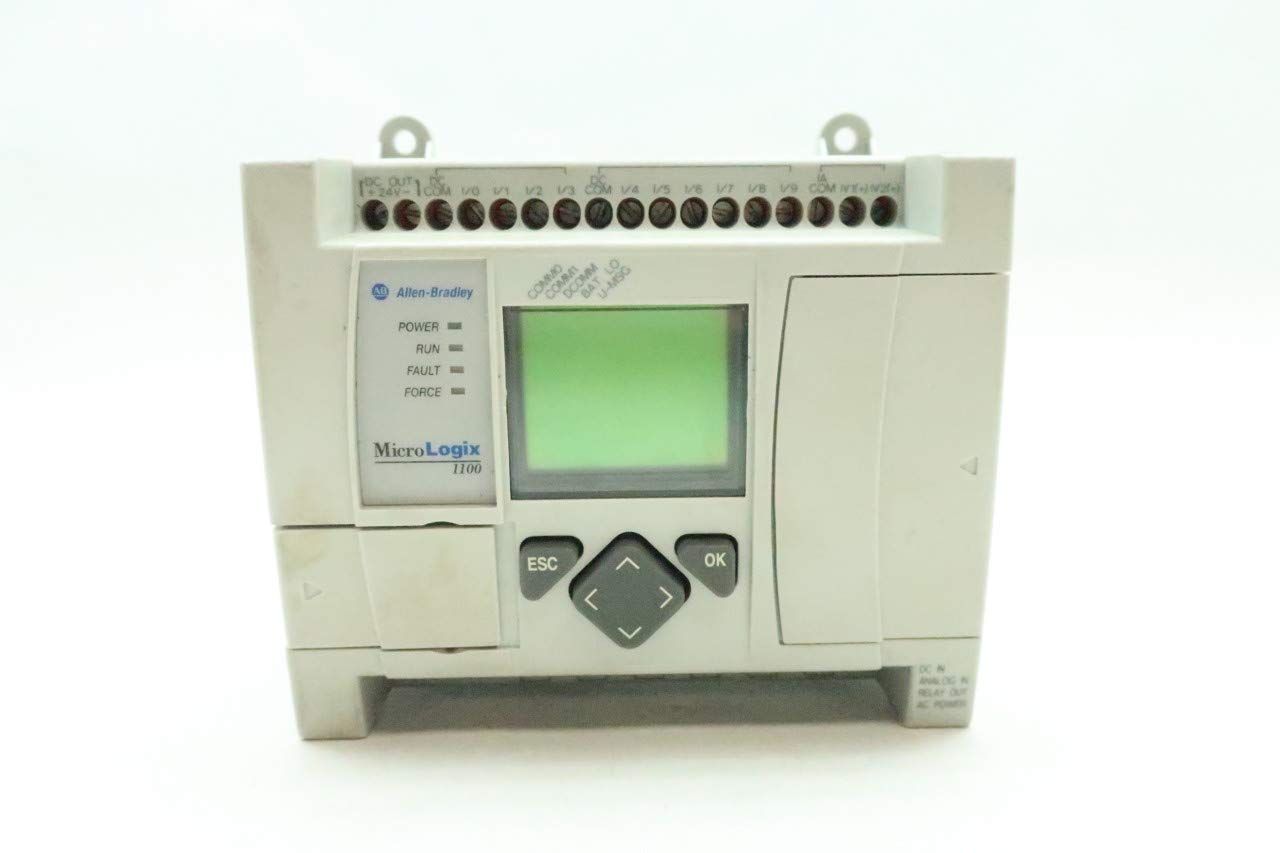
If your goal is a career in North American manufacturing, Allen-Bradley (Rockwell Automation) is the name you’ll see most on plant floors.
The Allen-Bradley MicroLogix 1100 (1763-L16BWA, ~$150) offers better industry relevance than the budget options, which can make the extra cost worthwhile.
The software story is beginner-friendly too. Rockwell offers a free RSLogix Micro Starter Lite (limited version) that supports MicroLogix 1000 and 1100 controllers, and its interface is identical to the paid RSLogix 500, so ladder logic you develop transfers directly to hardware.
In other words, you learn the real Rockwell environment without paying for the full license up front.
Best for: Career-focused learners aiming at industries where Allen-Bradley dominates.
Siemens S7-1200 Starter Kit: Best for Learning TIA Portal
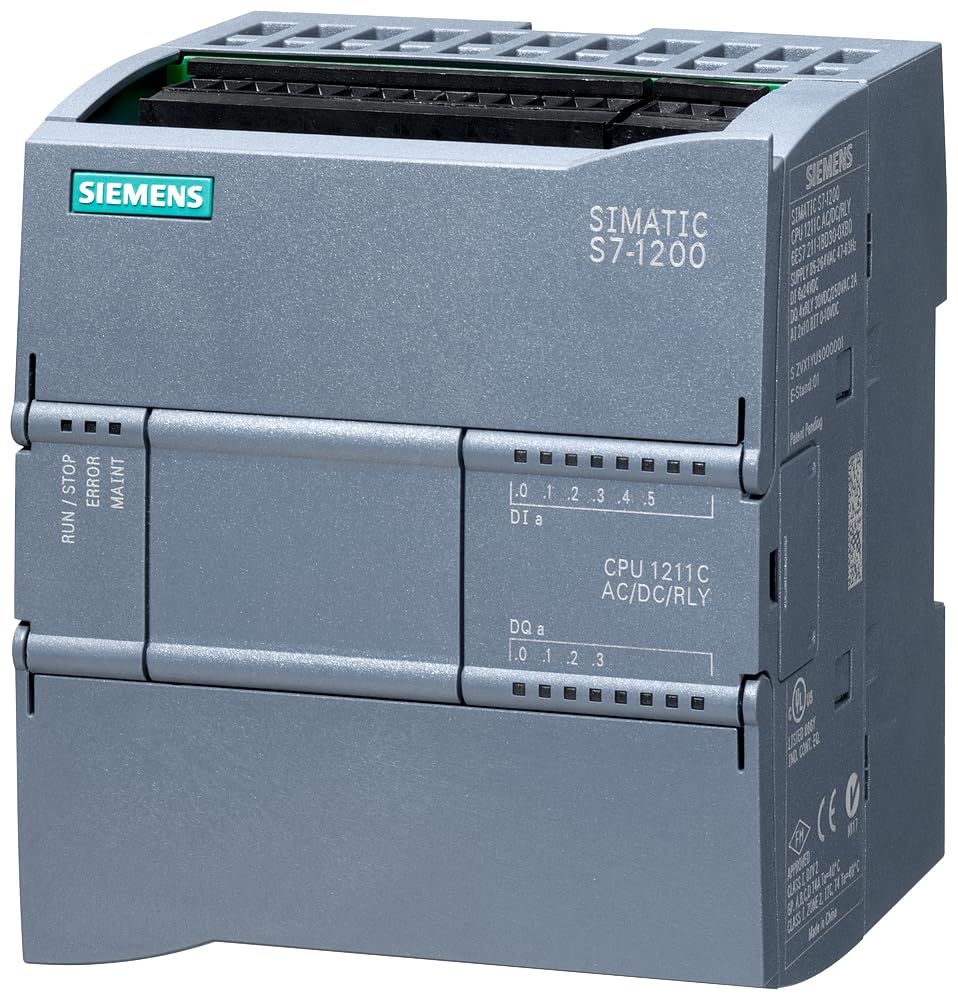
Siemens is the other giant of industrial automation, especially outside North America, and the S7-1200 is its entry-level workhorse.
The Siemens S7-1200 Trainer Kit is one of the most relevant options for learning real industrial PLC programming, and Siemens PLCs are very common in industrial automation with TIA Portal as a major platform.
A typical starter kit is well-rounded. The Siemens S7-1200 starter kit includes an S7-1212C PLC, TIA Portal Basic programming software (lifetime access version), an 8-point input I/O simulator, an Ethernet cable, and a hard plastic Systainer storage box with a built-in 120 VAC power supply.
Newer kits add extra communication value as well. This model also includes a basic runtime license for OPC UA to help move data to and from the PLC to other applications like data historians, which is a capability older versions lacked.
The main trade-off is TIA Portal’s steeper learning curve compared to CLICK’s simplified environment, but that investment pays off if Siemens is common in your target industry.
Best for: Learners who want to master TIA Portal and Siemens ladder logic for European or Siemens-heavy plants.
Siemens LOGO! Starter Kit: Best Simple All-in-One
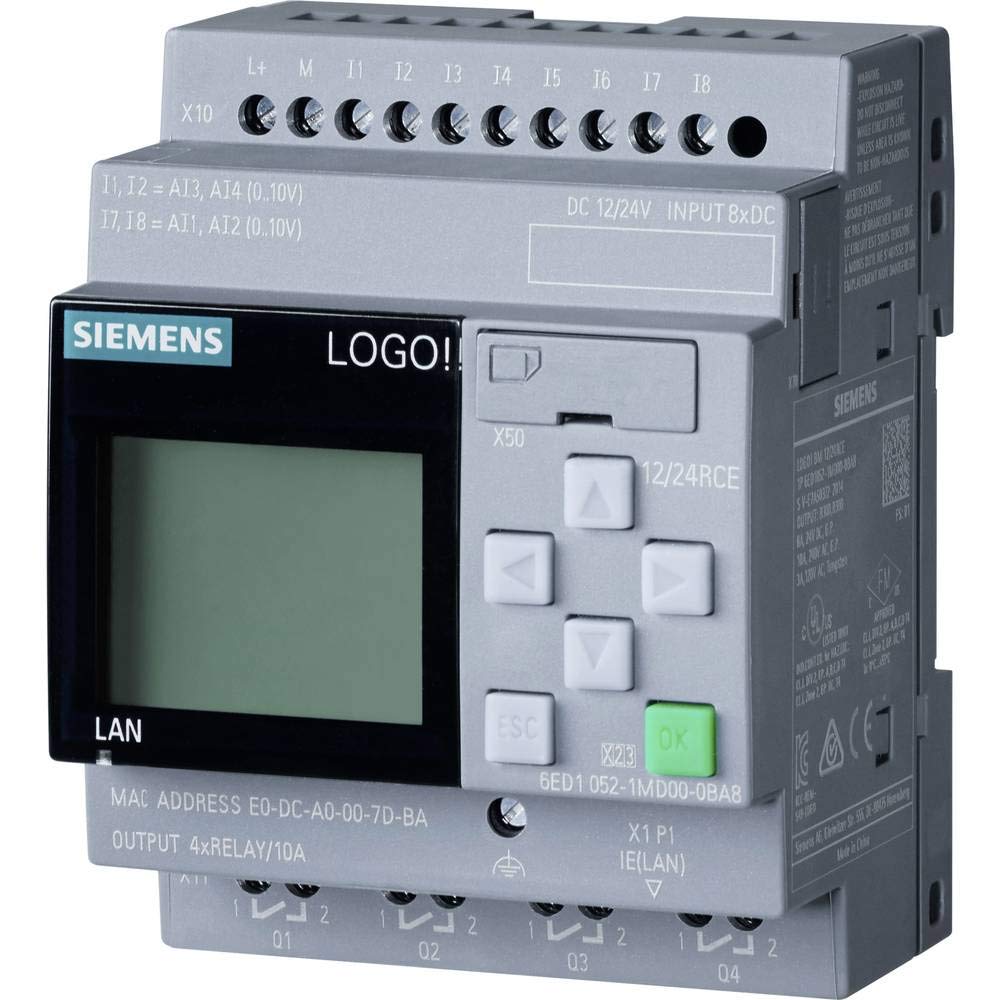
If the S7-1200 feels like too much, Siemens LOGO! is the friendlier sibling. The LOGO! 12/24RCE V8.4 starter kit is an all-in-one solution for beginners and professionals that includes the LOGO! 12/24RCE controller, LOGO! Soft Comfort programming software, a power supply, a screwdriver, and a Systainer case.
It also ships with documentation and tutorials aimed at beginners, plus compatibility with a wide range of sensors and actuators.
LOGO! sits somewhere between a smart relay and a full PLC, which makes it excellent for home automation and simple control tasks while still teaching core logic concepts.
Best for: Beginners who want a gentle, self-contained introduction without a steep software curve.
Arduino PLC Starter Kit: Best Modern Learning Kit
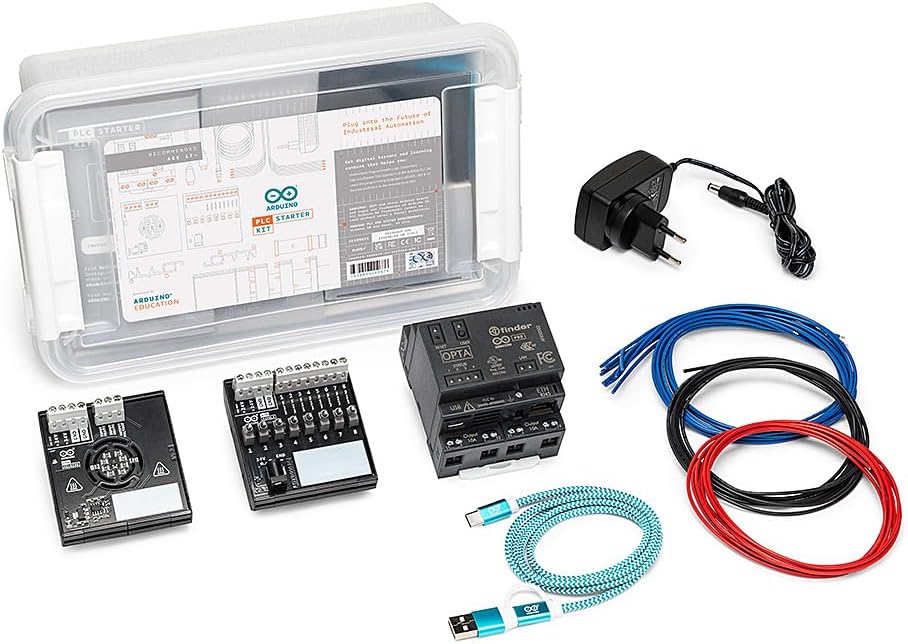
For makers and IoT-minded learners, the Arduino approach feels more contemporary than a bare controller with loose wires.
The Arduino PLC Starter Kit (AKX00051) is built around the Arduino Opta PLC and is described as an all-in-one educational solution for industrial automation, with digital and analog I/O, sensors, actuators, relays, communication modules, Wi-Fi, Bluetooth, cloud integration, and over 20 hours of online learning content.
The structured content is the real advantage here. Its biggest strength is that it is designed as a learning kit rather than a loose PLC with wires, and guided learning content is very valuable for someone starting from zero.
You’ll pick up automation fundamentals alongside modern IoT and cloud-monitoring concepts.
Best for: Makers, students, and anyone interested in IoT and cloud-connected automation.
Quick Comparison Table
| Starter Kit | Approx. Price | Software | Best For |
|---|---|---|---|
| AutomationDirect CLICK (C0-01DD1-D) | ~$100 | Free, no limits | Budget learning |
| Allen-Bradley MicroLogix 1100 | ~$150 | Free Starter Lite | North American industry |
| Siemens S7-1200 Trainer | Varies | TIA Portal Basic (kit-included) | Siemens/TIA Portal skills |
| Siemens LOGO! Starter Kit | Varies | LOGO! Soft Comfort | Simple all-in-one |
| Arduino PLC Starter Kit (AKX00051) | Varies | Arduino IDE / PLC IDE | IoT & guided learning |
Prices reflect recent listings and will vary by region and stock. Always check the manufacturer’s current pricing before ordering.
Do You Even Need Hardware to Start?
Here’s a money-saving truth: you can learn the fundamentals of ladder logic entirely in software before buying anything.
Simulators like LogixPro ($30–60) or the free RSLogix Micro Starter Lite with an emulator allow complete learning without hardware, though physical hardware provides valuable I/O wiring experience.
There are strong free options too. OpenPLC Editor is widely considered the best free PLC simulator for beginners in 2026, and free simulators now cover every major brand from Siemens to Allen-Bradley.
A sensible path is to practice programming in a simulator first, then buy a low-cost kit like the CLICK once you’re ready to wire real inputs and outputs.
How to Choose the Right Starter Kit for You
Match the kit to your goal rather than chasing the “best” label:
- On a tight budget or just curious? Start with the AutomationDirect CLICK. Free software and ~$100 hardware make it the lowest-risk entry point.
- Aiming for a manufacturing job in North America? The Allen-Bradley MicroLogix 1100 puts you in the Rockwell ecosystem employers expect.
- Targeting Siemens-heavy or European industry? The S7-1200 and TIA Portal are the skills that matter, even with a steeper learning curve.
- Want something simple and self-contained? The Siemens LOGO! kit gets you controlling real devices fast.
- Into IoT, maker projects, or guided lessons? The Arduino PLC Starter Kit bundles hardware, connectivity, and 20+ hours of learning content.
Whichever you pick, the concepts you learn, scan cycles, rungs, inputs, outputs, and timers carry across every platform. Your first PLC is a stepping stone, not a lifelong commitment.
Final Verdict
For most beginners, the AutomationDirect CLICK is the smartest starting point: it’s the cheapest real hardware, the software is genuinely free with no limits, and the learning curve is gentle.
If you already know you’re heading toward a specific industry, let that decide: Allen-Bradley for North American plants and Siemens S7-1200 for Siemens-dominated environments.
Start with a free simulator, buy an affordable kit when you’re ready to wire real I/O, and build small projects.
That combination will teach you more than any single piece of hardware ever could.
Prices and product details in this article were current as of 2026 and can change. Always confirm specifications and pricing directly with the manufacturer or an authorized distributor before purchasing.

1 thought on “Best PLC for Beginners: Starter Kits Compared (2026 Guide)”