If you work with pressure transmitters, thermocouples, RTDs, or 4-20 mA loops, a reliable process calibrator is the single most important tool in your kit.
It’s the difference between trusting your instrument readings and second-guessing every commissioning report.
But “best” depends heavily on what you actually calibrate day-to-day, so this guide breaks down the top process calibrators by use case, which specs genuinely matter, and how to avoid overpaying for features you’ll never use.
What a Process Calibrator Actually Does
A process calibrator sources and measures the electrical and physical signals used in industrial instrumentation.
In practice, that means it can simulate a sensor’s output (source mode) or read the output of an instrument (measure mode), so you can verify accuracy against a known reference.
The core signals a good calibrator handles include the following.
- mA (current): sourcing and measuring 4-20 mA loops, the backbone of process control
- Voltage: millivolt and volt ranges for sensor simulation and readback
- Thermocouples: typically types J, K, T, E, R, S, B, N with cold-junction compensation
- RTDs: Pt100 and other resistance sensors
- Frequency and pulse: for flow meters and turbine sensors
- Pressure: either built-in or via external modules
The more of these a single unit covers, the fewer tools you carry into the field, but multifunction units cost more and can be overkill for a technician who only ever works loops.
The Specs That Actually Matter
Marketing sheets list dozens of numbers. Only a few change your work.
Accuracy
Look at the accuracy as a percentage of reading plus a fixed offset. A spec like ±0.01% of reading is meaningful; a vague “high accuracy” claim is not.
Your calibrator should be at least four times more accurate than the instrument you’re verifying (the 4:1 test accuracy ratio); otherwise, you’re not proving much.
HART communication
If your plant runs smart transmitters, a calibrator with built-in HART capability lets you trim and configure devices without carrying a separate communicator. This alone justifies the price jump for many teams.
Loop power / 24V supply
The ability to power a transmitter directly from the calibrator saves you from rigging a separate power source every time you test a device on the bench.
Documenting vs. non-documenting
Documenting calibrators store results and sync to calibration management software, which is essential if you’re held to ISO, FDA, or API audit requirements.
If you’re a maintenance tech doing quick field checks, a non-documenting unit is lighter and cheaper.
Ruggedness and IP rating
Field work destroys fragile tools. An IP-rated, drop-resistant enclosure earns its keep quickly.
Best Process Calibrators by Use Case
Best Overall Multifunction: Fluke 754
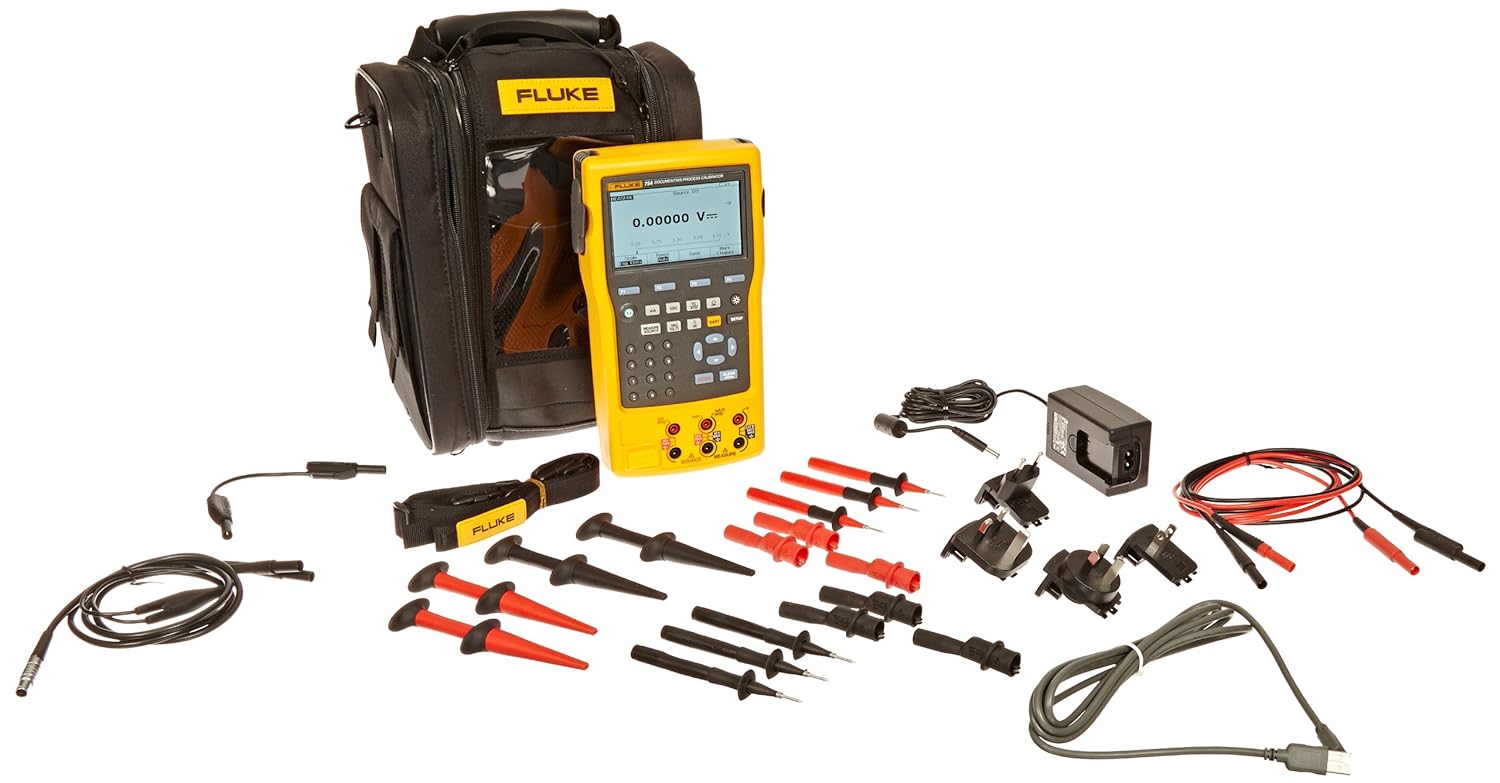
The Fluke 754 remains the benchmark documenting process calibrator for a reason. It sources and measures mA, voltage, RTDs, thermocouples, frequency, and pressure (with external modules), includes HART communication, and documents results for upload to calibration management software.
It’s expensive, but for a calibration lab or a plant with strict traceability requirements, it pays for itself in audit readiness and reduced tool count.
Best for: Calibration labs, regulated industries, teams needing full documentation and HART.
Best Value Loop Calibrator: Fluke 789 ProcessMeter
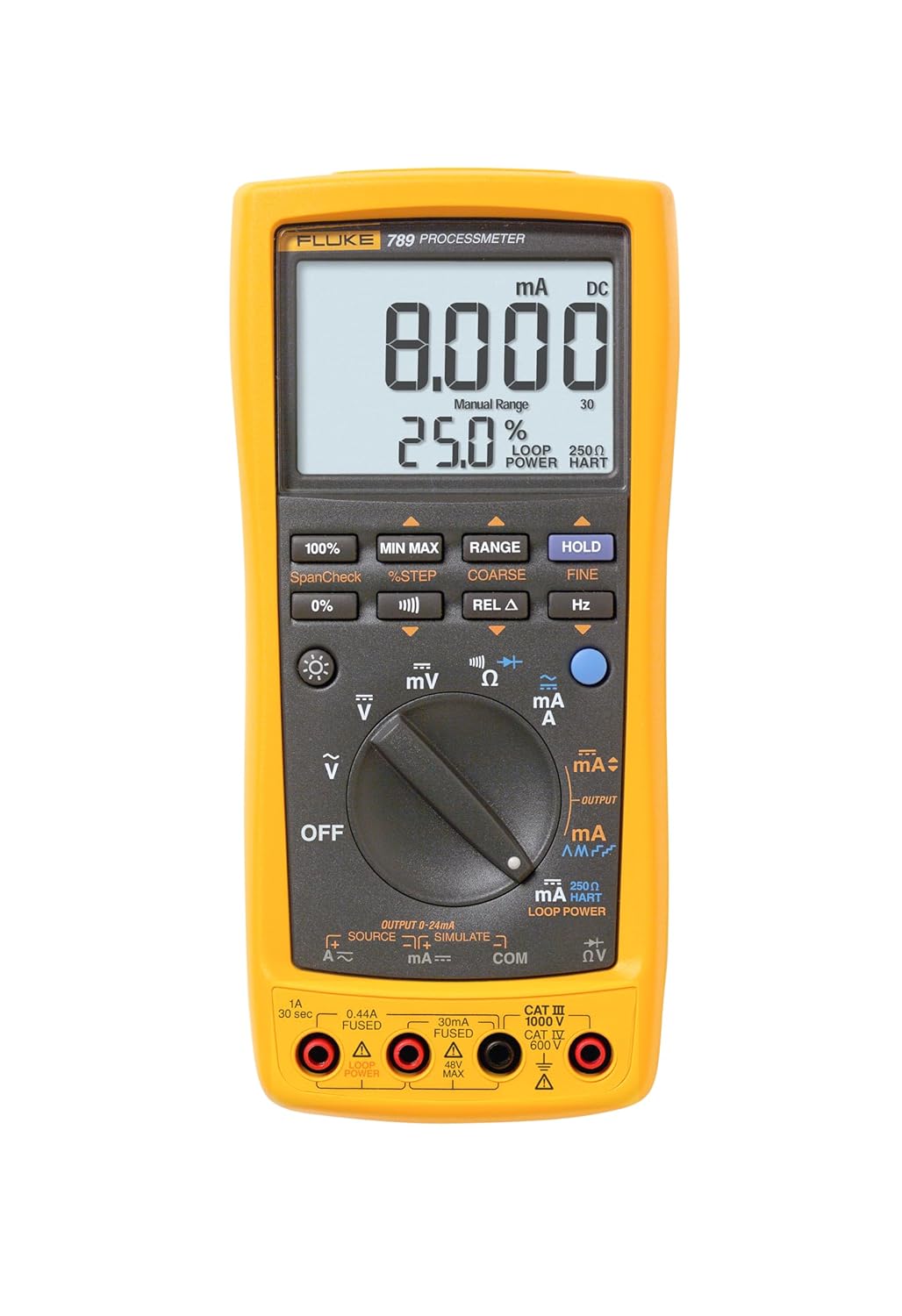
If most of your day is spent on 4-20 mA loops, the Fluke 789 combines a full digital multimeter with a loop calibrator and 24V loop power.
You get mA source and measurement, loop simulation, and standard DMM functions in one rugged unit. It’s the tool that lives in a maintenance tech’s bag.
Best for: Maintenance technicians and loop troubleshooting where documentation isn’t required.
Best Temperature-Focused: Additel or Fluke temperature calibrators
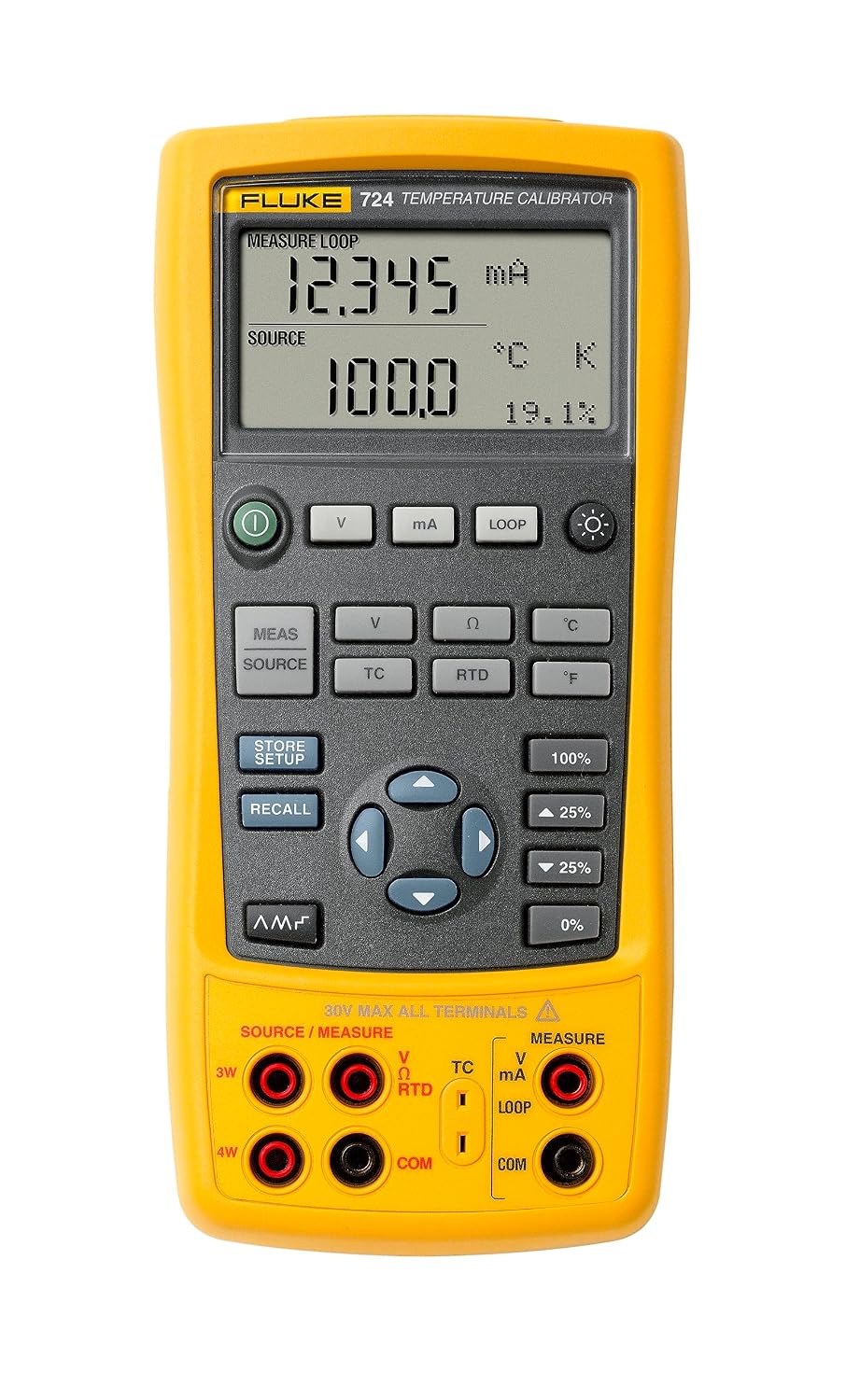
For teams doing heavy thermocouple and RTD work, a dedicated temperature calibrator with high resolution and low uncertainty outperforms a generalist.
Brands like Additel and Fluke offer units optimized for temperature sensor calibration with better cold-junction handling.
Best for: thermal-heavy processes, food and pharma, dryer and furnace instrumentation.
Best Budget Option: Entry-level multifunction calibrators
Brands like Additel, Time Electronics, and Meco offer capable multifunction calibrators at a fraction of the price of a Fluke 754.
You give up some accuracy, ruggedness, and software integration, but for a small shop or a technician getting started, they deliver the core sourcing and measuring functions reliably.
Best for: Small teams, budget-constrained shops, and technicians building a first kit.
How to Choose the Right One for You
Ask yourself three questions before buying:
- Do I need documentation? If audits and traceability matter, buy a documenting calibrator — retrofitting that capability later means buying twice.
- Do I work with smart transmitters? If yes, HART support is non-negotiable and saves you a second tool.
- What do I actually calibrate most? Match the tool to your daily work. A loop tech doesn’t need a full multifunction unit; a lab can’t get by with a loop calibrator.
Buying the most expensive calibrator you can afford is not the same as buying the right one.
The best process calibrator is the one that covers the signals you touch every day, meets your accuracy requirements with margin to spare, and survives the environment you work in.
Maintaining Calibrator Accuracy
Even the best calibrator drifts. To keep yours trustworthy:
- Send it for annual calibration against a traceable standard (NIST or equivalent)
- Store it in a stable environment away from temperature extremes
- Keep the calibration certificate on file for audit purposes
- Verify against a known reference before critical jobs
A calibrator that’s out of calibration is worse than no calibrator at all, because it gives you false confidence.
Final Thoughts
There’s no single “best process calibrator” for everyone. There’s the best one for your work.
For most plants with regulatory obligations, the Fluke 754 is the safe, capable standard. For loop-focused maintenance, the Fluke 789 offers unbeatable practicality.
And budget multifunction units from Additel and others have closed much of the gap for smaller operations.
Whatever you choose, prioritize accuracy margin, the signals you actually use, and documentation if your industry demands it. Get those three right and the tool will serve you for years.
