Programmable logic controllers still run the physical world: conveyors, boilers, packaging lines, water treatment plants, and the building automation systems I work with every day.
And despite an ocean of YouTube tutorials and paid online courses, a good book remains the most cost-effective way to build the deep, structured understanding that makes you dangerous on the plant floor.
Books are typically priced between about $5 and $40 for eBooks (textbooks run higher). They’re written by people with decades of hands-on experience, and they don’t expire the moment a vendor pushes a software update.
The problem isn’t finding a PLC book. It’s finding the right one for where you are. A complete beginner needs plain-language fundamentals and ladder logic.
An engineer who already knows the basics needs vendor-specific depth or a structured text deep dive.
And every working automation professional eventually wants a reference book that lives on the desk for those “How does this instruction actually behave?” moments.
This guide sorts the best PLC programming books into three tiers: beginner, intermediate, and advanced/reference, so you can buy the one that matches your level instead of guessing. For each book, I note who it’s for, what’s strong, and what’s missing.
How to Choose a PLC Programming Book
Before the list, three quick filters that will save you money:
Match the book to the hardware you’ll actually touch
If you know you’ll be programming Allen-Bradley PLCs in Studio 5000 / RSLogix or Siemens in TIA Portal, a vendor-specific book beats a generic one every time. If you don’t know yet, start vendor-agnostic and specialize later.
Match the book to your learning style
Some books teach the why first (theory, control concepts, systematic understanding). Others are hands-on and get you writing ladder logic on page ten. Neither is better. They suit different people.
Buy used where possible
PLC fundamentals barely change year to year. A used copy of a canonical textbook at a fraction of the new price teaches the same ladder logic, timers, and counters as the current edition.
Beginner PLC Programming Books
These assume zero prior knowledge. Start here if terms like “rung,” “scan cycle,” and “normally open contact” are new to you.
Programmable Logic Controllers: Frank D. Petruzella
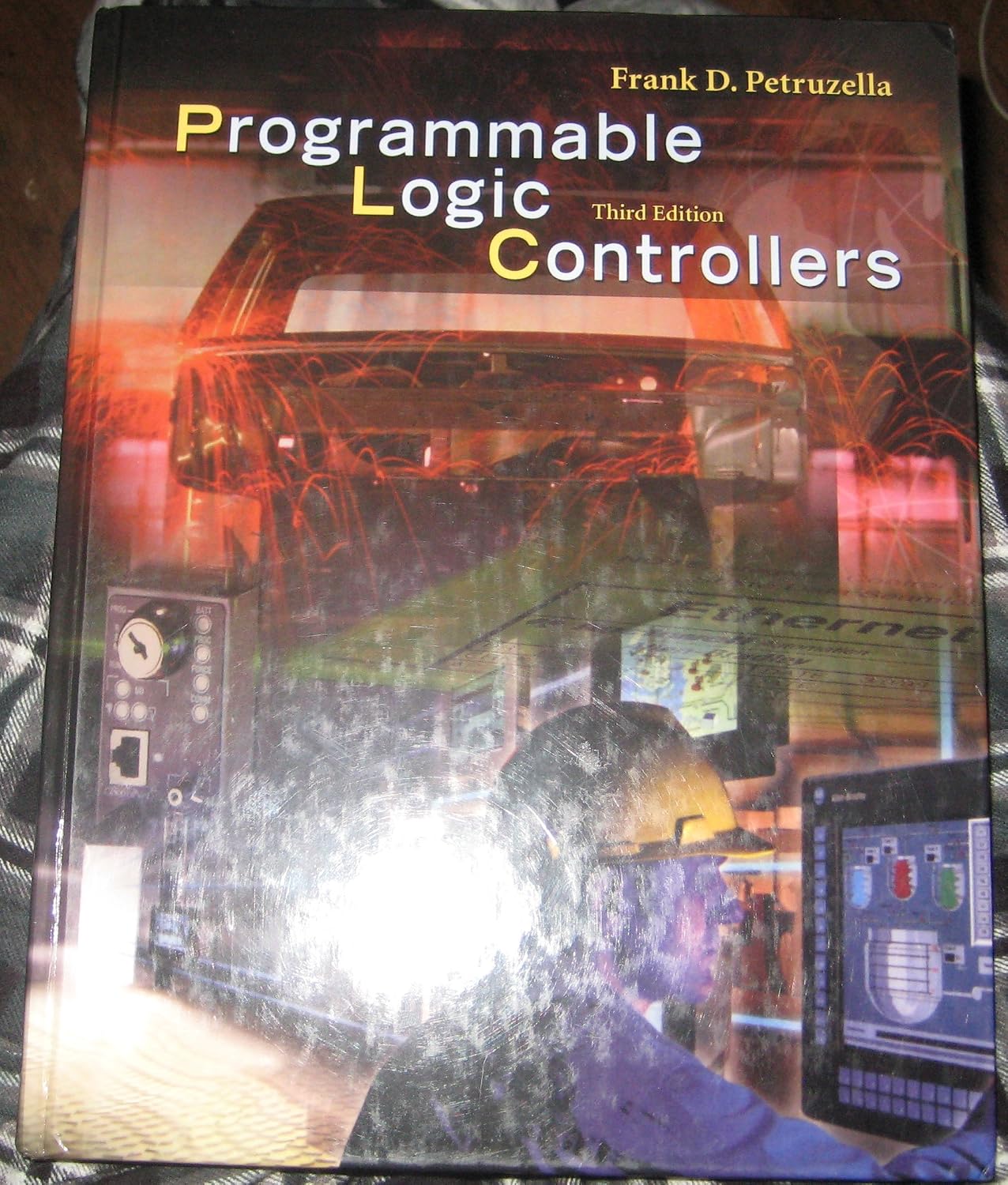
This is the classic first-course textbook, used in engineering and technical programs for decades.
Petruzella focuses on how PLCs actually work and gives genuinely practical information on installing, programming, and maintaining PLC systems, deliberately complementing (not replacing) manufacturer manuals.
It teaches in a generic sense but leans on Allen-Bradley SLC 500 and ControlLogix instruction sets for its examples, so it doubles as a soft on-ramp to Allen-Bradley.
Topics are broken into small, digestible segments with review problems at the end of each chapter, covering everything from number systems and logic fundamentals through timers, counters, data manipulation, math instructions, installation, troubleshooting, and an intro to SCADA.
- Best for: students, apprentices, and complete beginners who want a structured, classroom-grade foundation.
- Strong: clear, systematic, well-illustrated; excellent breadth; a recognized standard.
- Missing: It’s a textbook, so it’s pricier new. Buy an earlier edition used.
Beginner’s Guide to PLC Programming: Neal Babcock
A gentler, more conversational entry point than a full textbook, aimed squarely at people who just want to understand ladder logic and start writing simple programs without wading through control theory first. It’s widely circulated and has helped a lot of self-taught people get their first working program running.
- Best for: self-study learners who want the fastest path to writing basic ladder logic.
- Strong: approachable tone, practical focus, low friction.
- Missing: limited depth on advanced topics. You’ll outgrow it, which is fine.
Bolton: Programmable Logic Controllers
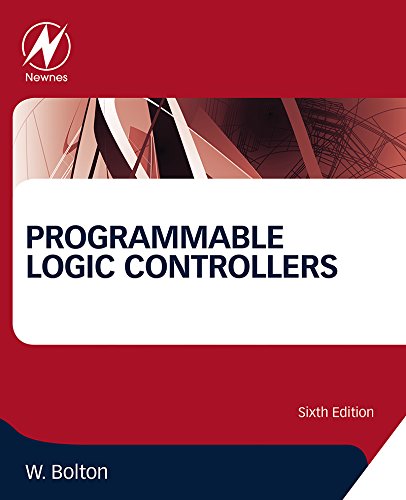
W. Bolton’s compact introduction has been an entry-level standard, particularly in the UK and Europe, for years.
It covers basics through intermediate concepts in roughly 300 pages without the bulk of a full US textbook.
- Best for: UK/European learners and anyone who prefers a concise book over a doorstop.
- Strong: brevity and clarity; good value.
- Missing: depth on advanced and vendor-specific topics.
Intermediate PLC Programming Books
You know the fundamentals: ladder logic, I/O, timers, counters. Now you want to go deep on a specific vendor platform or a specific language.
Allen-Bradley: RSLogix / Studio 5000 Practical Guides
If your shop runs Allen-Bradley, get a book built around your exact software environment. There are well-regarded practical guides specifically for RSLogix 5000 / Studio 5000 (ControlLogix and CompactLogix) and separate ones for the older RSLogix 500 (MicroLogix / SLC 500). Buy the one that matches your controller family.
The tag-based addressing in Logix 5000 is genuinely different from the file-based addressing in RSLogix 500, and a mismatched book will frustrate you.
- Best for: engineers and technicians committed to the Allen-Bradley ecosystem.
- Strong: hands-on walkthroughs of the actual IDE you’ll use daily; cheap eBooks.
- Missing: Narrow by design, they won’t help you on a Siemens job.
Siemens: TIA Portal / S7-1200 & S7-1500 Guides
The Siemens equivalent. Look for books that walk through the TIA Portal environment and target the S7-1200 (for smaller applications) or S7-1500 (for larger/higher-performance ones).
Good ones cover hardware configuration, tag handling, and diagnosing common fault and error codes, the kind of practical friction that generic books skip.
- Best for: engineers working in Siemens-heavy plants (common in Europe and multinational manufacturing).
- Strong: platform-specific configuration and troubleshooting details.
- Missing: again, single-vendor scope.
PLC Controls with Structured Text (ST)
Once you move beyond ladder logic, structured text is the language you’ll reach for on complex logic, math, and reusable function blocks.
A dedicated ST book is the cleanest way to learn it well, and it’s widely regarded as the go-to for that language specifically.
Because structured text is part of the IEC 61131-3 standard, what you learn transfers across vendors far better than ladder-only knowledge.
- Best for: intermediate programmers ready to write cleaner, more maintainable code.
- Strong: focused, transferable, increasingly relevant as projects grow more complex.
- Missing: it’s language-specific; you still need the platform knowledge from the vendor books above.
Advanced & Reference PLC Programming Books
These are the desk books, the ones you don’t read cover to cover but reach for when you hit a specific, gnarly question.
Programmable Logic Controllers: An Emphasis on Design and Application: Kelvin Erickson
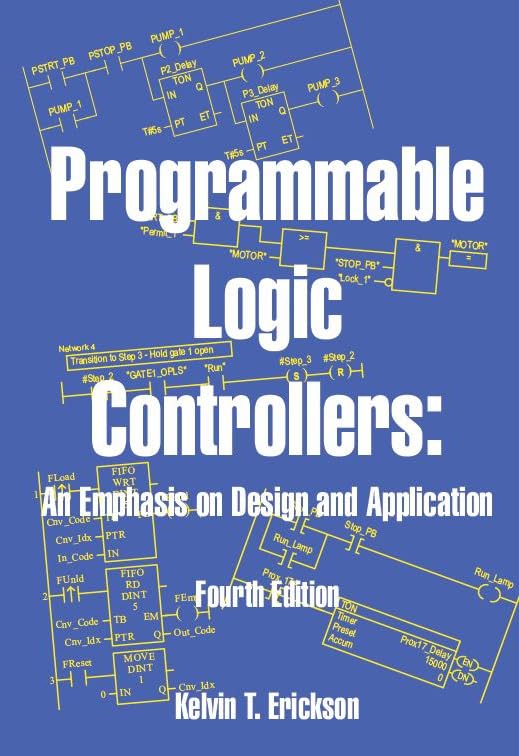
A more rigorous, engineering-school treatment that goes past “how to write a rung” into system design, application patterns, and the reasoning behind good architecture. This is the book for engineers who want to design robust automation systems, not just make a light turn on.
- Best for: degree-track engineers and anyone moving into system design responsibility.
- Strong: design methodology and depth beyond typical intro texts.
- Missing: heavier going; not a gentle first read.
Programmable Logic Controllers: Khaled & Eman Kamel
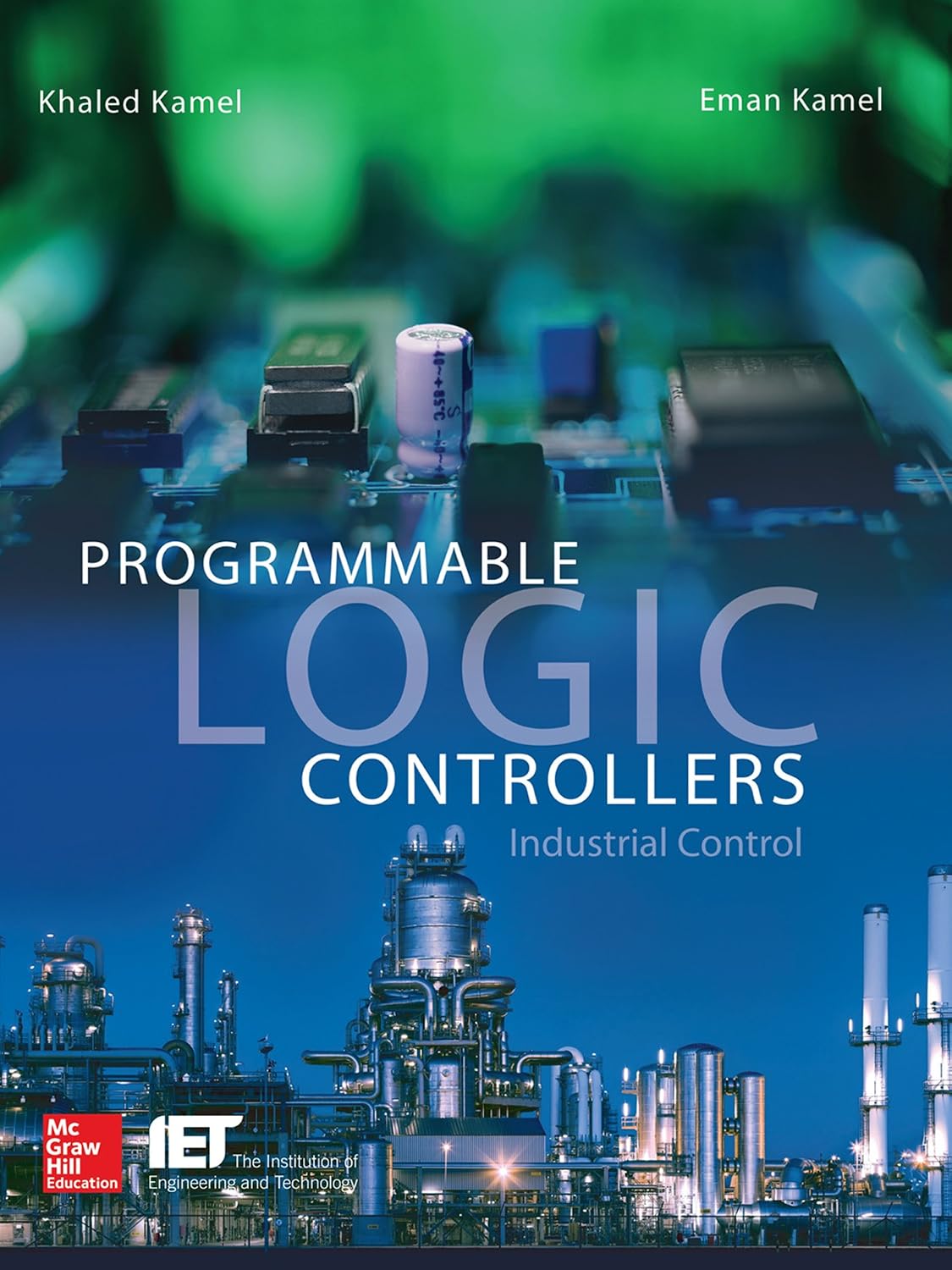
A thorough technical resource that bridges theory and hands-on practice across industrial automation systems, including more advanced programming techniques such as structured text. It’s substantial enough to serve as a long-term reference.
- Best for: learners who want theory and practice in one comprehensive volume.
- Strong: breadth, technical depth, staying power on the shelf.
- Missing: less “quick start,” more “sit down and study.”
An IEC 61131-3 Reference
IEC 61131-3 is the international standard that defines the five PLC programming languages (ladder diagram, function block diagram, structured text, instruction list, and sequential function chart).
A dedicated reference on the standard is invaluable once you’re working across multiple vendors or writing portable, standards-compliant code. This is reference material, not a tutorial. You’ll consult it, not read it front to back.
- Best for: senior engineers, integrators, and anyone working across mixed-vendor sites.
- Strong: vendor-neutral authority; the definitive source on language behavior.
- Missing: dry and technical, exactly what a reference should be.
Comparison Table: Best PLC Programming Books by Level
| Book | Level | Best For | Vendor Focus |
|---|---|---|---|
| Petruzella: Programmable Logic Controllers | Beginner | Students, apprentices | Generic (AB examples) |
| Babcock: Beginner’s Guide to PLC Programming | Beginner | Fast self-study | Generic |
| Bolton: Programmable Logic Controllers | Beginner | Concise UK/EU intro | Generic |
| RSLogix / Studio 5000 practical guides | Intermediate | Allen-Bradley shops | Allen-Bradley |
| TIA Portal / S7 guides | Intermediate | Siemens shops | Siemens |
| PLC Controls with Structured Text | Intermediate | Learning ST | Vendor-neutral language |
| Erickson: Emphasis on Design and Application | Advanced | System designers | Generic |
| Kamel & Kamel: Programmable Logic Controllers | Advanced | Theory + practice reference | Generic |
| IEC 61131-3 reference | Advanced | Cross-vendor / integrators | Standard |
A Suggested Learning Path
If you’re starting from zero and want a concrete route:
Foundations
Read Petruzella (or Babcock if you want something lighter) to understand how PLCs work, ladder logic, and the scan cycle.
Specialize
Pick up the vendor guide for the hardware you’ll actually use: Allen-Bradley or Siemens. This is where you go from “understands PLCs” to “can program this PLC.”
Level up your code
Work through a structured textbook to write cleaner, more scalable logic.
Keep on the desk
Add a design-focused book (Erickson or Kamel) and an IEC 61131-3 reference as career-long companions.
Pair whichever books you choose with actual practice. A free PLC simulator or a cheap trainer kit turns passive reading into muscle memory faster than anything else.
Reading about a timer instruction and watching one misfire in simulation are two very different levels of understanding.
Frequently Asked Questions
What is the best PLC book for absolute beginners?
For a structured, classroom-grade foundation, Petruzella’s Programmable Logic Controllers is the standard first-course text.
If you’d rather have something lighter and faster, Neal Babcock’s Beginner’s Guide to PLC Programming gets you writing ladder logic sooner with less theory.
Should I buy an Allen-Bradley or Siemens book?
Buy for the hardware you’ll actually use. Allen-Bradley dominates North American manufacturing; Siemens is more common in Europe and many multinational plants.
If you don’t know yet, start with a vendor-agnostic book and specialize once you know your platform.
Do I need to learn structured text, or is ladder logic enough?
Ladder logic is the best place to start and is enough for a lot of discrete control. But as projects get more complex, heavy on math, data handling, and reusable function blocks, structured text becomes far cleaner.
Because it’s part of the IEC 61131-3 standard, structured text also transfers well between vendors.
Are free PLC programming PDFs worth it?
Some canonical texts circulate freely online, and they’re genuinely useful for fundamentals.
Just make sure you’re getting a version that matches the software you’ll use, and buy a current edition if you need up-to-date vendor specifics or want to support the authors who write these books.
Can I learn PLC programming from books alone?
You can build strong theoretical knowledge from books alone, but pairing them with a simulator or a trainer kit is what makes it stick.
Automation is a hands-on discipline. The books give you the map, and the practice gives you the terrain.
Want to go deeper on the systems these controllers plug into? Explore our guides on BACnet, Modbus, and building management systems here on Control Circuitry.
