Improved accuracy and consistency have helped to transform manufacturing via industrial automation.
Among various production strategies, batch control plays a crucial role. Batch processes produce defined quantities of products under controlled conditions.
Unlike continuous manufacturing, batching operates in structured production cycles. Batching is widely used in sectors including food processing and pharmaceuticals. Each production run follows a defined recipe and execution sequence.
Automation systems ensure repeatability across multiple production cycles. Modern control platforms coordinate equipment, materials, and timing precisely. Digital standards have significantly improved reliability and documentation.
This article reviews the principles, architecture, standards, benefits, and challenges of batch control.
Understanding Batch Processes
A batch process manufactures a specific quantity of product within defined boundaries. Production occurs through ordered stages, each executed within limited timeframes. Materials are charged, transformed, held, and discharged sequentially.
Each stage follows a predetermined operational logic and timing. Equipment is commonly reused for multiple product formulations.
This flexibility differentiates batch manufacturing from continuous production systems.
Operators traditionally supervised these sequences manually with documentation. Automation now minimizes human error and increases operational consistency.
Recipes define temperature, pressure, flow rates, and mixing parameters. Control systems execute these parameters with high precision.
Batch manufacturing efficiently supports customization and product diversity.
Manufacturers can switch between formulations without extensive hardware modifications. This adaptability proves essential for specialty chemical production.
Pharmaceutical companies depend on accurate batch documentation for compliance.
Regulatory frameworks require detailed traceability of every operation. Automated systems record each action throughout the batch lifecycle.
Data logging ensures transparency for quality assurance purposes. Electronic documentation replaces traditional paper-based batch records.
Therefore, batch control integrates process control and information management. This integration strengthens reliability and regulatory accountability significantly.
Core Components of Batch Control Systems
Batch control systems combine coordinated hardware and software elements.
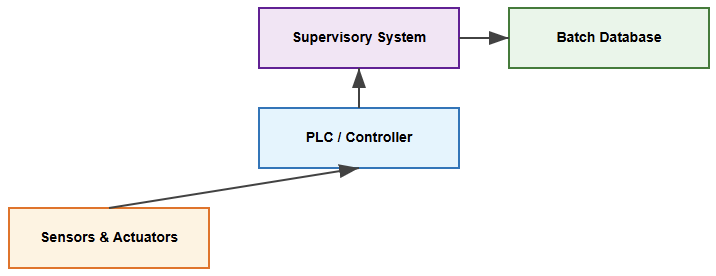
Temperatures and pressure, among other factors, are constantly detected by sensors. Actuators regulate valves as well as pumps. They are also in charge of controlling heaters and mixers.
Programmable logic controllers execute deterministic real-time control functions.
Supervisory control systems manage higher-level batch sequencing operations. Human-machine interfaces provide operators with clear process visualization.
Recipe management software stores and edits production instructions systematically. Database servers archive historical production data securely. Industrial communication networks connect field devices with control servers. These components collectively create an integrated automation environment.
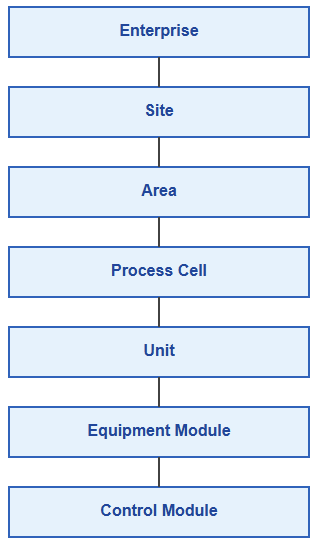
Control hierarchies structure operations into logical abstraction layers. Field devices perform measurement and final control actions. Control modules execute regulatory control loops reliably.
Equipment modules group control functions within specific process units. Unit procedures define complete operations executed within equipment units.
Operations and phases represent detailed process steps. This hierarchical structure simplifies the engineering of complex batch logic.
Modular design improves scalability and prolonged maintainability. System integration ensures synchronization across multiple production units. Reliable communication protocols guarantee accurate and timely data exchange.

ISA-88 Standard and Structured Batch Design
For batch automation, the ISA-88 standard gives a formal basis. It clearly separates physical models from procedural models. This separation increases system flexibility and reusability significantly.
The physical model defines hierarchical equipment organization clearly. Units, equipment modules, and control modules form structural layers. The procedural model defines the sequence of production tasks.
Procedures, unit procedures, operations, and phases organize activities. Recipes connect procedural steps with physical equipment resources.
This structured representation simplifies design and troubleshooting. Many industries adopt ISA-88 for standardized implementations globally.
Standardization improves interoperability between automation vendors significantly. Engineers benefit from consistent terminology across different projects. Integration complexity decreases when structured methodologies are applied.
Documentation becomes clearer and easier to maintain. Recipe portability improves between geographically separated production facilities. Training programs become more efficient under standardized frameworks.

Regulatory audits benefit from organized procedural documentation. Process validation becomes systematic and transparent.
Consequently, ISA-88 strengthens operational consistency across industries. Its influence extends widely throughout regulated manufacturing sectors.
Batch Control Execution and Recipe Management
Recipes represent the operational core of batch control systems. They specify materials, quantities, and required process parameters. Master recipes function as reusable production templates.
Control recipes customize these templates for individual batch runs. Operators schedule and initiate batches through supervisory interfaces. The system automatically allocates necessary equipment resources.
Each defined phase executes according to programmed logic. Interlocks prevent unsafe conditions or procedural violations.
Alarm systems notify operators during abnormal process deviations. Continuous data logging captures critical process variables.
Sequential logic ensures steps execute in the correct order. Conditional transitions respond dynamically to real-time measurements. Timers regulate holding periods and reaction durations precisely.
Setpoints automatically adjust according to recipe instructions. Batch reports summarize performance metrics after completion. Electronic batch records replace handwritten operational documentation.
Traceability improves through centralized digital data storage. Operator interference and system modifications are recorded on audit trails.
Version control maintains an accurate history of recipe modifications. This structured execution enhances consistent product quality outcomes.


Advantages of Batch Control in Industry
Batch control offers substantial operational flexibility for manufacturers. Multiple products can be produced using shared processing equipment. Changeovers require minimal mechanical adjustments or downtime.
Automated execution reduces variability between production runs significantly. Consistent quality strengthens customer trust and satisfaction. Energy consumption decreases through optimized parameter management.
Material utilization improves with precise dosing and timing. Waste generation is reduced due to controlled processing conditions.
Regulatory compliance becomes simpler through comprehensive documentation systems. Overall productivity increases through coordinated and automated operations.
Risk mitigation improves with embedded safety interlock mechanisms. Process deviations trigger immediate alarms and corrective responses. Historical performance data support root cause investigations effectively.
Continuous improvement initiatives rely on accurate performance metrics. Operators gain improved visibility into real-time process conditions.
Training becomes systematic using intuitive digital interfaces. Scalability enables future expansion of production capacity.
Integration with enterprise systems enhances production planning accuracy. Supply chain coordination benefits from predictable batch scheduling. These combined advantages make batch control strategically essential.
Challenges and Implementation Analysis
Although batch control has obvious advantages, it adds implementation difficulties. System design requires careful engineering and validation planning. Integration with legacy equipment may create technical difficulties.
Recipe development demands a deep understanding of process dynamics. Cybersecurity risks increase in interconnected automation networks. Validation procedures can extend commissioning timelines significantly.
Operator training remains critical for safe and reliable execution. Maintenance strategies must address hardware and software components.
Data storage requirements grow with accumulated batch records. Regular system updates guarantee adherence to changing rules.
Change management becomes essential during system upgrades. Thorough testing verifies logical sequences and safety interlocks. Failure scenarios require predefined recovery and restart procedures.
Redundant architectures may be necessary for critical operations. Documentation must remain comprehensive and readily accessible. Performance monitoring supports long-term optimization initiatives.
Cross-disciplinary collaboration improves implementation success rates. Clear communication prevents misunderstandings during project execution.
Lifecycle planning ensures sustainable system performance. Strategic planning ultimately determines successful batch automation deployment.
Integration with Modern Digital Technologies
Modern batch control aligns with broader digital transformation strategies. Industrial Internet technologies enhance real-time operational visibility. Cloud platforms store and analyze large production datasets efficiently.
Advanced analytics identify trends and optimization opportunities. Artificial intelligence supports predictive maintenance of equipment assets. Digital twin models simulate batch scenarios before execution.
Cybersecurity frameworks protect sensitive operational information. Enterprise resource planning systems coordinate materials and scheduling.
Manufacturing execution systems synchronize shop floor activities effectively. Together, these inventions build linked manufacturing ecosystems.
Data transparency enables informed decision-making at management levels. Remote monitoring supports geographically distributed production facilities. Mobile applications provide supervisors with immediate operational insights.
Energy management tools optimize consumption across batch operations. Sustainability initiatives benefit from detailed process performance data. Smart sensors increase measurement accuracy and reliability.
Edge computing reduces latency in time-sensitive applications. Standard communication protocols improve interoperability among devices.
Automation vendors continuously enhance integrated batch solutions. Future developments promise even greater operational intelligence.
Conclusion
This article explained the structure and significance of batch control systems. Batch automation enables flexible yet tightly controlled production cycles. Recipes coordinate materials, equipment, and procedural logic precisely.
ISA-88 provides standardized frameworks for structured implementation. Digital technologies enhance traceability and operational optimization capabilities. Integrated architectures improve visibility across manufacturing environments.
Despite implementation challenges, strategic planning ensures reliable performance. Batch control remains indispensable within regulated and specialty industries.
Its adaptability supports innovation and product diversification. Technological advancement, if sustained, will certainly provide more power to intelligent batch manufacturing systems.
Frequently Asked Questions
What is Batch Control in Industrial Automation?
Batch control is the automatic handling of specified batches of items made in defined sequences using recipes and regulated steps.
How does batch control differ from continuous control?
Batch control controls discrete manufacturing cycles with beginning/stop phases; continuous control runs ongoing processes without interruption.
How important are recipes in batch management?
For every batch step, recipes specify ingredients, amounts, and temperature and time limits.
What then makes ISA-88 so important for batch control?
ISA-88 gives batch manufacturing a clear structure for managing equipment, recipes, and operational steps.
Which sectors employ batch control automation?
Batch management is often employed by pharmaceutical, food, drinks, chemical, and regulated industries to guarantee quality and conformity.
