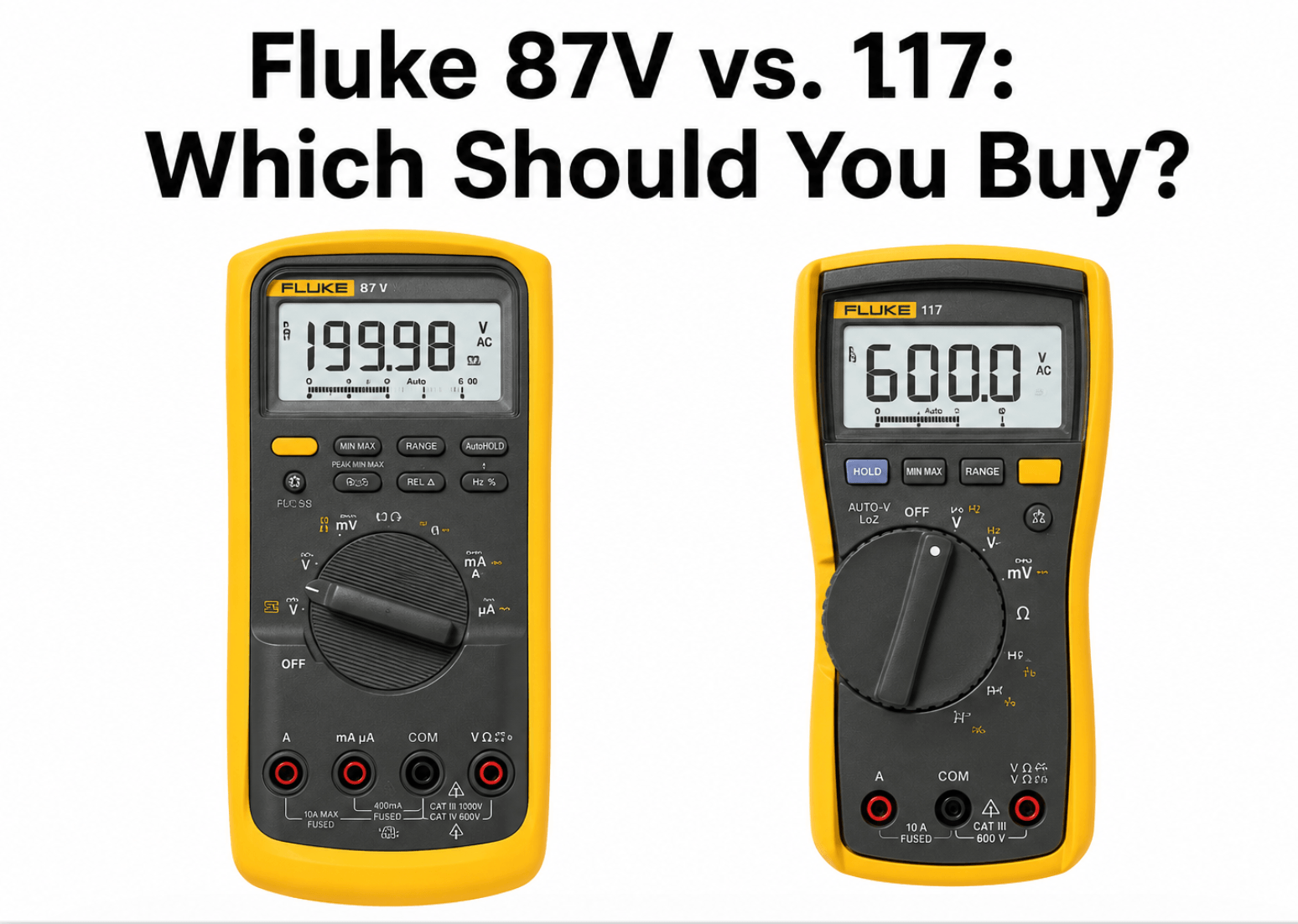
I have been an automation engineer since 2011, and during this time I have been using different multimeters to troubleshoot or measure electrical signals. Today, I will compare two of the most popular ones: the Fluke 87V and the Fluke 117.
Both the Fluke 87V and the Fluke 117 carry the same reputation for accuracy and build quality, and both are True RMS meters from the most trusted name in test equipment.
So the real question isn’t which one is “better”; it’s which one is built for your work. Buy the wrong one, and you either overpay for capability you’ll never use, or you end up with a meter that gives you misleading readings on the exact signals you needed to trust.
The Fluke 117 is the electrician’s meter, built for commercial and residential work. The Fluke 87V is the industrial workhorse, built for motor drives, plant automation, and high-energy distribution. Below is the full breakdown so you can match the tool to the job with confidence.
Fluke 87V vs. 117: Which Should You Buy?
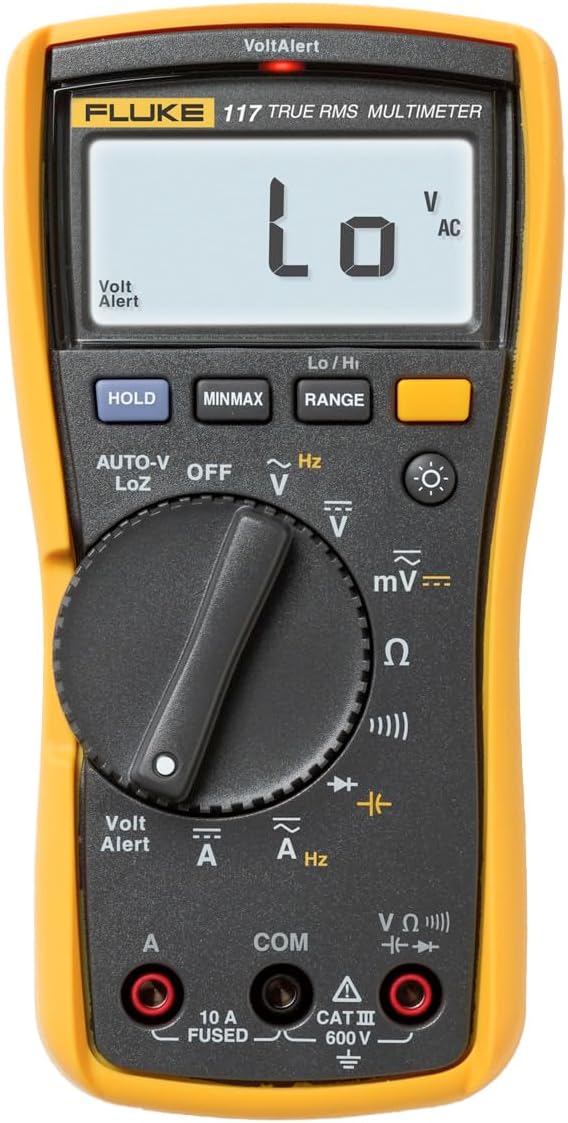
Buy the Fluke 117
If you’re an electrician doing commercial or residential installation and troubleshooting panels, outlets, lighting circuits, and ghost voltage checks.
Its integrated non-contact voltage detection and Auto-V/LoZ features are built for exactly that workflow at a noticeably lower price.
Buy the Fluke 87V
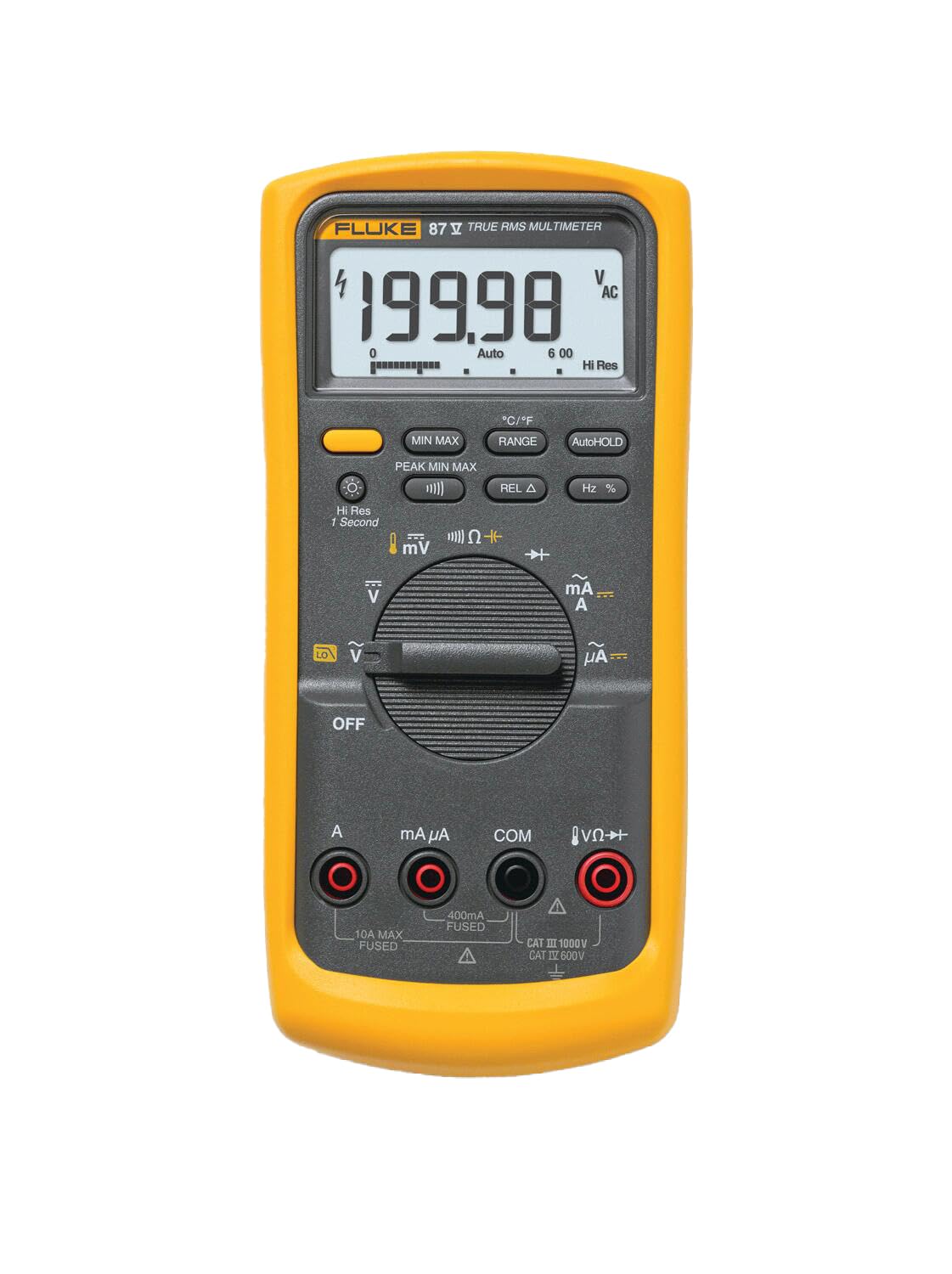
If you work in industrial maintenance, VFD cabinets, PLCs, motor windings, and substations are common.
Its low-pass filter, 20,000-count resolution, temperature measurement, 1000V range, and CAT IV safety rating justify the premium for demanding environments.
Specs at a Glance
| Feature | Fluke 117 | Fluke 87V |
|---|---|---|
| Display resolution | 6,000 counts | 20,000 counts (high-res mode) |
| Basic DC accuracy | ±0.5% | ±0.05% |
| Max voltage | 600V AC/DC | 1000V AC/DC |
| Frequency range | up to ~50 kHz | up to ~200 kHz |
| Temperature measurement | No | Yes (built-in) |
| VFD low-pass filter | No | Yes |
| Non-contact voltage (NCV) | Yes | No |
| Auto-V / LoZ | Yes (automatic) | LoZ (manual mode) |
| Safety rating | CAT III 600V | CAT IV 600V / CAT III 1000V |
| Warranty | 3-year | Lifetime/long-term |
Specifications summarized from manufacturer and reseller comparison data; confirm current figures against Fluke’s official datasheets before purchasing.
Where the 117 Wins
The Fluke 117 was designed around the daily reality of an electrician’s job. Its standout convenience feature is AutoVolt, which detects AC or DC voltage automatically without you switching the dial.
It also includes a low input impedance (LoZ) mode that eliminates the “ghost voltages” that show up in multi-wire circuits and can send you chasing a fault that doesn’t exist.
The other big one is integrated non-contact voltage detection (VoltAlert) right in the meter.
You can wave the meter near a conductor to confirm the presence of voltage before you ever touch a probe to it a genuine safety and speed advantage that the 87V, surprisingly, does not have.
For panel work, circuit verification, continuity, and general installation, the 117 does everything you need. Its 6,000-count display gives you one less decimal place than the 87V, but for this kind of work that limitation never actually matters.
Where the 87V Wins
The 87V is a fundamentally more capable instrument, and the gap shows up most clearly in industrial settings.
VFD low-pass filter
This is the single most important difference for anyone working around motor drives. Variable frequency drives output a chopped, pulse-width-modulated waveform, not a clean sine wave.
A standard meter reads that switching noise and returns a number that looks plausible but is simply wrong.
The 87V’s built-in low-pass filter strips out the high-frequency noise, so you read the fundamental voltage actually driving the motor. If you troubleshoot drives, this feature alone can justify the meter.
Resolution and accuracy
The 87V’s high-resolution 20,000-count mode and ±0.05% basic DC accuracy make it the reference-grade choice when small differences matter: calibration checks, sensor signals, and precise resistance readings.
More measurement types
Built-in temperature measurement (with the included probe), a wider frequency range, and peak capture for catching fast intermittent events all extend what you can diagnose without reaching for a second tool.
Safety and ruggedness
The 87V carries a higher CAT IV 600V safety rating and a tougher casing engineered for drops, heat, vibration, and electrical interference.
It also handles up to 1000V, versus the 117’s 600V ceiling, which is essential if your work goes above building-level distribution.
Warranty
Fluke backs the 87V with a lifetime warranty, compared with three years on the 117, a reflection of how the meter is positioned for a career of hard use.
Price and Value
Pricing shifts with retailers and promotions, but the gap is consistent: the 117 typically lands in the low-to-mid $200s, while the 87V generally runs in the low-to-mid $300s. That’s roughly a $100–$150 difference in recent listings. (Check current pricing before you buy; these figures move.)
For an electrician, that premium buys features you may rarely touch. For an industrial technician, it buys measurement integrity you can’t get any other way, which makes it not a luxury but a requirement.
How to Decide
Ask one question: Does your work involve variable frequency drives, motor diagnostics, high-precision measurement, or voltages above 600V?
- Yes → the Fluke 87V. The low-pass filter, resolution, and safety rating aren’t upsells for you; they’re the job.
- No → the Fluke 117. You get Fluke reliability, true RMS accuracy, integrated NCV, and ghost-voltage rejection in a compact meter without paying for industrial capability you won’t use.
Both are meters you can buy once and trust for years. The only mistake is buying the industrial tool for commercial work and never using half of it, or buying the electrician’s tool and discovering it can’t read your drive output. Match the meter to the environment, and either one will earn its place in your bag.
Frequently Asked Questions
Can the Fluke 117 measure up to 1000V?
No. The 117 is rated for a maximum of 600V AC/DC. If you need 1000V, the 87V is the meter that handles it.
Is the Fluke 87V worth the extra money?
For industrial professionals, yes, the VFD low-pass filter, 20,000-count resolution, temperature measurement, CAT IV rating, and lifetime warranty justify the premium.
For standard commercial and residential electrical work, the 117 delivers everything you need for less.
Does the 87V have non-contact voltage detection?
No. Integrated NCV is a 117 feature. If quick, contactless voltage presence checks matter to your workflow, that’s a point in the 117’s favor.
Which is better for VFDs and motor drives?
The 87V, decisively, because of its low-pass filter. A meter without one can return dangerously misleading readings on PWM drive output.
