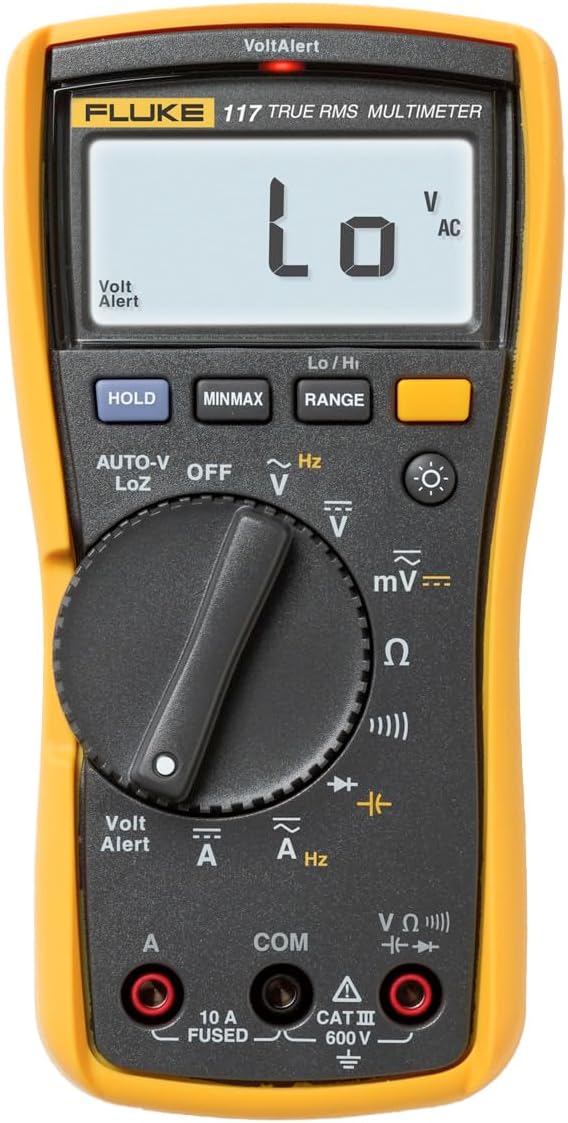
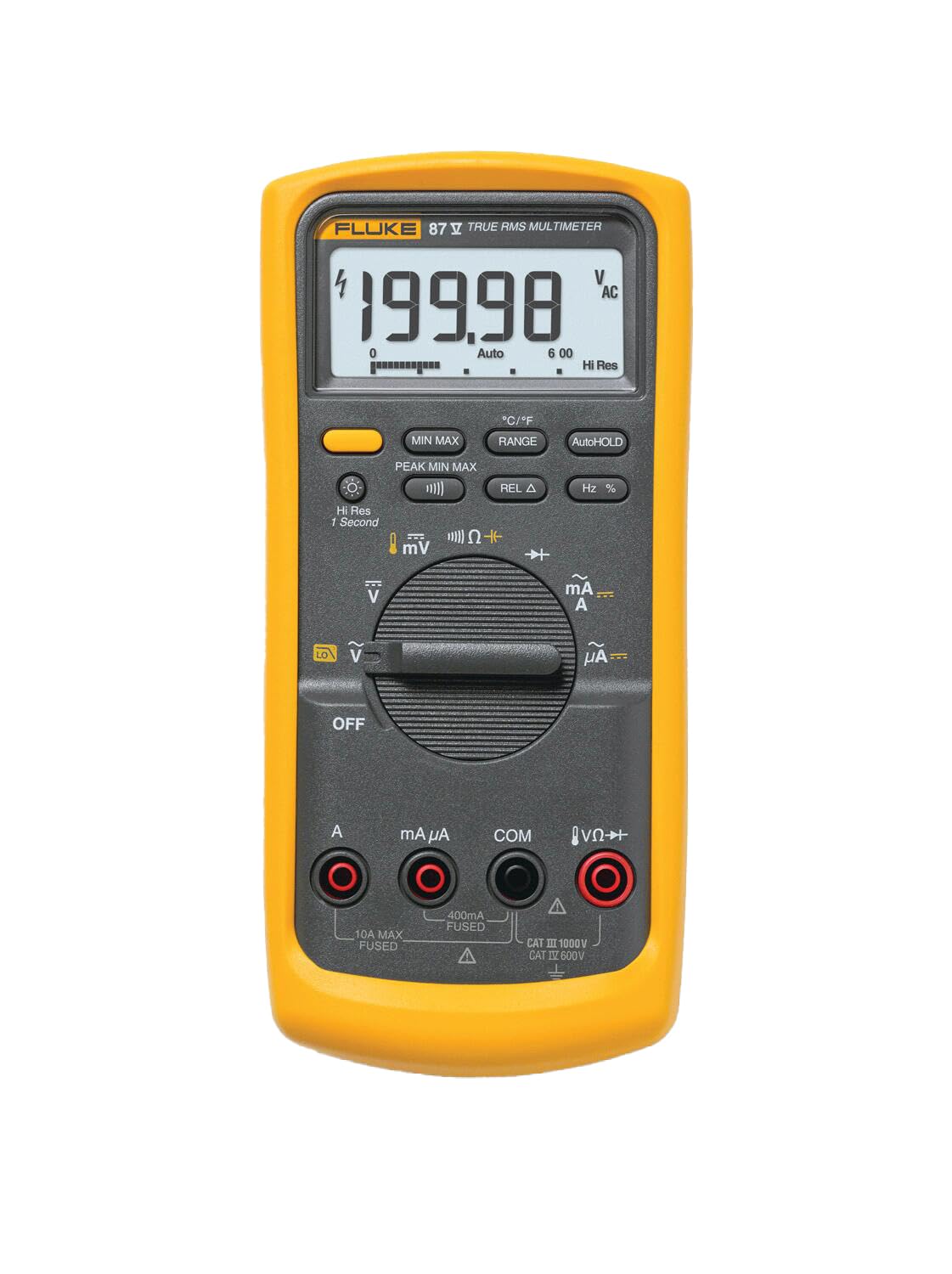
If you spend your days chasing voltage drops, verifying panel loads, or hunting a parasitic draw, the clamp meter on your belt matters more than almost any other tool you own.
The right one reads current without breaking the circuit, keeps you outside the arc-flash zone, and gives you numbers you can actually trust.
This guide walks through the best clamp meter for electricians in 2026, organized by the work you actually do rather than a generic top-ten list.
There is no single “best” meter for everyone. A residential service electrician, an HVAC tech testing flame sensors, and an industrial troubleshooter logging trends over an hour all need different things.
So instead of crowning one winner, I’ll match meters to trades and explain which features are worth paying for.
Best Clamp Meter for Electricians
Best overall for working electricians
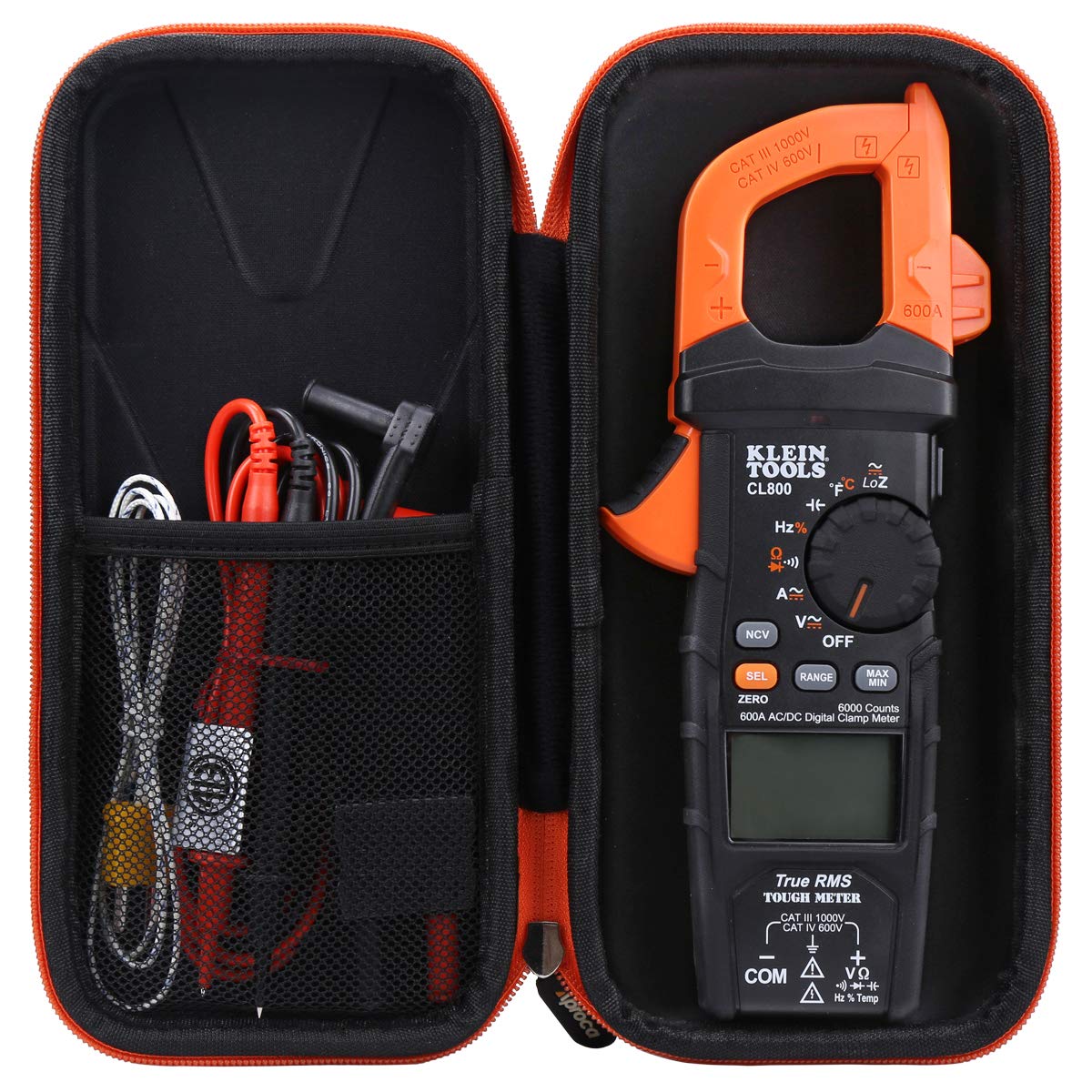
Klein Tools CL800 / CL810: True RMS, DC, LoZ, NCV, and temperature at a price that undercuts comparable Fluke units.

Best trusted standard (AC work)
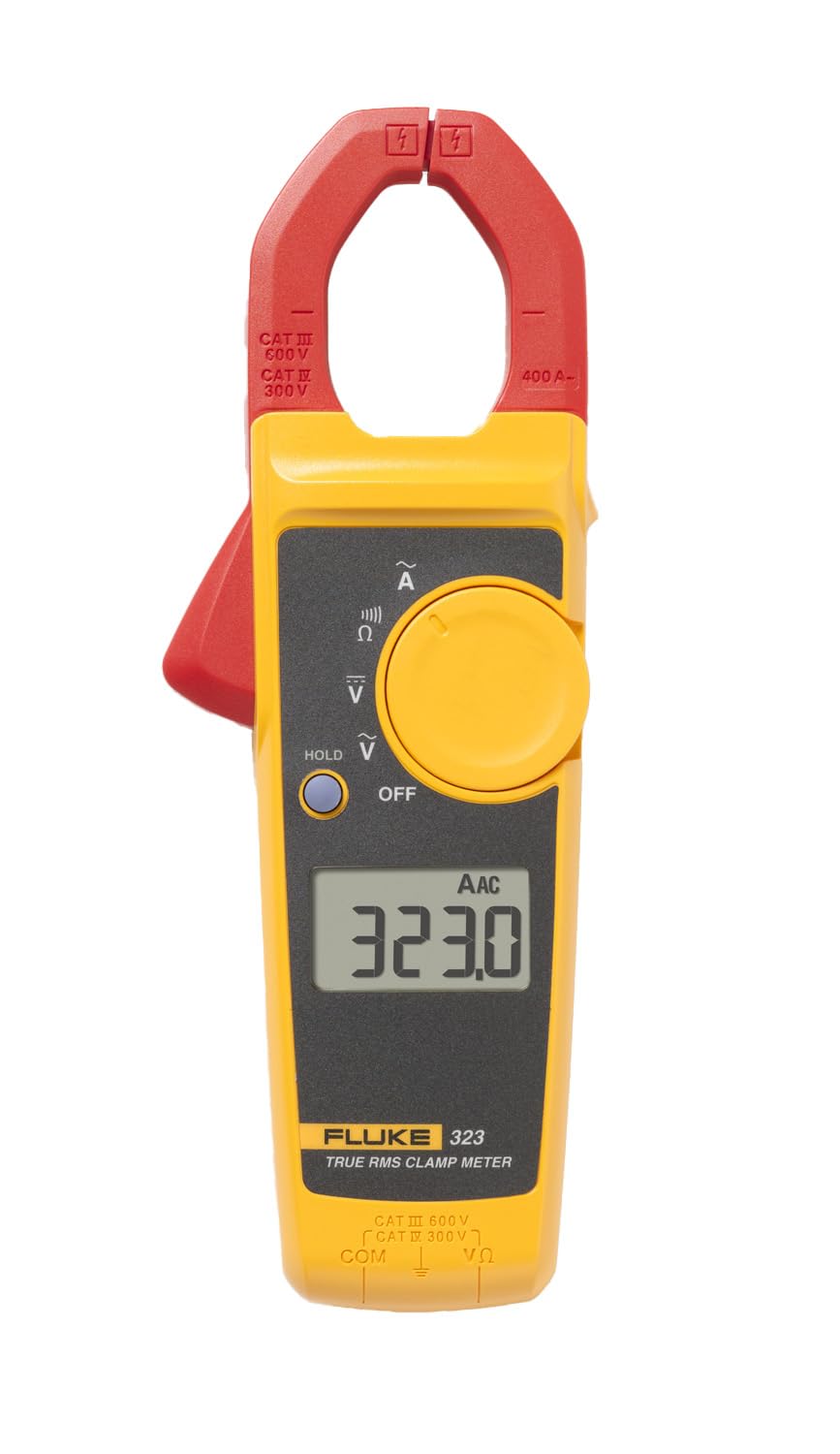
The Fluke 323: battle-tested reliability if your work is mostly AC and you want the industry benchmark.

Best mid-range all-rounder
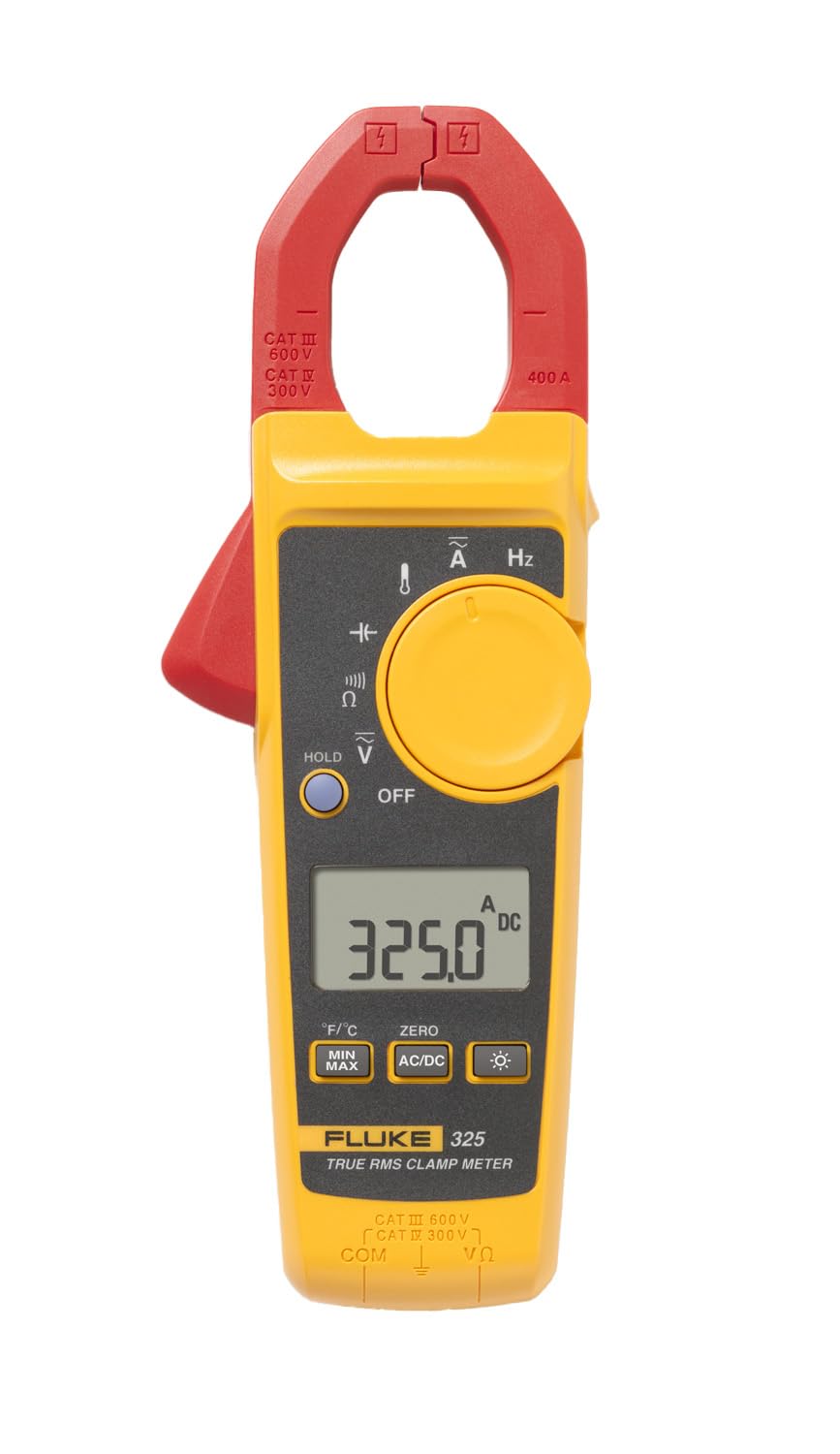
The Fluke 325 adds temperature, frequency, and capacitance to the Fluke lineup at a justifiable price.
Best value with DC current
Klein CL390 AC/DC, True RMS, and DC microamps for well under $100.
Best budget pick (apprentices/homeowners)
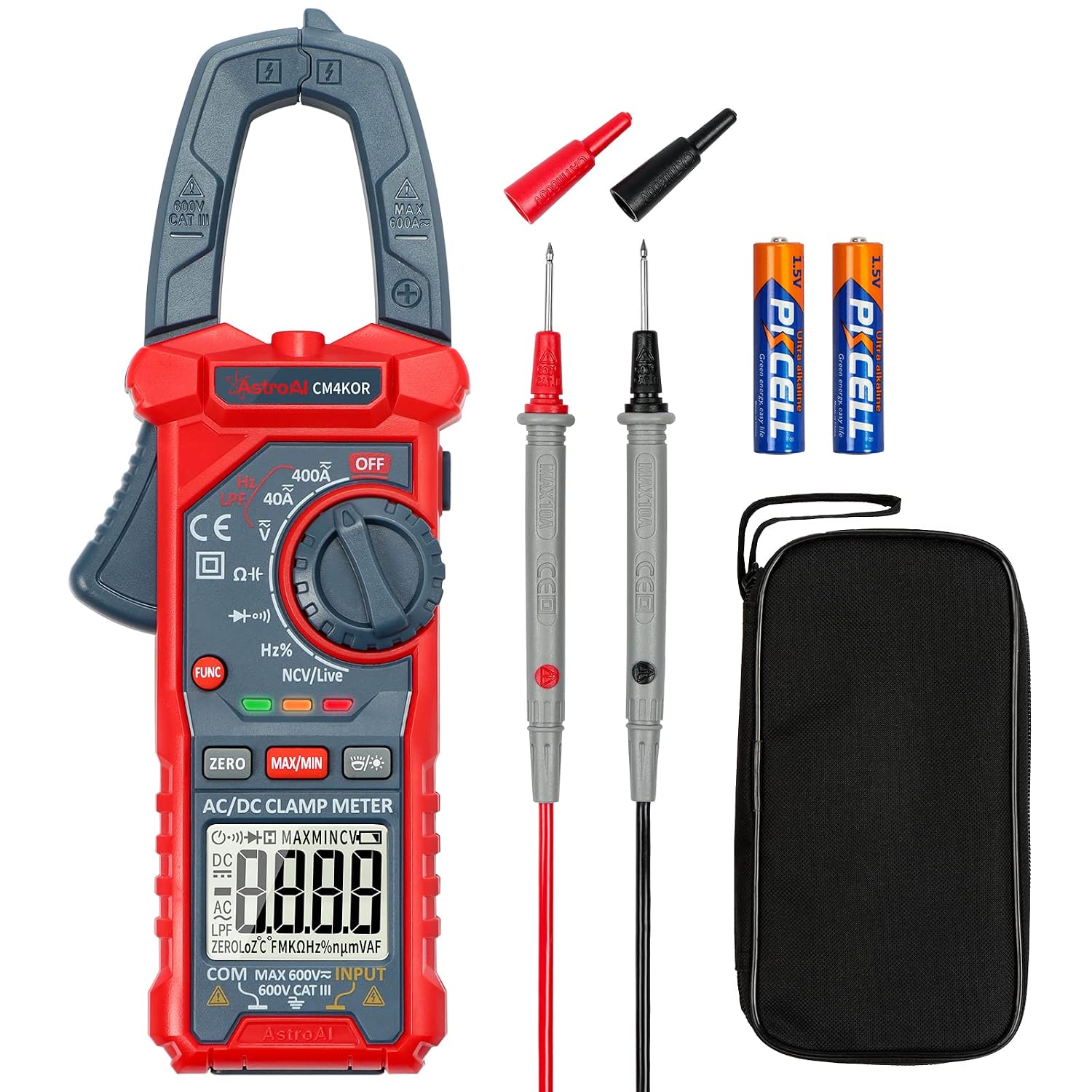
Kaiweets or AstroAI True RMS models are solid basics at the lowest price.

Best premium/industrial
The Fluke 376 FC, iFlex flexible probe, and Bluetooth logging for remote monitoring away from live gear.
What a Clamp Meter Actually Does
A clamp meter measures current by closing its hinged jaw around a single conductor. Electromagnetic induction lets it read the current flowing through that wire without you cutting into the circuit or landing a probe on a live bus.
That non-contact measurement is the whole point: a standard multimeter can’t safely read the high currents in a service panel, but a clamp meter can do it in seconds.
Modern units combine the clamp with regular multimeter functions, so a single tool reads current, voltage, resistance, continuity, and often capacitance, frequency, and temperature. That versatility is why it’s the first meter most electricians reach for.
The Features That Actually Matter
Before comparing models, understand which specs affect real work and which are marketing noise.
True RMS
Non-linear loads (VFDs, LED drivers, electronic ballasts, and switching power supplies) produce distorted waveforms.
A true RMS meter reads those accurately; an averaging meter guesses and can be off by a wide margin. For any modern commercial or industrial work, True RMS is non-negotiable.
Safety rating (CAT III / CAT IV)
This is the one spec you never compromise on. The category rating tells you the transient overvoltage the meter can survive at a given location.
Panel and service-entrance work generally calls for CAT III 600V at minimum and CAT IV for line-side and utility connections. A proper rating is not optional for professional work.
AC vs. AC
Cheaper meters read AC only. If you touch solar, battery systems, automotive, or DC control circuits, you need DC capability, and it’s worth checking the DC microamp range if you test HVAC flame sensors.
LoZ (low impedance) mode
Loads down the meter’s input impedance to eliminate “ghost voltages” and phantom readings from induced voltage on de-energized wires. Saves you from chasing circuits that aren’t actually live.
Inrush measurement
Captures the startup surge of motors and compressors, which can be several times running current. Essential for diagnosing nuisance breaker trips.
Jaw size
The jaw has to open wide enough to clamp the largest conductor you work with. Residential meters with small jaws won’t fit around larger feeders.
Display and worklight
A backlit, high-contrast display readable in a dim mechanical room or bright sun sounds minor until you’re squinting at a panel at 4 p.m. A built-in worklight is a genuine convenience in cramped spaces.
Best Clamp Meter by Trade
Residential and general service work
For everyday residential service and light commercial troubleshooting, the Fluke 323 and Klein CL800 are the two workhorses.
The Fluke 323 reads AC to 400A, covers most loads you’ll meet, and carries the reliability reputation the brand is known for.
The Klein CL800 competes head-to-head at a similar price while adding DC, LoZ, NCV, and temperature, which is why a lot of electricians have been switching.
If your work is nearly all AC and you value the proven standard, go Fluke; if you want more features per dollar, the Klein is the smarter buy.
Commercial and troubleshooting
Step up to the Klein CL810 or Fluke 325 here. Both give you true RMS, inrush for motor startup diagnosis, and the extra measurement functions (capacitance, frequency, temperature) that come up constantly when you’re diagnosing rather than just installing.
The CL810 packs the most complete feature set for the money; the Fluke 325 is the sweet spot in Fluke’s lineup if brand support and long-term durability weigh heavily for you.
HVAC/R
HVAC work has one specific requirement: DC microamps for flame-sensor testing. The Klein CL390 covers this along with AC/DC and temperature at a value price, and purpose-built HVAC meters like the Fieldpiece and UEi units add diagnostics tailored to the trade.
If you split your time between electrical and HVAC, the CL390 is the most economical way to cover both.
Solar and DC systems
Solar and battery work lives on the DC side, so you need strong DC measurement and adequate voltage range.
Meters built with DC applications in mind, the Amprobe AMP-220 among them, handle PV strings and battery banks better than an AC-focused unit.
Verify the DC range matches your array and confirm the CAT rating covers your string voltages.
Industrial and heavy troubleshooting
For industrial work where you’re logging trends, monitoring remotely, or staying clear of live gear, the Fluke 376 FC is the premium pick.
Its iFlex flexible current probe wraps around awkward or oversized conductors that a rigid jaw can’t reach, and Bluetooth lets you trend measurements on your phone from outside the arc-flash boundary.
It’s an investment, but for the electrician who needs remote logging and arc-flash safety, it earns its keep.
Apprentices and budget buyers
If you’re buying your first meter or watching every dollar, budget True RMS models from KAIWEETS and AstroAI deliver honest basic functionality at the lowest prices in the category.
They won’t match a Fluke on durability or long-term accuracy, but they’ll get an apprentice through the fundamentals, and you can upgrade as your needs grow.
Just confirm the model you pick is genuinely True RMS and carries an appropriate CAT rating; the cheapest units sometimes cut corners on both.
How to Choose: A Simple Decision Path
- Do you work with DC (solar, battery, automotive, or HVAC) sensors? If yes, you need AC/DC. That immediately narrows your options.
- What’s the highest-energy location you test? Match the CAT rating to it. Line-side and utility work means CAT IV.
- Do you troubleshoot or mainly install? Troubleshooting justifies inrush, low impedance, and the extra functions. Pure installation can get by with less.
- What’s the largest conductor you clamp? Confirm jaw size or consider a flexible-probe meter.
- Set your budget against those needs, not the other way around. Don’t overpay for capabilities you’ll never use, but don’t undercut safety to save $30.
A Note on Buying Quality
A good clamp meter from Fluke or Klein can last decades, which changes how you should think about price.
Spread over ten-plus years of daily use, the gap between a budget unit and a professional-grade meter is small, and the professional meter pays it back in accuracy, durability, and safety margin.
Buy the meter that matches your current trade while leaving a little headroom for where your work is heading.
Frequently Asked Questions
What’s the single best clamp meter for most electricians?
If you want one recommendation without knowing the trade, the Klein CL800/CL810 offers the best balance of features and price for general professional work, while the Fluke 323 is the safe choice for anyone who prioritizes the industry-standard brand and works mostly in AC.
Do I really need True RMS?
For any modern electrical work involving VFDs, LED lighting, or electronic loads, yes. Averaging meters give inaccurate readings on the distorted waveforms that those loads produce.
What CAT rating do I need?
CAT III 600V is a reasonable minimum for panel and branch-circuit work; step up to CAT IV for line-side, service-entrance, and utility connections. Never use a meter rated below the location you’re testing.
Is an expensive Fluke worth it over a budget meter?
For occasional or apprentice use, a quality budget true RMS meter is fine. For daily professional work, the reliability, accuracy retention, and safety margin of a Fluke or Klein justify the cost over the tool’s lifespan.
Always de-energize where possible, verify your meter on a known source before and after testing, and use a unit rated for the category and voltage of the circuit you’re working on. The right clamp meter is a safety tool first and a diagnostic tool second.