When a VFD trips intermittently or a Modbus RTU line drops packets under load, a multimeter tells you almost nothing. You need to see the signal.
That’s where the right oscilloscope earns its place in the toolbag. But the “best” scope for automation work isn’t the one with the highest bandwidth number on the box.
It’s the one matched to the signals you actually chase: encoder pulses, PWM inverter output, fieldbus differential pairs, and noisy 24 VDC control loops.
I’ve spent years troubleshooting industrial controls and safety systems, and the pattern is consistent.
Automation techs don’t need a 1 GHz RF lab instrument. They need adequate bandwidth, isolated or floating inputs, serial bus decode, and something that survives a control cabinet.
This guide covers the specs that matter, then gives concrete bench and handheld picks for 2026.
Best Oscilloscope for Automation Technicians
| Use case | Recommended model | Bandwidth | Why it fits |
|---|---|---|---|
| Best overall bench scope | Siglent SDS1104X-E / SDS2000X series | 100–200 MHz | 4 channels, serial decode, great value for PLC/VFD work |
| Best handheld for fieldwork | Fluke 123B/125B ScopeMeter | 20–40 MHz | Isolated inputs, rugged, built for live industrial voltages |
| Best fieldbus/bus analyzer | Chauvin Arnoux OX9302-BUS | 300 MHz | Dedicated CAN, LIN, DALI, KNX qualification workflow |
| Best budget bench entry | Rigol DS1054Z | 50 MHz (hackable) | 4 channels, proven reliability, cheapest serious option |
| Best 3-in-1 for the toolbag | Hantek 2D72 / ZOYI ZT-703S | 50–70 MHz | Scope + meter + signal generator in one handheld |
What Automation Technicians Actually Need in a Scope
Before you look at any model, get clear on the four requirements that separate an automation-ready scope from a generic hobby unit.
Isolated or floating inputs (the safety-critical one)
Most bench oscilloscopes share a common ground on all their BNC connectors, and that ground is tied to earth through the mains plug.
Clip that ground onto a live point in a control panel, a floating DC bus, or a phase of a VFD output, and you create a dead short through the scope. That destroys the instrument and can injure you.
For live industrial measurements, you want either a handheld scope with truly isolated channels (like the Fluke ScopeMeter family) or a bench scope used with proper differential probes.
This is the single most common mistake I see technicians make when they move from electronics to power and automation work.
Never float a standard bench scope by lifting its safety ground; it’s dangerous and against every safety standard worth following.
Bandwidth that matches your signals, not the spec sheet
Automation signals are slow compared to RF or high-speed digital. A 100 MHz oscilloscope handles the overwhelming majority of PLC I/O, encoder feedback, PWM inverter carriers, and control logic you’ll ever probe.
Industry guidance in 2026 broadly agrees that a well-engineered 100 MHz oscilloscope with 12-bit resolution strikes the optimal balance between performance, features, and price for embedded, automotive, and power electronics work.
The rule of thumb: pick a bandwidth at least 5x the fastest signal edge you need to see accurately.
For fieldbus and encoder work, 100 MHz is comfortable headroom. Handheld field scopes at 20–40 MHz are fine for control voltages, relay logic, and slower drives but come up short if you need to inspect fast-switching edges on modern IGBT inverters.
Channel count for real troubleshooting
Two channels let you compare a command signal against a response. Four channels let you watch a three-phase output, or a bus signal, alongside a trigger and a control line simultaneously. For automation, four channels is worth the modest price increase. You’ll use them.
Serial bus decode
This is the feature that turns a scope into an automation diagnostic tool. Decode for Modbus/RS-485, CAN, LIN, I2C, SPI, and UART lets you read the actual protocol traffic on screen instead of squinting at raw waveform edges.
If you troubleshoot networked devices, drives, or building automation, insist on it. Higher-end analyzers like the Chauvin Arnoux OX9302-BUS go further, offering a structured four-step qualification process for verifying signal quality across fieldbus protocols, including KNX, DALI, CAN, LIN, FlexRay, and Ethernet.
Bench vs. Handheld: Which One Do You Need?
This is the first real decision, and it comes down to where you work.
A benchtop scope gives you more bandwidth, more channels, a bigger display, and deeper memory for the same money.
It lives in the maintenance shop or panel-build area. If most of your diagnostic work happens at a workbench with the device in front of you, buy a bench.
A handheld scope trades some performance for portability, battery operation, and, critically, isolated inputs.
Handheld oscilloscopes excel in mobile applications like on-site industrial maintenance, offering battery-powered operation and integrated multimeter functions for quick measurements without external equipment.
If you’re up a ladder at a rooftop AHU or crouched in front of a live MCC, handheld wins every time.
Many working technicians end up owning both: a capable four-channel bench scope for the shop, and a rugged handheld for live field diagnostics.
If you can only buy one and you do live industrial work, buy the handheld with isolated inputs. Safety first.
The Best Bench Oscilloscopes for Automation
Siglent SDS1104X-E / SDS2000X-E : Best Overall Value
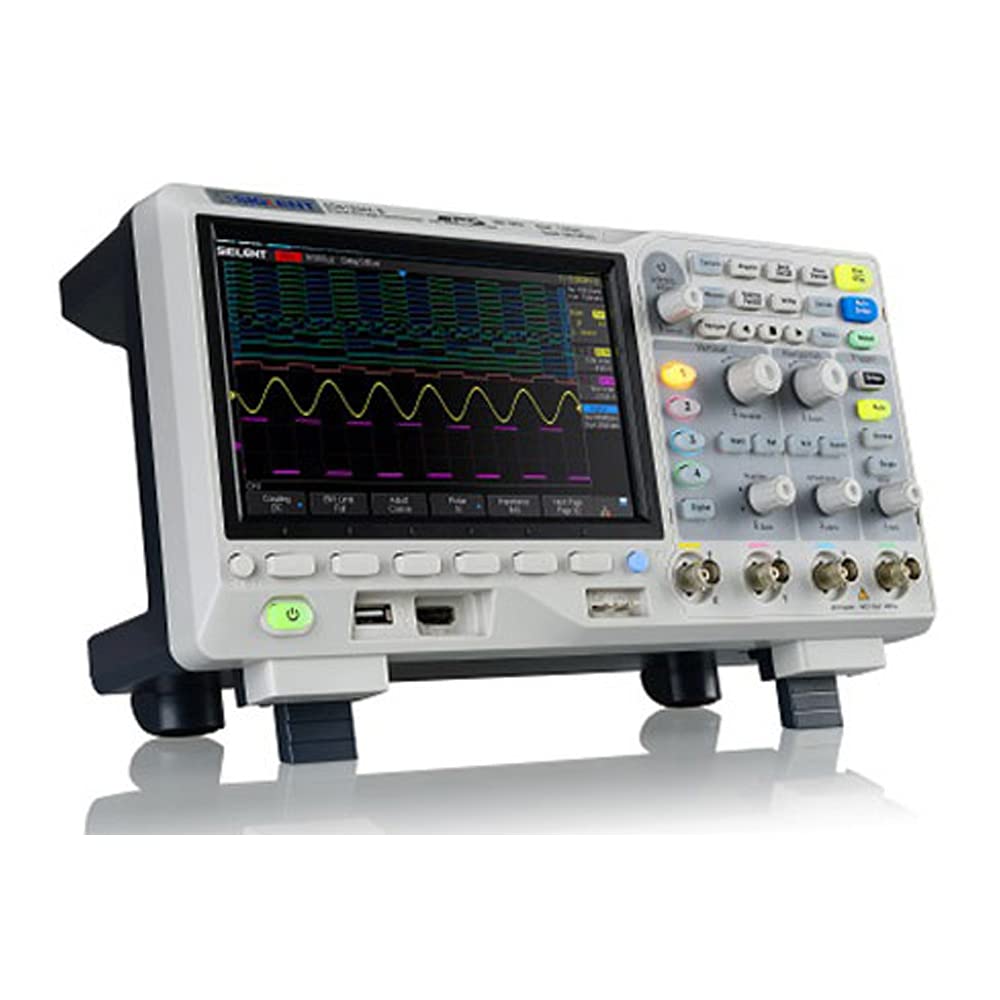
Siglent has become the default recommendation for working technicians who want professional capability without lab-grade pricing.
Siglent instruments cater specifically to electronic engineers and technicians</cite>, and the X-E series delivers four channels, 100–200 MHz bandwidth, serial decode across the common protocols, and a responsive interface.
For PLC, VFD, and general control troubleshooting at a bench, this is the sweet spot in 2026. Firmware support and community resources are strong.
Rigol DS1054Z: Best Budget Entry
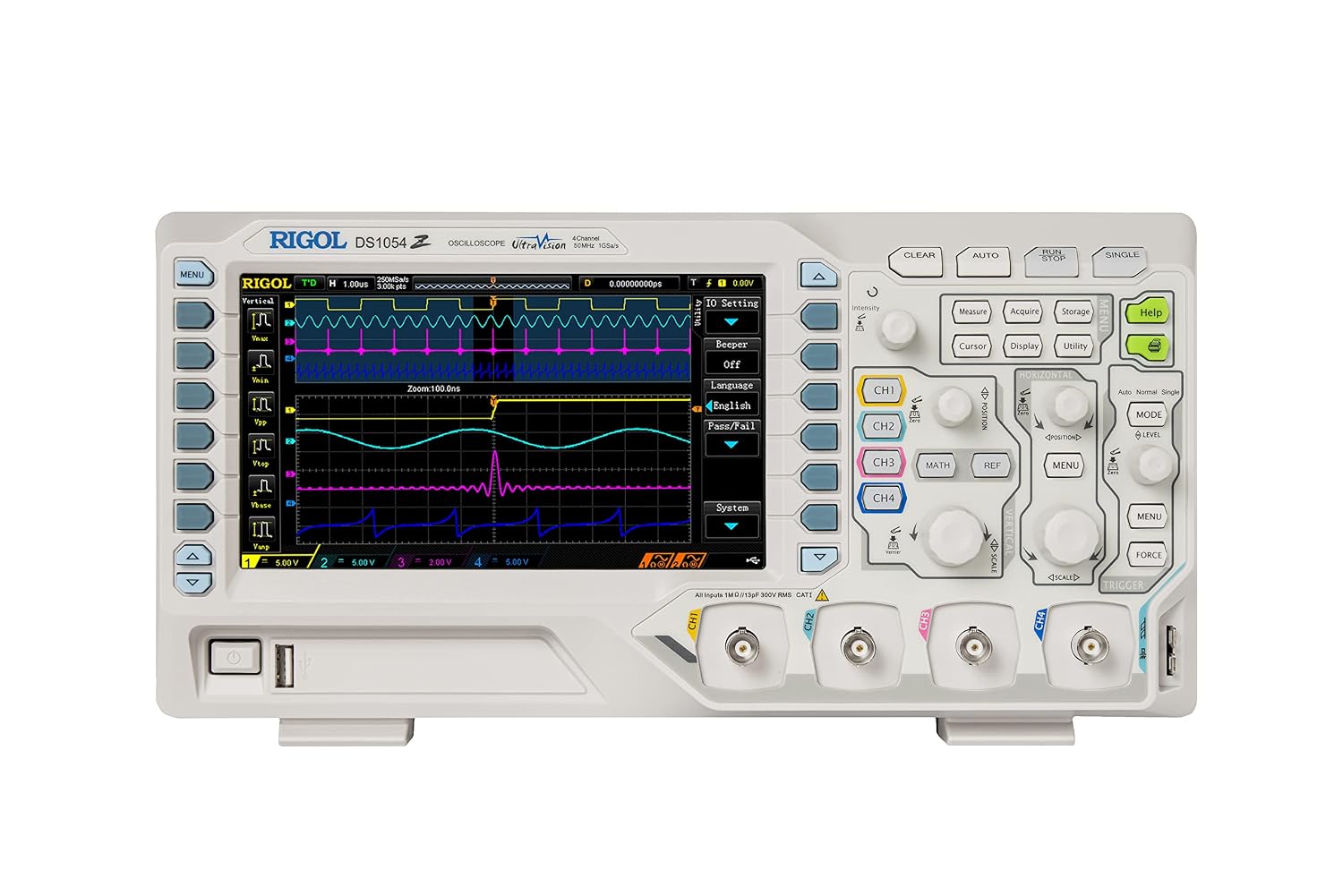
The DS1054Z remains the cheapest genuinely serious four-channel scope you can buy. It’s an excellent choice for professionals who need advanced oscilloscope features combined with solid reliability.
Fifty MHz of bandwidth covers most control work, and it’s a proven, dependable first scope for a maintenance department on a tight budget.
Tektronix and Keysight: When Budget Isn’t the Constraint
If you work in a plant that specifies premium instruments, these are the reference brands.
Tektronix oscilloscopes are favored for high bandwidth, multi-channel capability, and an intuitive interface, with users appreciating their accurate measurements, reliability, and automation features.
You pay a premium, and for most automation troubleshooting you won’t use the extra headroom, but the build quality and long-term support are unmatched.
The Best Handheld Oscilloscopes for Field Work
Fluke 123B / 125B ScopeMeter: Best for Live Industrial Voltages
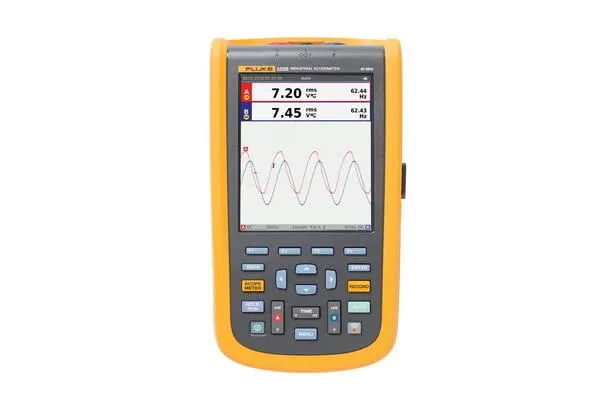
If you probe live panels, this is the tool. The Fluke 123B is one of the most trusted handheld scopemeters for industrial use and offers top-tier performance for industrial environments.
Isolated inputs, a rugged sealed body, and a meter built into the same unit make it the safe, practical choice for on-site diagnostics.
It costs more than the alternatives, and it’s worth it for the safety margin alone when you’re working on energized equipment.
Chauvin Arnoux OX9302-BUS: Best for Fieldbus Diagnostics
For technicians whose days revolve around networked devices and industrial buses, this is a specialist’s tool.
It’s built specifically for engineers and technicians working with industrial automation and communication protocols, with an intuitive human-machine interface and advanced bus analysis functions that simplify signal diagnostics across fieldbus protocols.
If KNX, DALI, CAN, and similar buses are your daily reality, the dedicated qualification workflow pays for itself.
Hantek 2D72 / ZOYI ZT-703S: Best Budget 3-in-1
For a tech who wants a scope, multimeter, and signal generator in one pocket-sized unit, these deliver remarkable value.
The ZOYI ZT-703S delivers strong value under $100 with dual-channel 50 MHz performance and an integrated high-count multimeter.
The tradeoff is a button-driven interface with a learning curve and a small screen. Treat these as capable utility tools for the toolbag rather than a replacement for a proper isolated field scope on live gear.
Specs Cheat Sheet for Automation Work
| Spec | Minimum for automation | Sweet spot | Notes |
|---|---|---|---|
| Bandwidth | 20 MHz (handheld field) | 100 MHz (bench) | 5x your fastest edge |
| Channels | 2 | 4 | Four lets you watch three-phase + trigger |
| Sample rate | 500 MS/s | 1 GS/s+ | Higher = cleaner, fast edges |
| Vertical resolution | 8-bit | 12-bit | 12-bit reveals small anomalies on noisy lines |
| Isolation | Required for live work | Fully isolated channels | Non-negotiable for panel work |
| Serial decode | UART/RS-485 | + CAN, LIN, SPI, I2C | The automation-specific must-have |
How to Choose: A Quick Decision Path
- Do you probe live, energized industrial equipment? If yes, prioritize a handheld with isolated inputs (Fluke ScopeMeter). Safety outranks every other spec.
- Is most of your work at a bench with the device de-energized? Buy a four-channel bench scope (Siglent SDS1104X-E or Rigol DS1054Z).
- Do you troubleshoot fieldbus and networked devices daily? Get a serial decoder at minimum or a dedicated bus analyzer (Chauvin Arnoux OX9302-BUS).
- Tight budget, need one do-it-all tool? A 3-in-1 handheld (Hantek 2D72, ZOYI ZT-703S) covers basics, but don’t rely on it for live measurements above its isolation rating.
Frequently Asked Questions
What bandwidth oscilloscope do I need for PLC and VFD troubleshooting?
For most PLC I/O, encoder feedback, and VFD control work, 100 MHz on a bench scope is comfortable, and 20–40 MHz on a handheld is adequate for slower control voltages.
The general rule is to choose bandwidth at least five times the fastest signal edge you need to measure accurately. You rarely need more than 100 MHz for standard automation signals.
Can I use a regular bench oscilloscope on a live control panel?
Not safely. Standard bench scopes share a common earth ground across all inputs, so clipping the ground to a live or floating point creates a short circuit through the instrument.
For live industrial measurements, use a handheld scope with isolated inputs or a bench scope paired with proper differential probes. Never lift the scope’s safety ground to “float” it.
Do I need serial bus decoding on my oscilloscope?
If you troubleshoot networked devices, drives, or building automation systems, yes. Serial decode for Modbus/RS-485, CAN, LIN, SPI, and I2C lets you read actual protocol traffic on screen instead of interpreting raw edges by eye. It turns a general-purpose scope into a genuine automation diagnostic tool.
Is a handheld oscilloscope good enough, or do I need a benchtop?
It depends on where you work. Handheld scopes win for field diagnostics thanks to portability, battery power, and isolated inputs.
Bench scopes offer more bandwidth, channels, and screen real estate for the money and suit shop-based work.
Many technicians own both, but if your work is primarily on live equipment in the field, the isolated handheld is the priority purchase.
What’s the best budget oscilloscope for an automation technician?
The Rigol DS1054Z is the go-to budget bench scope, offering four channels and proven reliability at the lowest serious price point.
For a portable all-in-one, the Hantek 2D72 or ZOYI ZT-703S combines a scope, meter, and signal generator for under $100, though they’re best treated as utility tools rather than primary instruments for live industrial voltages.
The Bottom Line
The best oscilloscope for an automation technician is the one matched to your work, not the one with the biggest bandwidth number.
For bench troubleshooting, a four-channel 100 MHz Siglent gives you serial decode and Pro capabilities at a fair price.
For live field diagnostics, a Fluke ScopeMeter’s isolated inputs are worth every peso for the safety alone. And if fieldbus work dominates your day, a dedicated bus analyzer earns its keep fast.
Buy for the signals you actually chase, insist on isolation for anything live, and don’t overpay for bandwidth you’ll never use.
Get those three things right, and the scope will pay for itself the first time it finds a fault your multimeter never could.
Have a specific troubleshooting scenario, three-phase drive diagnostics, encoder faults, or a flaky Modbus line? Drop it in the comments, and I’ll point you to the right measurement setup.
